













Measuring what matters is fundamental to achieving business objectives. Profit.co recognizes this by offering a comprehensive KPI management system with 300+ built-in metrics and customizable KPI boards that transform raw performance data into actionable insights.
Table of Contents
What Makes KPIs and KPI Boards Valuable?
KPIs and KPI Boards ensure effective performance measurement and strategic monitoring through structured tracking:
- Performance measurement: Profit.co provides inbuilt KPIs and allows the creation of KPI Boards which play a major role in OKRs, as they measure the performance of your key results over time for a specific objective
- Strategic monitoring: KPIs and KPI boards enable organizations to monitor their progress over time, identify trends, and make adjustments to their strategies and processes to achieve their goals more effectively
What are KPIs?
KPIs (Key Performance Indicators) are quantifiable metrics that measure how effectively an organization, department, or individual is achieving specific business objectives. They provide:
- Measurable values that demonstrate performance levels
- Insights into progress toward strategic goals
- Data-driven indicators for decision-making
- Benchmarks for continuous improvement
What are KPI Boards?
KPI Boards are centralized dashboards that display multiple KPIs in one organized view. They enable:
- Consolidated visualization of key metrics
- Real-time performance tracking
- Easy comparison across different KPIs
- Quick identification of trends and patterns
How do I create a KPI Board in Profit.co?
Step 1
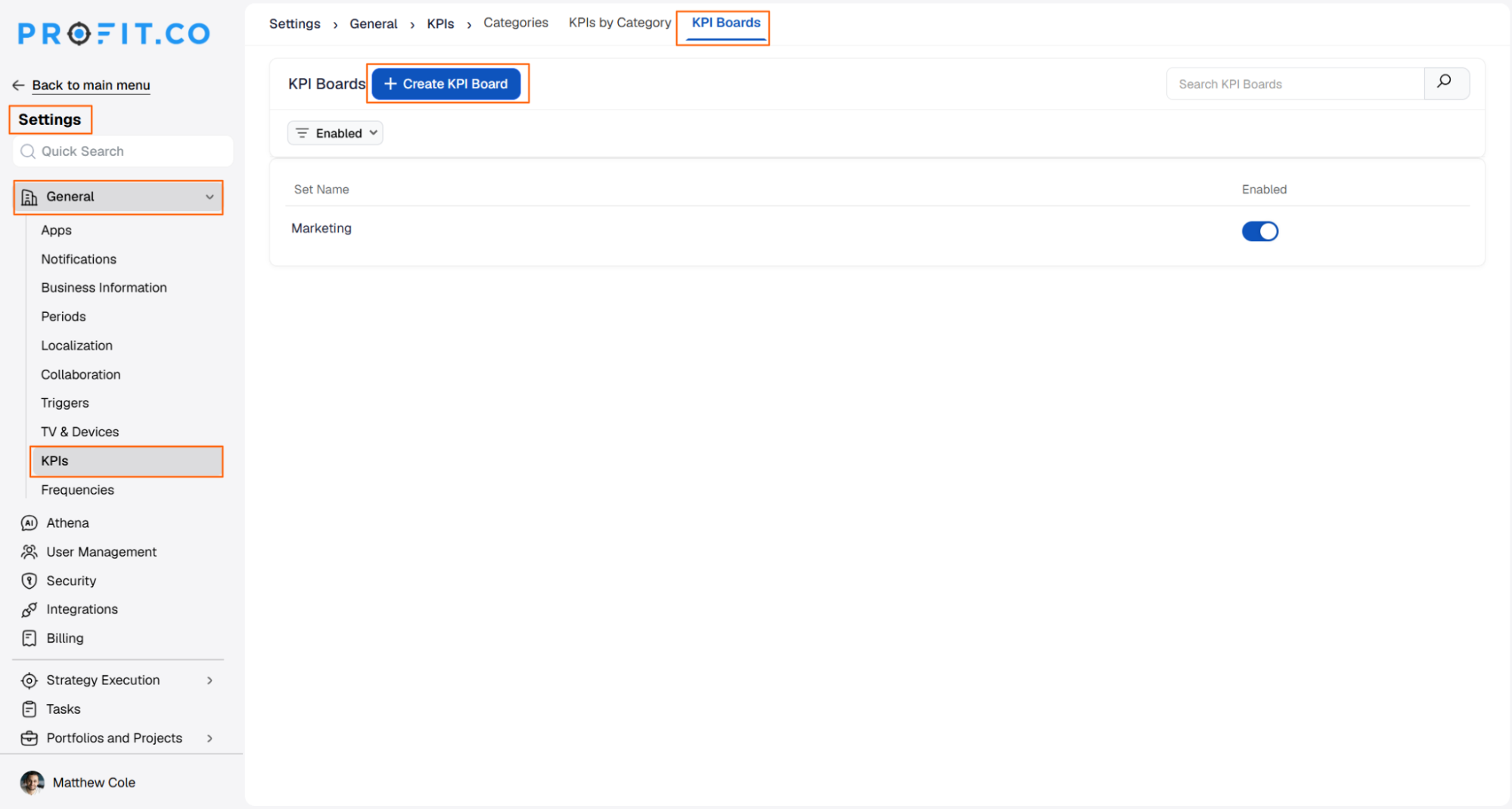
- Navigate to Settings → OKRs → KPIs from the left navigation panel.
- Switch to the KPI Boards tab and click on the + Create KPI Board icon.
Step 2
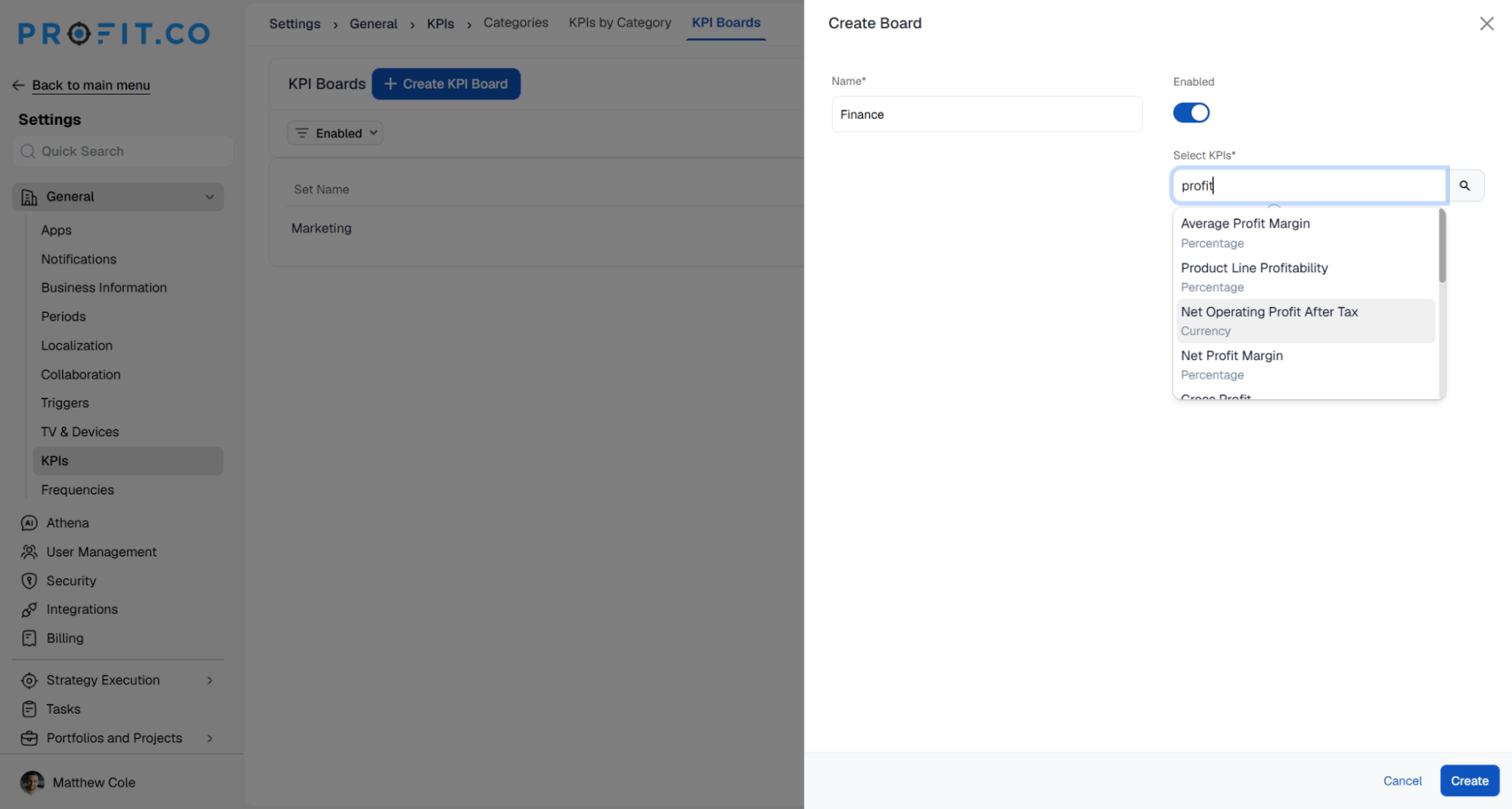
- On the create page, enter the board name.
- Click on the search icon in the Select KPIs and add the KPIs you want to add to the board.
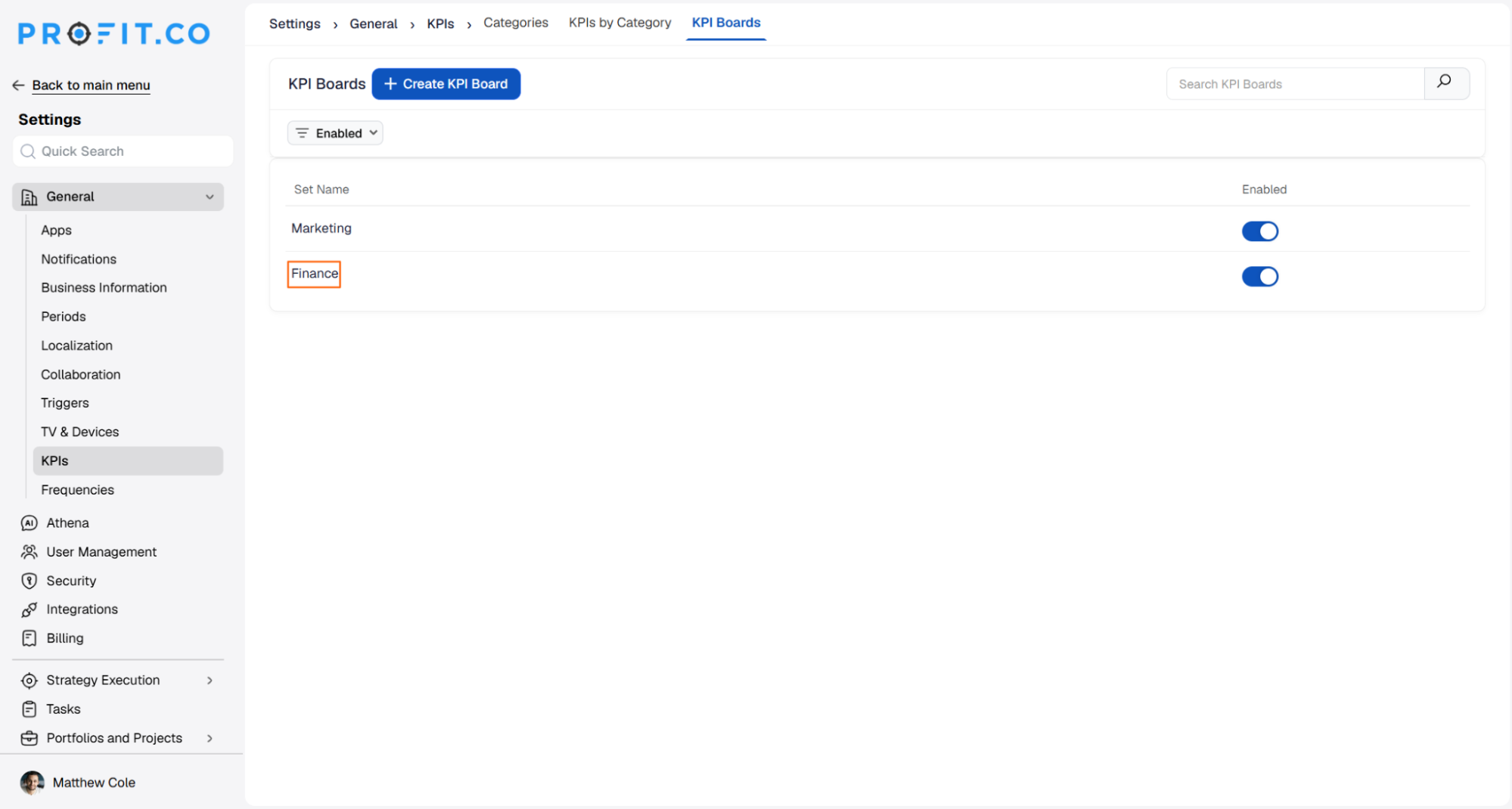
- Once done, click Create.
Step 3
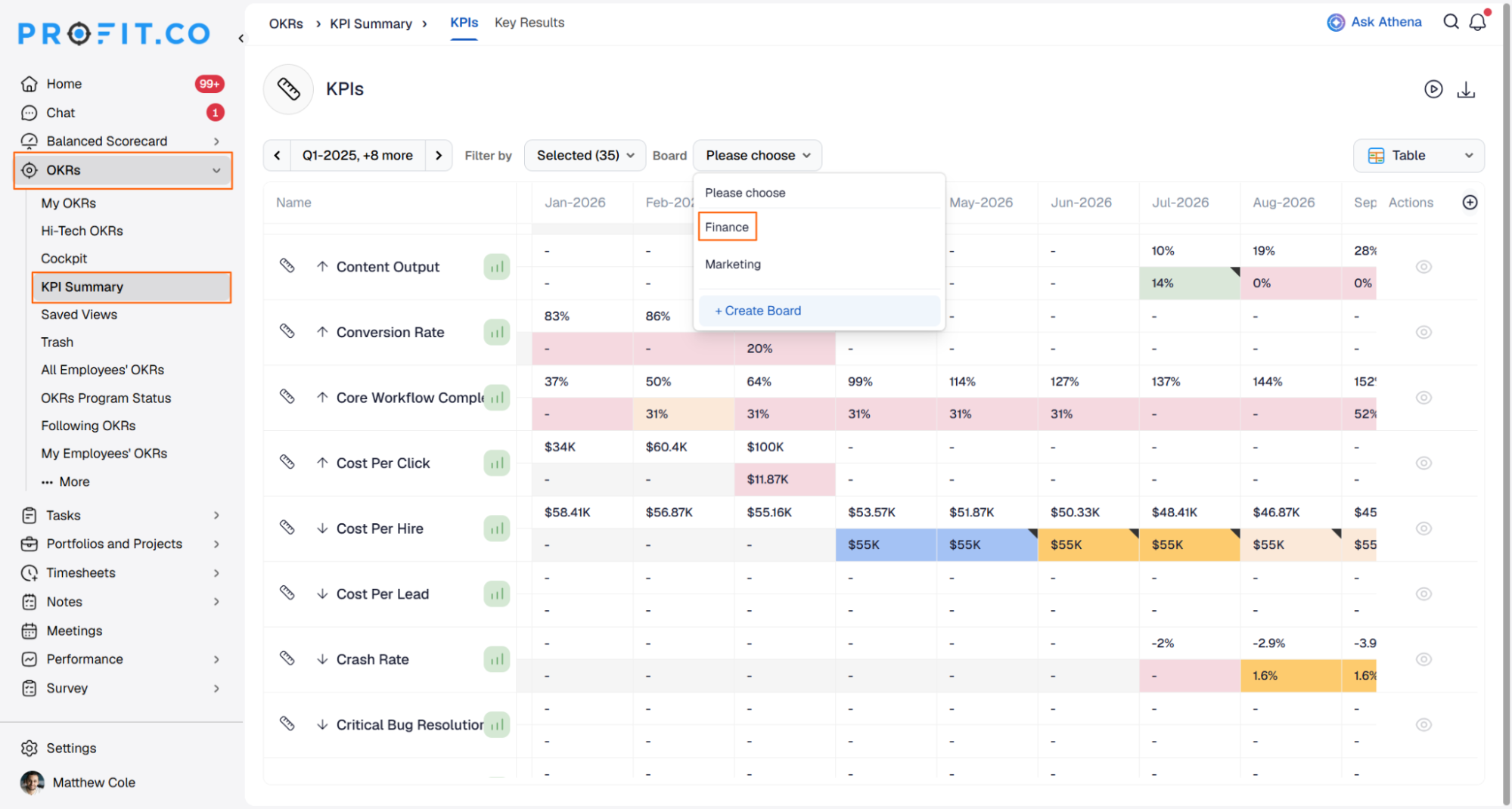
You can also view the KPI boards by navigating to OKRs → KPI Summary from the left navigation panel.
There, you can find the enabled KPI boards.
Note
You can also create a new board by clicking on the + Create Board button.
What are the Benefits of Using KPIs and KPI Boards?
Enhanced Performance Visibility:
- Clear view of organizational performance metrics
- Real-time tracking of key indicators
- Consolidated data for quick assessment
Data-Driven Decision Making:
- Objective insights for strategic planning
- Trend identification for proactive adjustments
- Evidence-based resource allocation
Strategic Alignment:
- Direct connection between KPIs and OKRs
- Clear measurement of objective achievement
- Unified understanding of success metrics
Improved Accountability:
- Transparent performance tracking
- Defined metrics for success evaluation
- Clear benchmarks for teams and individuals
Best Practices for Using KPIs and KPI Boards
- Select relevant KPIs: Choose KPIs that directly measure progress toward your specific objectives, avoiding vanity metrics that don't drive meaningful insights
- Organize by theme: Group related KPIs together on boards by department, function, or strategic initiative for easier monitoring and analysis
- Review regularly: Establish a consistent cadence for reviewing KPI boards (daily, weekly, or monthly) based on the nature of the metrics
- Update consistently: Ensure KPI data is refreshed regularly to maintain accuracy and enable timely decision-making
- Limit board size: Keep KPI boards focused with 5-10 key metrics rather than overwhelming users with too many indicators
- Share with stakeholders: Make KPI boards visible to relevant team members to promote transparency and collective accountability
- Connect to OKRs: Explicitly link KPIs to corresponding key results to demonstrate how metrics support objective achievement
Related Questions
Frequently Asked Questions
Key Results are specific, measurable outcomes you want to achieve within a set timeframe (typically quarterly) to reach an objective. KPIs are ongoing metrics that track performance over time. Key Results often use KPIs as their measurement method, but KPIs continue tracking beyond individual OKR cycles.
It's recommended to include 5-10 KPIs per board to maintain focus and clarity. Too many KPIs can overwhelm viewers and dilute attention from the most critical metrics. Create multiple boards if you need to track different sets of metrics for various purposes.
Yes, you can edit or delete KPI Boards after creation. This allows you to add or remove KPIs, rename boards, or reorganize your performance tracking structure as your organizational needs evolve.
Execute your strategy with confidence
Connect OKRs, tasks, and teams in one place with Profit.co
