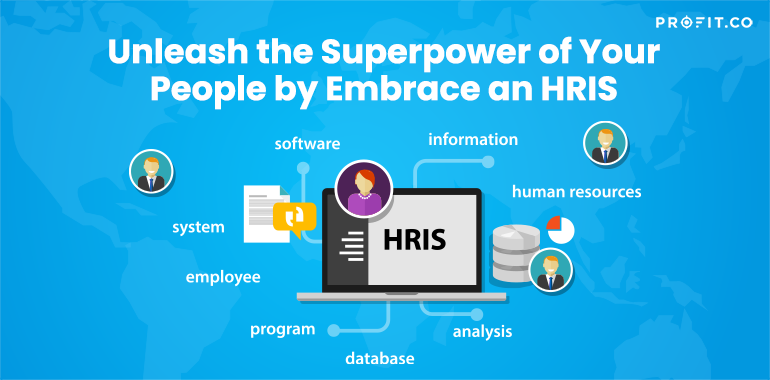
Unleash the Superpower of Your People by Embrace an HRIS
Bastin Gerald·
The world of work is undergoing a digital revolution, and HR is no exception. Dusty filing cabinets are becoming relics of the past, replaced by the sleek efficiency of Human Resources Information Systems (HRIS). Imagine a system that lets you retrieve employee information with the ease of a Google search, onboard new hires in a flash, and automate repetitive tasks that drain valuable HR resources. This is just the tip of the iceberg. With a projected market size of $56 billion by 2030, HRIS is poised to become a game-changer for businesses of all sizes. This blog explores HRIS, its features, benefits, and how it can empower your workforce and propel your business forward.
So, what exactly is an HRIS?
HRIS stands for Human Resources Information System. It’s a software solution designed to manage and automate various aspects of an organization’s employee data and HR processes. Imagine it as a central hub for everything related to your employees, from storing information and onboarding new hires to tracking leave and payroll.
Here’s a breakdown of what HRIS does:
Employee Data Management
HRIS is a secure database for all employee information, including personal details, job descriptions, compensation history, etc. This eliminates the need for paper files while having accurate and up-to-date information.
Process Automation
HRIS automates repetitive tasks such as onboarding, leave requests, and performance reviews. This frees up HR professionals’ time to focus on more strategic initiatives.
Improved Communication
HRIS can facilitate communication between employees and HR by providing self-service portals where employees can access information, update their details, and submit requests.
Enhanced Compliance
HRIS helps ensure labor laws and regulations compliance by tracking important data like leave accruals and training records.
Data-Driven Decision Making
HRIS provides valuable insights into your workforce by generating reports and analytics on trends like employee turnover and performance.
HRIS is a powerful tool that can help organizations streamline HR operations, improve efficiency, and make better data-driven decisions about their workforce. Performance management software is a robust tool that can be used within the HRIS domain.
Understanding the Difference Between HRIS & HRMS & HCM Helps you Choose the Right System for Your Needs
Feature
HRIS (Human Resource Information System)
HRMS (Human Resource Management System)
HCM (Human Capital Management)
Focus
Core HR functionalities
Comprehensive HR suite
Holistic workforce management
Typical Features
Employee data management
Benefits administration
Basic payroll processing
Recruitment & onboarding
Time & attendance
Talent management
Learning management integration
Workforce analytics & reporting
Payroll & timekeeping
Strategic workforce planning
Compensation & benefits planning
Talent acquisition & development
Employee engagement tools Integration with other systems
Benefits
Centralized data storage & access
Improved data accuracy & security
Streamlined basic HR processes
Increased automation & efficiency
Data-driven decision making
Improved talent management
Strategic talent planning & development
Maximize workforce potential
Enhance employee engagement
Generally, HRIS focuses on core HR functions, while HRMS adds features like payroll and timekeeping. HCM takes it a step further, encompassing the entire employee lifecycle. Consider your needs and choose the system that best fits your company’s goals.
Why is an HRIS Important?
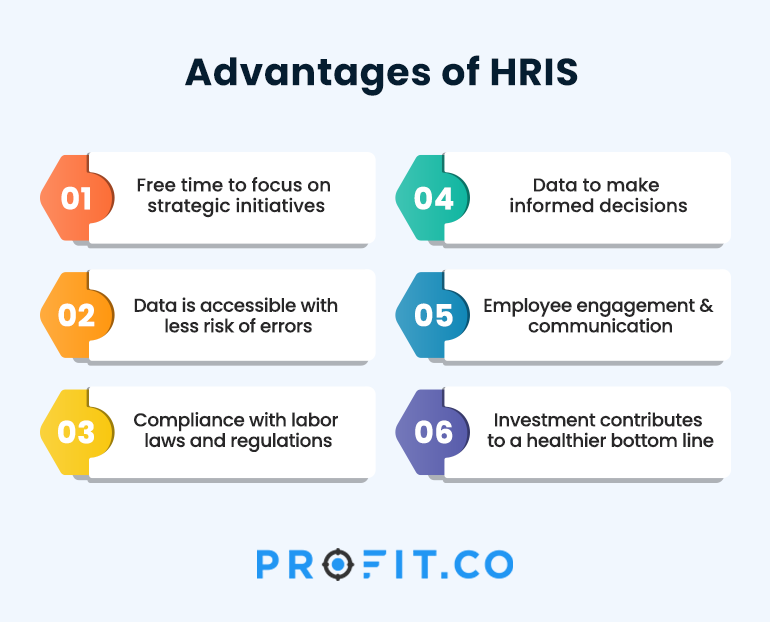
HRIS automates repetitive tasks like onboarding and leave requests, freeing your HR team to tackle strategic initiatives.
HRIS is a secure vault for employee data, keeping everything organized and accessible with less risk of errors.
HRIS tracks important data like leave accruals and training records, helping you stay compliant.
HRIS provides insightful reports and analytics, empowering you to make decisions about talent acquisition, development, and retention backed by data.
HRIS fosters a smooth dialogue between employees and HR. Self-service portals allow employees to get information, update details, and submit requests.
While there’s an initial investment, HRIS can be a long-term money saver. Increased efficiency, reduced errors, improved compliance, and data privacy compliance all contribute to a healthier bottom line.
What are the Challenges of an HRIS?
HRIS solutions come in all shapes and sizes (and price tags). For smaller businesses, the initial investment might feel like a trap. But remember, a well-chosen HRIS can pay for itself in the long run.
Setting up an HRIS takes planning, data migration, and employee training. It takes time and effort.
Security is paramount. HRIS stores sensitive data, so robust security measures with regular system updates, access controls, and data security awareness training are essential.
Integrating HRIS with existing systems can be tricky. Compatibility issues and data mapping can lead to frustration. But with careful planning and the right tech support, you can achieve a smooth and harmonious integration.
Transitioning from paper to digital can feel overwhelming. Provide clear training and ongoing support to ensure your team embraces the HRIS and unlocks its full potential.
Data quality is the foundation of a strong HRIS. Be prepared for an ongoing battle against inaccurate or incomplete data. Regular data cleansing will ensure your system remains efficient and reliable.
The benefits of HRIS far outweigh the challenges. By carefully understanding your needs, choosing the right solution, and planning for implementation, your HR team can transform and be ready to tackle any workforce challenge that comes their way.
“Take Care Of Your Employees And They’ll Take Care Of Your Business”
Richard Branson, business magnate
The Future of HRIS: Where Human and Machine Meet
The world of work is changing rapidly, and HRIS technology is evolving alongside it. Gone are the days of clunky, siloed systems. The future of HRIS is about using automation, artificial intelligence, and real-time data to create a more efficient, compliant, and employee-centric workplace.
Performance Redefined
HRIS will usher in a new era of continuous performance management. Real-time feedback, skills development recommendations, and personalized coaching will become the norm.
Compliance on Autopilot
Navigating the ever-changing world of HR regulations can be a headache. Future HRIS will provide automated compliance features, ensuring companies stay on top of labor laws and avoid costly penalties. Think automatic tax calculations or built-in alerts for policy updates.
AI-powered HR
AI and machine learning together will be the forerunner in analyzing data to predict employee behavior, recommend solutions, and streamline tasks. Think AI-powered chatbots answering employee questions, facial recognition for secure logins, or automated pay calculations – all designed to make HR processes frictionless.
The Cloud Takes Center Stage
On-premise HR systems are becoming relics of the past. Cloud-based HRIS solutions offer anytime, anywhere access, making it easier for global teams to collaborate. This trend will only accelerate, with Software-as-a-Service (SaaS) models becoming the go-to choice for organizations of all sizes.
Integration perfected
Payroll, HR, and other business systems will seamlessly integrate into one unified platform. This will eliminate data silos, streamline workflows, and provide a holistic view of the workforce. A single platform to manage employee data, track time and attendance, and analyze performance metrics – all in one place.
Employee Self-Service
The future of HR is about empowering employees. Self-service portals will become even more sophisticated, where employees can manage their benefits, request time off, and access important documents—all at their fingertips. This will save HR time and foster a sense of ownership and control among employees.
Forecasting the Future of Your Workforce
HR will become more data-driven than ever before. HRIS will use predictive analytics to identify issues like employee turnover or skills gaps. This foresight will empower organizations to make proactive decisions about talent acquisition, development, and retention strategies.
The future of HRIS is bright. Imagine a system that uses AI to anticipate employee needs and proactively offer solutions. Upgrades and rollouts become seamless, and tailored to your specific requirements. The HRIS of tomorrow will partner in creating a human-centric workplace where technology empowers people to achieve more.
Conclusion
In today’s competitive landscape, empowering your workforce is the ultimate differentiator. HRIS isn’t just a software solution it’s a strategic investment that unlocks efficiency, data-driven decision-making, and a thriving employee experience. Don’t settle for outdated systems. Embrace the HRIS revolution and unleash the true potential of your greatest asset your people.
To learn more about how we can help optimize your organization’s performance!
Building a Dynamic Performance Rhythm That Actually Changes Behavior
TL;DR Dynamic Performance Management data only changes behavior when it’s paired with a human cadence. Use daily micro-touchpoints to remove…
Bastin Gerald
Performance Management
7 min read·February 16, 2026
How Performance Management Platforms Align Individual Goals with Company Strategy
TL;DR Performance management platforms help organizations align individual goals with company strategy by cascading objectives, tracking progress in real time,…
Bastin Gerald
Performance Management
4 min read·February 16, 2026
Employee Recognition and Performance Management Software: The Missing Link Between Motivation and Results
TL;DR Employee recognition and performance management software bring motivation and accountability together on one platform. By connecting recognition, feedback, goals,…
Bastin Gerald
Performance Management
5 min read·February 9, 2026
Goal & Performance Management Software
TL;DR Goal and performance management software helps organizations move from static annual reviews to continuous, outcome-driven performance. By aligning goals,…
Bastin Gerald
Performance Management
5 min read·January 27, 2026
The Future of Employee Performance Management: Trends HR Leaders Can’t Ignore in 2026
Performance reviews have often been seen as routine tasks that take up time, focus on compliance, and do not always…
Bastin Gerald
Performance Management
18 min read·December 29, 2025
The Ultimate Guide to Dynamic Performance Management, 2026
Table of Contents What is Dynamic Performance Management? The Four Performance Management Archetypes Why Organizations Are Shifting to Dynamic PM…