Human Resources works tirelessly to find ways to provide an effective team for its company.
While there are countless strategies to help achieve this, our focus today is on the OKR framework. What are OKRs? Objectives and key results is an efficient system of strategy and goal management. This simple framework helps maintain transparency and alignment throughout an entire organization.
Better to fail at doing the right thing than to succeed at doing the wrong thing.

Best Practices for OKRs
In this article, we’ll take a look at the best practices your organization can apply to align team members strategically.The Definition of OKRs
OKRs developed from another well-known strategy-execution framework– MBOs, or management by objectives. OKRs improved upon this framework, and gained popularity among Silicon Valley companies. Most notably, Google adopted OKRs and attributes much of its unprecedented success in the tech industry to this framework’s simple yet effective set up. The Objective and Key Results are a simple strategy: users decide on a goal or objective statement, and define between three and five key results, or tangible outcomes that they will be able to see within their business. If these outcomes are achieved, then the objective itself should also be successful.OKR Process to Achieve Strategic Alignment
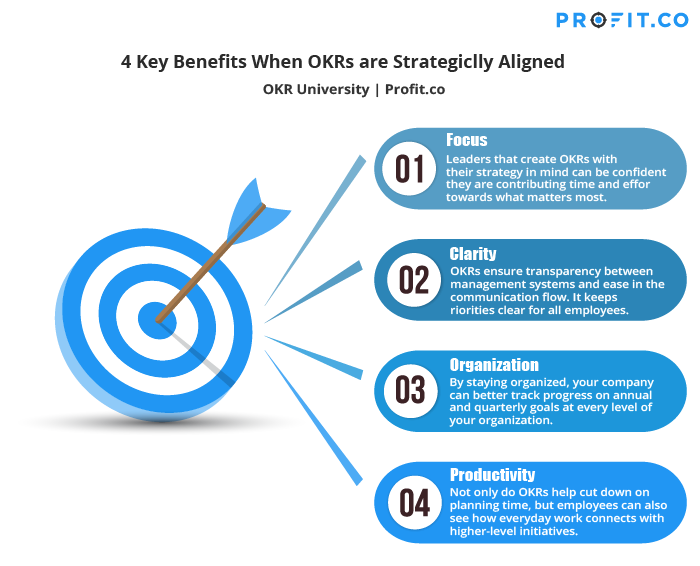
There are a number of benefits to OKRs. All of these begin with setting up your OKR properly. Let’s take a look at how strategy and OKRs align:1. Strategic Initiatives
First, top-level employees will need to consider the long term strategy of your company. The most impactful OKRs take strategic direction into consideration. The planning process of your OKR quarter is one of the most important periods for your team. If you begin by focusing on the wrong things, you’re going to get the wrong results. Strategy does not boil down to what projects you are going to take on within a single quarter. Instead, consider your organization’s three or five-year plan. Where do you want to see your organization go within this timeframe? Work backwards from this vision. Break down your five year goal into annual milestones. OKRs are great for moonshot goals- think of your best case scenario or your most ambitious goal for your organization. Then, create ambitious, aggressive goals to help make it a reality. Considering your strategy and vision is a vital part of writing high-quality objectives.