Whether you’re just beginning your OKR process or you’ve been using it in your organization for a while, you might’ve committed a few mistakes. That’s because it can be difficult to tell the difference between good and bad OKRs.
In this article, we’ll go through the common OKR mistakes and how to fix them, to put your company back on track
Sometimes when you innovate, you make mistakes. It is best to admit them quickly, and get on with improving your other innovations

What Does a Good OKR Process Entail?
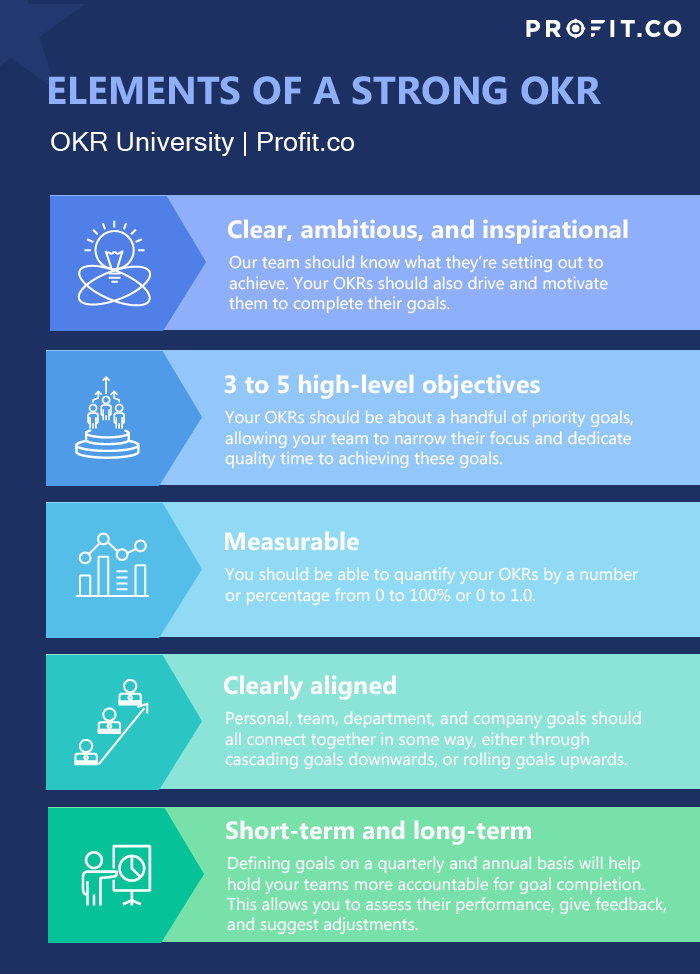
Before we discuss common OKR mistakes, it’s important to get an idea of what a good OKR process looks like.Good OKRs should be:
- Clear, ambitious, and inspirational: Your team should know what they’re setting out to achieve. Your OKRs should also drive and motivate them to complete their goals.
- 3 to 5 high-level objectives. Your OKRs should be about a handful of goals that are most important to your organization. Having a few goals will allow your team to narrow their focus and dedicate quality time to achieving these goals.
- Measurable: You should be able to quantify your OKRs by a number or percentage from 0 to 100% or 0 to 1.0.
- Clearly aligned: Your OKRs should be aligned by cascading goals from the top-levels to the bottom levels, or rolled up from the bottom levels of the company to the topmost levels. Personal, team, department, and company goals should all connect together in some way.
- Short-term and long-term: You should define OKRs quarterly or annually. Doing so will help hold your teams more accountable for goal completion. This allows you to assess their performance, give feedback, and suggest adjustments they need to make for improvement.