REHAU Building Solutions (Americas) turned a good strategy into great execution with Profit.co OKRs. With sharper visibility, cross‑functional accountability, and a leadership‑led rollout, the business grew market share in a down market, achieved double‑digit CAGR with improving profitability, delivered 90% of high‑level objectives, and executed complex, multi‑year initiatives such as securing top‑10 builder agreements, all while strengthening a culture of constructive challenge and mutual accountability.
REHAU Building Solutions is known worldwide for its polymer-based systems that power modern construction, everything from water distribution and radiant heating and cooling to wastewater and stormwater management. With a strong focus on safety, reliability, and energy efficiency, REHAU has built its reputation as a trusted partner in sustainable building and infrastructure projects.
To bring this story closer, Mark Hudoba, Executive Vice President of REHAU Building Solutions – Americas, sat down with Profit.co for a fireside chat. In his words, the business was already good. But with Profit.co’s OKRs, they found a way to go from good to great
In a volatile construction market, REHAU Building Solutions (Americas) used OKRs in Profit.co to drive next‑level visibility, cross‑functional accountability, and faster execution achieving double‑digit CAGR, improved profitability, and 90% completion of high‑level 2024 objectives.
Mark, how did your team originally set and track strategy goals before adopting OKRs?
Mark replied, “We used the ‘Playing to Win’ strategic model. Obviously there are multiple models and tools for developing strategies, but that’s the one I prefer to utilize.
About five years ago, our leadership team sat down and took a hard look at our strategy. We made sure we had a very clear focus on where we were going to compete, what markets we were going to play in, and most importantly – how we were going to win in these markets, not just participate.”
How did you track progress on your strategic objectives?
Mark explained, “We set out our strategic plan and from there identified the key objectives we needed to accomplish each year, along with the KPIs associated with those objectives. This was an annual process for us.
I also implemented a sales and operations planning process that we used to review the status of these objectives, at least at a high level. We’d track the KPIs to see where our performance stood and where we needed corrective action.”
What changed when you adopted OKRs? How did that transition happen?
Mark: “The big thing when we adopted OKRs a few years back was it brought the next level of visibility and accountability for our strategy execution. It wasn’t that we didn’t have a strategy or a sound strategy – I think we were all pointed in the right direction. I wouldn’t say we were directionally completely misaligned, but OKRs gave us the next level of alignment.
The key improvements were:
- Deeper organizational visibility: Everyone could see how their piece connected to the success of the overall business at a much deeper level.
- Distributed accountability: Not just managers and leaders could hold people accountable, but everybody had the visibility to hold others accountable. There was a clear understanding of what was happening and how it was affecting different cross-functional areas and different people’s objectives.
- Cultural transformation: It created a culture of accountability across the entire team.”
What results did you see from this improved visibility and accountability?
Mark explained, “When you create that kind of organizational transparency and shared accountability, you see increased efficiency and increased speed, those kinds of things go hand in hand.
That’s what happened with OKRs for us – we stepped up to the next level of having that visibility, accountability, and full integration. It’s been very, very helpful for our organization.
The bottom line is that while we had good strategic direction before, OKRs gave us the systematic approach to make sure everyone understood their role in executing that strategy and could see the real-time impact of their work on our overall business success.”
Mark, was there any resistance or skepticism from employees during your OKR implementation, and how did you address it?
Mark replied, “I think with any change, there’s a certain level of fear. I mean, I started off as a design engineer, so my job from the beginning of my career was to foster change – I thrive on it. Some people do, but many don’t. And it’s just different, right?
So there’s the fear of the unknown to some extent. But with change comes opportunity.
For us, it was important to ensure leadership buy-in first and then communicate with the team.
We made sure that we as the leaders really looked at this tool, understood the tool, and led by example. We needed to utilize the tool before we really asked other people to utilize the tool.
By doing that, we were able to firsthand show them – when there were questions about how to use the tool – what the benefits of using the tool were. Eventually, they started to see the benefits of utilizing the tool and realized that it really was an easy, user-intuitive tool to use.
I would also say plenty of communication was key – we didn’t leave people in the dark about what we were doing and how we would adopt this new methodology.”
Mark, are there any specific experiences you can share about how you brought about the change?
Mark’s Response:
“For me, the tool was fairly easy to use, it was fairly easy to understand, and it created that visibility.” I can slot it down to these steps.”
- The Initial Skepticism: “I often saw people kind of understand why we were doing it. I think initially they think “I’m not sure” , “I think I understand why,” but then of course it’s change. It’s different. It’s not like we were completely broken to begin with, and we were completely off course. So, you know, ‘why change a good thing?’ It’s kind of the ‘good to great’ methodology or mentality.”
The Cross-Functional Breakthrough: “You could see as people started to recognize the benefits of what it did. For example, they would see, like, ‘I have an objective and I need somebody else in another department to be delivering some key result that supports this objective. But I don’t see it now aligned to my objective.'”
“So they could simply ask the question, ‘Do you have this key result? Are you delivering this deliverable that’s supporting my objective?’ and vice versa. And sometimes it was, ‘Hey, we just forgot to link the visibility in the system. Now it’s linked.’ And other times it was, “Hey, I didn’t realize.”
- The Power of Detailed Alignment: “So it fosters these conversations to make sure that, look, the devil’s in the details type of thing you can be aligned at the high level and the objectives are all right, but it’s the real actions and the work that has to happen to support those objectives.”
- Multiple Mini-Moments: “I saw a lot of, let’s call them, light bulbs or mini light bulbs. And in some cases it would take kind of 2 or 3 or 4 of these instances. And then people would kind of see like, ‘okay, now, now I get it right. I understand the benefit. I can see the benefit.'”
- The Snowball Effect: “And then there’s a bit of a snowball effect, right? Because they see the benefit, then they get more engaged in utilizing the tool. And then they’re talking to their other peers and other people because we’re all interconnected, right? We’re operating as a team. And so it was kind of like it would spread right in a positive way, that adoption and engagement would spread.” “And the more that it spreads and the more solid engagement you have, the more powerful the tool is.”
- The Ultimate Result: “That’s where we really started to see a lot more benefit coming out of delivering that visibility, having the alignment across the different functional areas, having all the right conversations about what we are doing and what we should not be doing right. We start looking at things and saying, ‘Hey, what are you working on over here? What is this activity that you’re doing? And I don’t know if that aligns with this other objective or doesn’t all tie up and align with the higher-level strategic objectives.'”
Can you share examples where teams weren’t exactly aligned, but the OKRs helped them align better?
Real Example: “Great Place to Work” Initiative
Mark’s Response
- The Situation: “Just recently, we have had one objective: to make REHAU Building Solutions, America, a great place to work. And there’s an actual certification for it. And it’s one of our high-level objectives for this year. We have KPIs tied to it about how we want to have survey results increased from previous years, etc.”
- The Problem Discovery: “I went in there, and I was looking at the KPIs and the objective and the status and the alignment, and I said, ‘Hey, I’m just seeing some big gaps in here. With the activity that’s happening across various regions, various departments and areas.”
- The Solution: “So what I did was, I scheduled a meeting. I mean, look, one of the things that this helps us do is reduce the number of meetings, but in this case, I looked and said, “Hey, we’re not fully aligned on a key objective that’s important for us this year, one of our top objectives.” “I asked the leaders to come in with an update on their plan for what they’re doing to address and support this Great Place to Work initiative. And what’s the status update?”
- Cross-Learning and Accountability: “The areas that were on track, it allowed other leaders to see, ‘hey, here’s what’s happening in other areas.’ It set a good example then. And for some areas that said, ‘hey, I’m not where I need to be’ to really recognize where they need to be and also foster the discussion about how we can help support each other in areas so we can bring everybody back up to speed.”
- Quick Resolution: “To me, it was a great use of the tool to say, ‘hey, I can reduce the number of meetings and non-value added time spent because I can see status and updates,’ but then when I recognize that there’s a consistency deviation, I can then regroup the team and refocus and kind of get everybody back up to speed.””And we did that very quickly – really one meeting. We have one additional follow-up meeting. And already actions are in place so we can get that objective back on track.”
Do you use OKRs to track innovations or product launches?
Mark’s Response
Cross-Functional Nature of Product Development
“Yeah, we track all of our new product developments and launches using the OKR system. So of course, you have the design engineers involved, but you’re going to have supply chain folks involved. And of course, we’re going to have sales and sales forecasting involved, and we’re going to have marketing involved from a product launch standpoint. So it’s purely cross-functional projects. And that’s I think really where OKR systems can help support that cross-functional collaboration and visibility. So we use it to track all of ours.”
Impact on Performance Efficiency and Speed:
“I would say honestly, it’s hard to measure exactly what would have happened if we weren’t utilizing the OKR system. But I can say that for probably almost all of them, it improved the efficiency not only of the speed and timing of our being able to stay on track and on schedule, but also the quality of the deliverables.”
Quality Improvements:
“So when we’re looking at marketing materials or sales tools, it just creates additional visibility so people can have the right conversations to make sure that we’re creating the quality level as well as increasing the speed. The “Good to Great” Effect: “So yeah, we’ve been pretty happy. And like I said before, our team did a good job with product launches, and OKRs just allowed us to get even better.”
How Do OKRs Support Culture at REHAU Building Solutions?
Mark’s Response:
“I think they support the culture. Every leader needs to help support the culture. Look, we have a kind of ‘work hard, play hard’ – we want to ‘play to win’ mentality at [our company], and we have a very highly accountable but highly visible, right, honest integrity, authentic type of culture.”
- Enhanced Visibility: “And this really helps to support that because it just provides more visibility.”
- Constructive Conflict: “I would say conflict is not bad as long as it’s constructive conflict. And I think that this really helps to foster that – the visibility fosters accountability, but it fosters constructive conflict where I can question and feel free to question somebody or ask in a respectful way about things.”
- Collaborative Problem-Solving: “And then we can share differing viewpoints, because most of the time the best solution is a combination of input from multiple people. So we want to be able to foster that type of environment, to share input, to explore different viewpoints and different ideas.”
- Cross-Business Understanding: “And I think that having this highly visible tool, right, that people can see and very quickly can get additional visibility into all the different segments of the business, it just helps to foster that type of culture.”
Q: Mark, are there any success stories where OKRs have directly led to tangible and measurable impact?
Mark’s Response:
Overall Business Performance
“I believe that OKRs have contributed significantly to our successes. I mean, look, we’re growing when the market is contracting. So from just a pure revenue standpoint, you can attribute that to many things, but certainly the OKR system is one of them.”
Specific Success Story: Top 10 Builder Agreements
The Strategic Initiative: “A few years back, we identified as part of our strategy, pushing harder into the plumbing segment. In order to sell into the plumbing segment, many big, large builders – many that you would recognize: Pulte and D.R. Horton, these big builders – they require builder agreements, right. In other words, you have to be a part of a builder agreement list in order for you to install our products in the houses that are built for one of these large builders.”
The Goal: “So we basically set out an initiative to obtain these builder agreements with the top ten builders. And over the course of the last 2 to 3 years, we’ve been able to do that with all ten of the top ten builders.”
The Challenge and OKR Solution
Complex Coordination Required: “It was important for us because at the time we didn’t have a specific role that would say, ‘hey, we’re going to put this person in charge of doing this.
How OKRs Enabled Success: “So what we did is utilize the tool to track it, but we also utilize the tool to create visibility because we had many different people in the organization, myself included, intimately involved with who’s handling which builder and how are we monitoring and tracking this, and then how do we create visibility to the overall objective.”
Measurable Results
Direct Impact: “I would say that was one where it directly led to the success of that initiative. And I can say that that initiative directly led to the success of our continued market share growth.”
Clear ROI: “So I mean, it’s using the system to track the success of an initiative. And we can clearly see the tie of the success of the initiative to actual financial business results.”
What’s your message to other manufacturing leaders thinking about implementing OKRs?
Mark’s Response:
Business Results:
“For me, why do you use OKRs? I mean, I would start with what I’ve touched on previously – business results. If you want to drive better business results, I think that’s why we try too many different tools and initiatives, and that’s what OKRs has allowed us to do.”
Concrete Performance:
“I mentioned before that we’re growing even in down markets, and we’re growing at an annual [rate] of over 10% – we’re into double digit compounded annual growth rate. And we’re also simultaneously improving the profitability of the business.”
Objective Achievement
“I actually went back and looked before we came into this conversation in 2024. And we accomplished nearly 90% of our high level objectives that we set out at the beginning of the year. And so those objectives are our direct lead indicators to the success of the business.”
Implementation Advice
Leadership First:
“Get alignment with your leadership, get involved with the tool, have the leaders learn the tool, lead by example. It cascades down from a strategy standpoint – the key initiatives, the key strategies will cascade down, but also the use of the tool will cascade down.”
Leverage Professional Support:
“I would say leverage the professional support system, because you guys have really helped by providing the structure and utilizing your expertise and how other organizations have done it to really give us the blueprint.”
Establish a Champion:
“Part of the blueprint was establishing an OKR champion, kind of the super user, the point person. That I think was hyper critical for our success. It became the liaison because we certainly did have questions, concerns, things we were trying to understand.”
The Critical Success Factor
Get the Snowball Rolling with Profit.co
“I think helping us establish this blueprint, establishing an OKR champion and then periodically and continually supporting us with the implementation was critical because it’s a little bit of a snowball effect, but you’ve got to get the snowball rolling and then it gets a little bit of its own momentum.”
“I fear that if you don’t follow some of that logic, you may not get the snowball rolling, and then you will never get to the point where you can realize the real benefits of the tool, which is when you have the majority or all of your organization running with this methodology.”
Are there any specific features of the Profit.co tool that stand out and help you make better decisions and execute better?
Mark’s Response:
- Alignment Tool: “One of the critical alignment tools for us allows you to see the connectivity between key results, your objectives, and the objectives of others. To me, that was a big part of the visibility.”
- Dashboards: “The dashboards, a simple way to see high-level tracking and understand where you maybe need to dig in a little bit deeper or where things are working and where they’re not, I think are critical.”
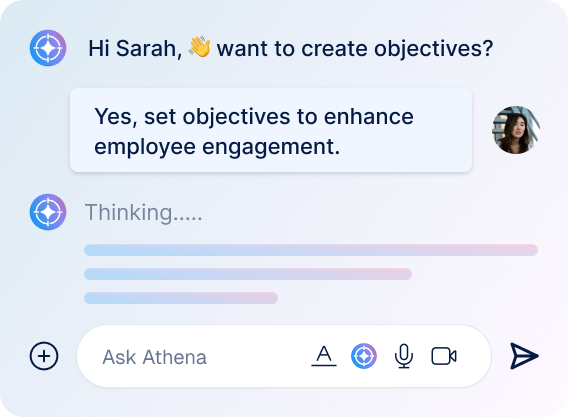
- AI Integration: “Some of the recent innovation and integration of AI into creating objectives and key results has been really helpful. I’ve seen a couple light bulbs go off with that one.”
The AI Advantage
- Fixes Setup Issues: “Sometimes people know what they need to do, but they struggle with the wording and formatting in the methodology we’re used to, to create a solid objective or key result.”
- Speeds Up Process: “That tool really helps to create the wording and put it in the proper format and really make it a true objective and key result that works with the system. They can type in more of what they’re thinking, and then the AI tool will automatically transform it into something that’s easy for them to literally paste straight into the objective.”
- Sales Team Benefits: “Especially across our sales organization they really want to focus on the customer and focus on achieving their revenue, and minimize the time that they’re in the tool, putting in data and entering data because they’re thinking, “Hey, I really want to make sure that I’m driving the revenue with the customer and taking care of my customers.”
Conclusion
REHAU Building Solutions (Americas) went from good to great by adopting OKRs with Profit.co. The result: sustained double-digit growth, 90% of strategic objectives achieved, and a stronger culture of accountability and collaboration.