

Profit.co allows you to create the Objectives and Key results quickly and easily via the Quick Create option.
Why this feature?
- This feature allows you to create your Objectives and Key results instantly without needing to go through a lot of steps.
- Instant OKR creation saves time and effort and helps teams focus on their goals faster.
Creating Objectives using Quick Create:
Step 1
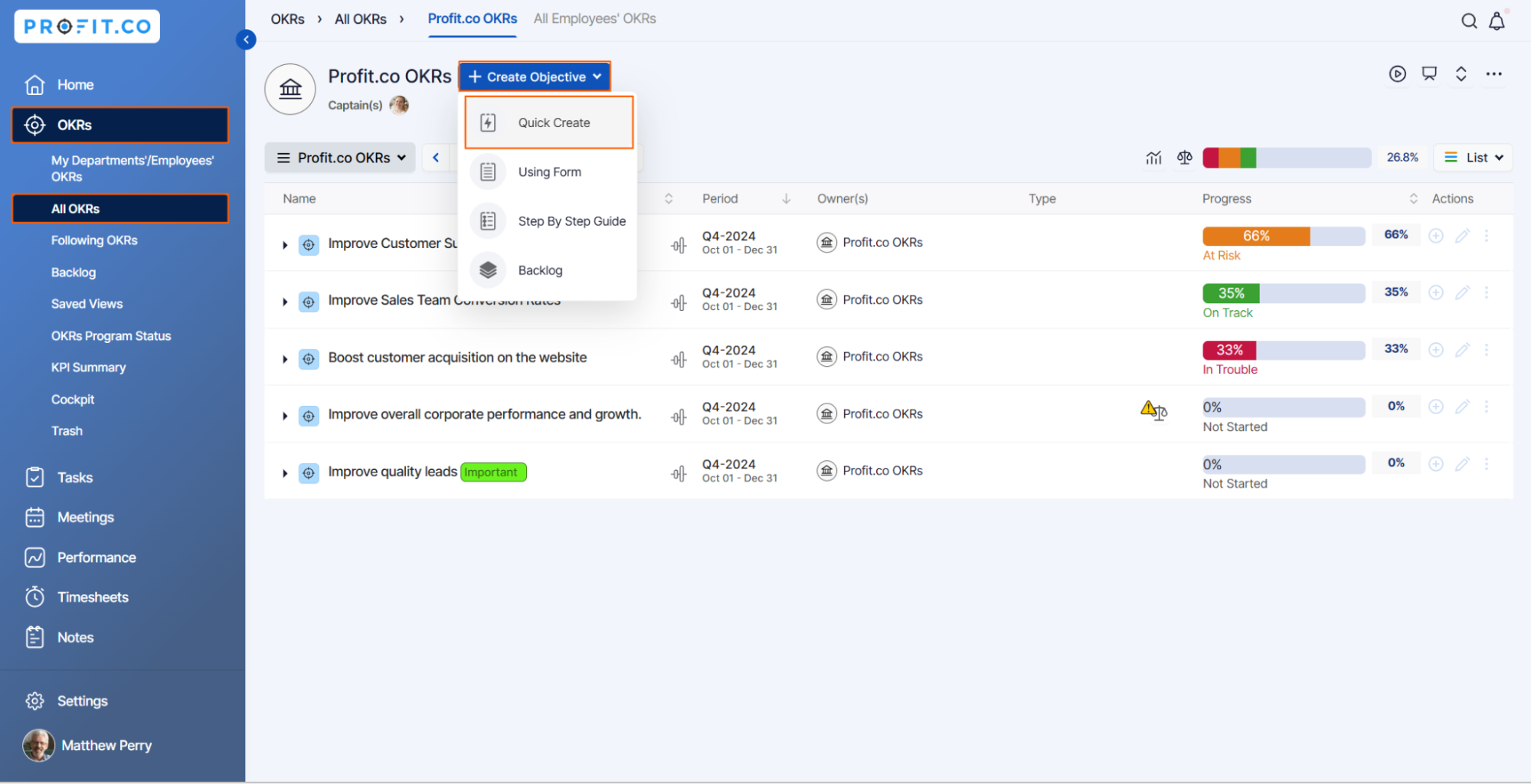
Navigate to OKRs → All OKRs. On the All OKRs page, Click on the + Create Objective button and select the Quick Create option.
Step 2
Create your Objective and click Save.

Step 3
The Objective will be created. By default, the Target date will be set to the current quarter.

Creating Key results using Quick Create:
Step 1
Under the Objective, click on the Add a new key result→ Quick Create.

Step 2
Create your Key Result and click Save.
While creating key results you can select the key result type by clicking on the following drop-down icon. Here the key result type Percentage KPI is selected.

Step 3
Also, you can select Assignees for your key result by clicking on the Assignee Icon/Name in the OKRs list page.

Step 4
The Key Result will be created.

Related Blog Post:
To learn more about what a KPI dashboard is, click here.
