TL;DR
PMO-to-Value Delivery Office transformation follows a five-phase roadmap: establish value metrics that matter to executives, kill zombie projects to build credibility, create a CFO partnership on capital allocation, implement continuous value monitoring, and become a strategic orchestrator. Success requires joint CFO-CIO sponsorship, willingness to make hard termination calls, and patient persistence through organizational resistance.Three months ago, I was on a call with a VP of Project Management at a financial services company. She’d just attended a conference where Value Delivery Offices were the hot topic.
“I get it,” she said. “We need to change. But where do we actually start? And how do we know we’re making progress?”
Here’s the truth: the PMO-to-Value Delivery Office transformation isn’t a rebrand or a tool upgrade. It’s a fundamental operational shift that typically takes a few months. But it follows a predictable roadmap. Let me walk you through it.
The Five-Phase Transformation
Most successful transformations follow this sequence. You can compress it slightly if you have strong executive sponsorship and an organizational appetite for change.Phase 1: Establish Value Metrics
The transformation begins by changing what you measure. Traditional PMOs measure project health. Value Delivery Offices measure portfolio investment performance.What you’re building:
- Portfolio outcome map: Every initiative is mapped to explicit strategic outcomes with quantifiable targets
- Portfolio ROI dashboard: Actual vs. projected value delivery across all active initiatives
- Capital efficiency metrics: Cost of capital compared against realized benefits
- Financial language translation: All portfolio performance is expressed in CFO terms
Critical success factor: Obtain explicit validation from the CFO and CEO that these are the metrics they’ll use to judge portfolio effectiveness.
Don’t assume your new metrics matter. Present them. Ask directly: “Will you use these metrics to evaluate whether we’re allocating capital effectively?” If the answer is yes, you have executive buy-in. If the answer is hesitation or silence, you’re not done yet.
Common failure pattern: Teams build beautiful outcome dashboards but never validate with executives whether these metrics actually matter to them. Six months later, they’re still presenting data nobody uses.
Success milestone: The CFO references your portfolio ROI data in a board meeting or financial planning discussion.
“The best way to predict the future is to create it.”

Phase 2: Kill the Zombie Projects
Nothing builds Value Delivery Office credibility faster than demonstrating you can make hard calls. Every portfolio has zombie projects, initiatives that should have been terminated quarters ago but limp forward, consuming budget and talent because nobody wants to pull the plug.What you’re doing:
- Conduct an honest portfolio value assessment using the new ROI framework
- Identify 3–5 initiatives delivering returns below the hurdle rate or lacking strategic alignment.
- Build termination business cases showing opportunity cost of continuing versus reallocation benefit
- Get CEO and CFO sponsorship for terminations
- Execute terminations professionally
- Reallocate freed capital to highest-value opportunities
Critical success factor: You need executive sponsorship before you start killing projects. Without it, you’ll face political backlash that derails the transformation.
Common failure pattern: Teams identify zombie projects but lack courage to actually terminate them. They recommend “pausing for further analysis” or “descoping to reduce risk.” This reinforces the perception that PMOs can’t make hard calls.
Success milestone: Leadership team explicitly views you as a strategic decision-maker capable of making difficult portfolio choices.
Stop measuring progress. Start measuring impact
Phase 3: Build Financial Partnership
Value Delivery Offices succeed when CFOs view them as partners in capital allocation, not IT cost centers. This phase is about systematically building that partnership.What you’re doing:
- Integrate portfolio planning with annual budget cycles (portfolio decisions drive capital allocation)
- Translate all portfolio performance into financial language (NPV, IRR, payback period, cost of capital, benefits)
- Establish regular Value Delivery Office and CFO portfolio reviews focused on investment performance
- Create joint Value Delivery Office and Finance portfolio optimization process for quarterly rebalancing
- Position yourself as CFO’s trusted source for capital allocation effectiveness data
Critical success factor: Stop presenting project data to the CFO. Only present investment performance data. Every metric should answer the question: “Are we allocating capital effectively?”
Common failure pattern: Organizations create separate CFO and CIO versions of portfolio performance, each with different definitions, calculations, and priorities. This creates confusion and prevents a deep, real executive partnership. You need a single source of truth with role-specific perspectives.
Success milestone: CFO explicitly references your portfolio data in financial planning or strategy discussions. The CFO asks you for a portfolio analysis, unprompted.
Phase 4: Implement Continuous Value Monitoring
Traditional PMOs discover problems during quarterly reviews. Value Delivery Offices implement continuous monitoring by tracking outcomes using leading and lagging indicators that surface value delivery risks in real time.What you’re building:
- Value-at-risk thresholds for each strategic outcome (When do leaders need to know? What triggers immediate action?)
- Automated monitoring that tracks leading indicators of strategic value delivery
- Escalation protocols (What triggers immediate reallocation conversations? Who gets alerted? What’s the response timeline?)
- Rolling quarterly portfolio rebalancing with pre-authorized reallocation authority
Critical success factor: Continuous monitoring only works if you have clear thresholds and escalation triggers. Monitor the leading indicators that predict strategic outcome failure.
Common failure pattern: Teams build comprehensive monitoring dashboards that track everything but don’t define clear thresholds or escalation triggers. Result: information overload without action triggers. Executives ignore the dashboard because it doesn’t tell them what and when to act.
Success milestone: Leadership identifies and responds to a portfolio risk at least 8 weeks earlier than your old quarterly review process would have surfaced.
Phase 5: Become the Strategic Orchestrator
The final phase is positioning the Value Delivery Office as the enterprise’s strategic orchestrator, the function that connects strategy, capital allocation, and value delivery.What you’re building:
- Strategic sensing capability: Identifying emerging opportunities and threats that should trigger portfolio rebalancing
- Value Delivery Office participation in enterprise strategic planning (portfolio reality informs strategy development)
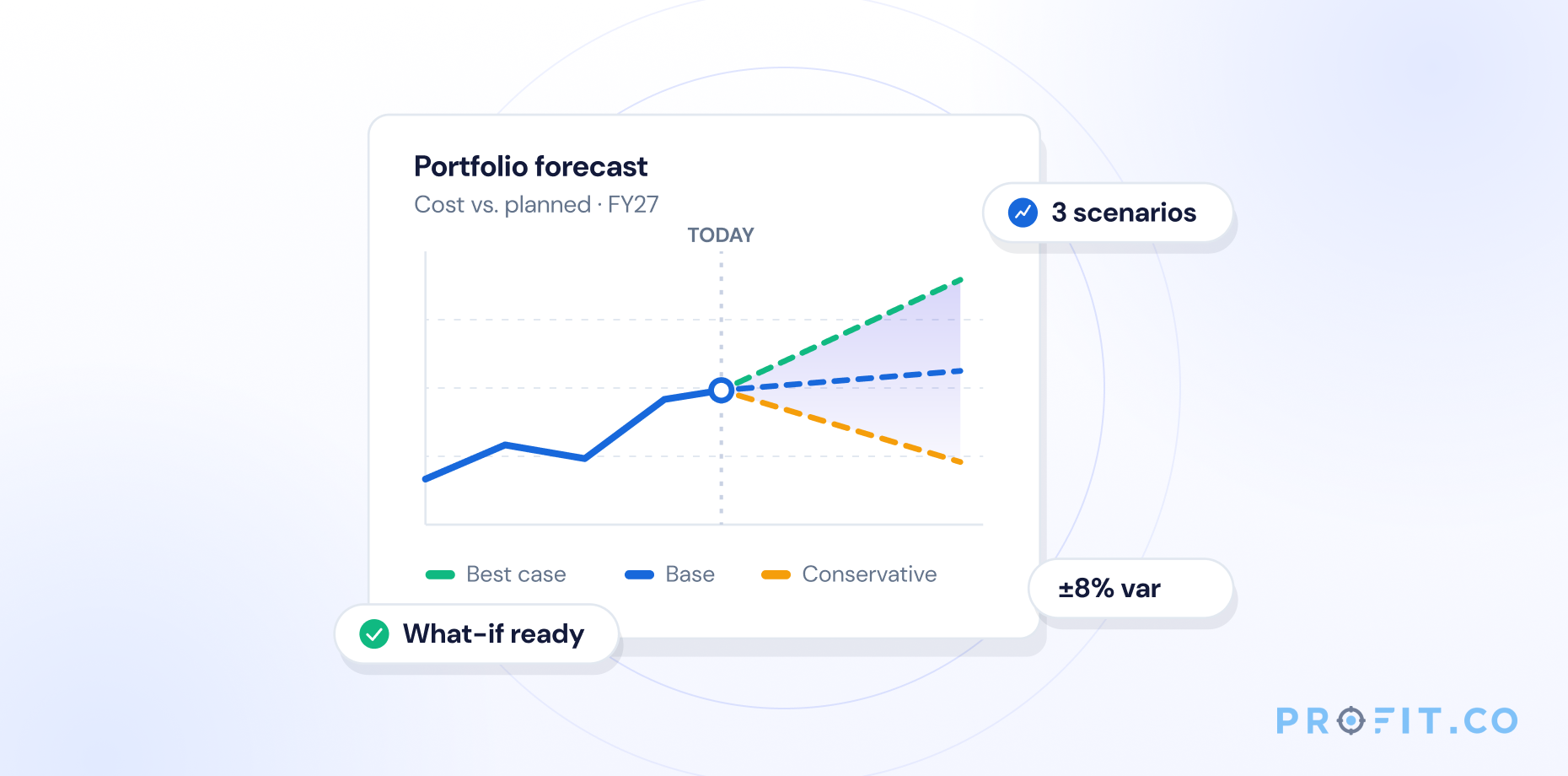
- Portfolio scenario planning: Helping leadership understand strategic options and capital allocation implications
- Benefits realization capability: Ensuring outcomes happen, not just initiatives complete
Critical success factor: You can’t force your way into strategic planning. You earn a seat by demonstrating you have insights executives need. Build credibility and then expand into strategic orchestration naturally.
Common failure pattern: Teams try to jump directly to the “strategic orchestrator” role without first establishing credibility through value metrics, hard calls, and CFO partnership. Result: executives view this as PMO overreach and push back.
Success milestone: CEO asks you to lead or participate in strategic initiative prioritization discussions or annual planning.
What Derails Transformations
Three factors kill most PMO-to-Value Delivery Office transformations before they complete:1. Lack of Joint Sponsorship
Value Delivery Office transformation cannot be owned solely by IT. It requires joint sponsorship from both CFO (who owns capital allocation) and CIO (who owns technology strategy). Without CFO sponsorship, Value Delivery Office remains an IT function trying to speak finance language. Without CIO sponsorship, Value Delivery Office lacks credibility with technology delivery teams. Both sponsors need to be actively engaged, not just nominally supportive.2. Unwillingness to Kill Projects
The hardest part of Value Delivery Office transformation is killing zombie projects. Organizations unwilling to terminate failing initiatives regardless of political pressure or sunk costs should not pursue a Value Delivery Office transformation. You’ll just create another layer of reporting without the credibility that comes from making hard calls.3. Expecting Immediate Results
PMO-to-Value Delivery Office transformation typically takes a few months to fully complete. Phase 1 feels uncomfortable (exposing portfolio problems). Phase 2 creates political tension (killing projects). Phase 3 requires patience (building CFO trust takes time). Organizations expecting instant transformation abandon the effort during these uncomfortable early phases.You need patient persistence and the ability to continue measuring value delivery, make hard calls, and build financial credibility, even when organizational momentum pushes back.
How to Know It’s Working
You’re making genuine progress when:- You’ve killed at least two zombie projects and executives notice you’re willing to make hard calls
- CFO starts using your portfolio ROI data in financial discussions without you prompting them
- You surface a portfolio risk weeks earlier than your old process would have, and leadership reallocates capital based on your recommendation
- The CEO asks you to participate in strategic planning or major initiative prioritization
If these milestones are happening, you’re transforming, not just rebranding.
The Bottom Line
PMO-to-Value Delivery Office transformation is an operational evolution that happens in phases. You can’t shortcut it. You can’t rebrand your way there. You can’t tool your way there. You have to fundamentally change what you measure, how you govern, who you serve, and what value you create. But when you do, you transform from organizational overhead into a strategic weapon.Discover how to continuously realign initiatives to the outcomes that matter most
This is a make-or-break moment. If your organization isn’t willing to terminate failing initiatives despite CFO/CEO sponsorship, you don’t have the cultural readiness for Value Delivery Office transformation. Either pause until you have genuine executive commitment to portfolio discipline, or acknowledge you’re building better PMO reporting, not making a true transformation.
Both approaches work. External advisors can accelerate by bringing proven frameworks and providing political air cover for hard decisions. Internal teams save cost and build deeper capability. The key success factor isn’t internal vs. external, it’s whether you have joint CFO-CIO sponsorship and willingness to make hard calls.
Expect discomfort. Phase 1 exposes portfolio problems that traditional PMO reporting obscures. Phase 2 creates political tension. Phase 3 requires patience. Track small wins: first CFO data reference, first successful project termination, first early risk detection. Share these wins with sponsors to demonstrate progress even when transformation feels hard.
Build structural reinforcement: joint CFO-CIO governance, value metrics embedded in executive dashboards, continuous monitoring with automated alerts, pre-authorized rebalancing authority. The key is making Value Delivery Office behaviors systematically reinforced, not dependent on individual discipline. When systems enforce the new model, regression becomes harder.