TL;DR
It’s time for traditional annual reviews to go away. Dynamic performance conversations take the place of yearly reviews with ongoing, meaningful conversations that really help employees grow. This guide will show you how to move from doing evaluations once a year to giving ongoing coaching that really works. Find out how to make performance management something your team looks forward to instead of dreading by learning useful frameworks, conversation strategies, and tools.It’s December, and you’re in a panic trying to remember what your team members did in February. Does this sound familiar? You’re not the only one who has ever felt like a performance review was more like a court hearing than a conversation about growth. The old way of managing performance once a year doesn’t work anymore, and managers all over the world are realizing that waiting 365 days to talk about performance is obsolete. Your best workers aren’t sitting around waiting for their annual review to see how they’re doing. They want feedback right away, real chances to grow, and managers who care about their growth now, not just at the end of the fiscal year.
Let’s talk about how to change your way of judging people once a year to dynamic and ongoing coaching conversations that really work.
Why Annual Reviews Are Keeping You From Moving Forward
When was the last time you were really excited about an annual performance review? Yeah, we don’t either.When managers and employees have to review each other’s work, it makes for a strange situation where managers are judges and employees are defendants. People are stressed, nothing feels real, and by the time you talk about your goals for the first quarter, no one can remember the details well enough to make the conversation useful.
But here’s the most important thing: employees who get feedback on a regular basis are three times more engaged than those who wait for their annual reviews. When you stop judging and start coaching, something amazing happens: people start to see their boss as a partner in their success instead of someone who is judging them with a clipboard
“To be able to ask a question clearly is two-thirds of the way to getting the answer.”

What Makes Conversations About Dynamic Performance Management More “Dynamic”?
Dynamic performance conversations aren’t just regular meetings; they completely change your thinking. You are no longer asking, “How do I judge this person?” Instead, you are asking, “How do I help this person become great?”Here’s what managers need to know about dynamic performance management conversations.
- Not episodic, but continuous: Instead of one big download session, you’re having smaller talks all year long
- Two-way conversation: Your team members should be talking more than you are. It shouldn’t feel like you’re giving a speech where you list everything you’ve seen. They’re group explorations of growth
- Looking ahead: You’ll definitely talk about what happened, but the focus will be on what’s next. You’re not living in the past; you’re building the future
- Customized: Your analytical problem-solver and your creative innovator will not be able to use the same thing. Dynamic conversations change to fit each person’s needs, strengths, and way of talking
- Data-driven and clear: You can always see your goals, progress metrics, and feedback in real time, so you don’t have to guess or rely on memory. You and your team members can always see where things stand, which makes conversations more objective and useful
What Changes in Dynamic Performance Conversations
| Annual Reviews | Continuous Coaching |
|---|---|
| One-Way Judgment | Two-Way Dialogue |
| Past-Focused | Future-Focused |
| Generic Approach | Personalized Growth |
| Memory-Based | Data-Driven |
How the Dynamic Performance Management Framework Helps Managers Move From Assessment to Empowerment
Here’s how to set up conversations that lift you up instead of bringing people down: Start with what you do well, not what you do wrong. Start every conversation by talking about what’s going well. When they know you value them, people are more open to discussing areas for improvement. It’s about building trust. You could start with, ” I’ve been paying attention to how you’ve been handling client calls lately.” It’s very impressive how well you can stay calm when things get tough. “Let’s talk about how we can build on that…”Ask Questions That Make Employees Think
The best coaching is when people find the answers on their own. Instead of telling someone what to do, help them find their answers. Sometimes the easiest way to keep these conversations natural is to ask a few open-ended questions and let the person do the talking. Here are some you can lean on anytime:- “What’s been going well for you lately?”
- “What’s been harder than it should be?”
- “What are you feeling stuck on right now?”
- “What part of your work is giving you energy?”
- “What’s draining your energy?”
- “What do you want to get better at next?”
- “What support from me would make the biggest difference this month?”
- “If you could change one thing about how we work together, what would it be?”
You don’t need to ask all of these in one meeting. Pick one or two, listen closely, and follow the thread. These questions change the way things work, from top-down directions to working together to solve problems.
Link Each Person’s Work to a Larger Goal
People do better work when they know how important it is. In every conversation, make sure to explain how what they’re doing affects the team, customers, or the organization.Some conversations Managers can have with teams
1. The Sunk Cost Trap
- For example, “The way you help our newer team members is helpful.” The way you’ve been teaching them is directly helping us grow while keeping our culture intact. That is important.
- Show the effect on others: Show workers how their work affects people outside of their own team. “The thorough paperwork you make? The customer service team uses it every day, which helps customers get answers faster. Your attention to detail is making their jobs easier.”
- Link to the results for customers: “Your work is making things better for real people, our customers. You also made it easier for thousands of people to finish their purchases.” Make clear connections between what they do and how well customers do.
- Link daily tasks to long-term goals: “I know data entry can be boring, but the accuracy you keep up lets our leadership team make smart choices about where to invest next quarter.”
Ready to track your team’s progress in real time
Make the next steps clear Together
Conversations that are dynamic shouldn’t end with vague promises or unclear expectations. Before you finish, work together to make specific, actionable promises that make it clear to everyone what will happen next:- Set clear goals: What will they work on before you talk to them again? Be clear. Instead of saying, “work on your communication skills,” say, “practice giving project updates using the three-point structure we talked about.”
- Find the resources you need: What do they need to succeed in terms of help, tools, training, or access? Sometimes growth stops not because of lack of effort, but because of missing resources that you can easily provide
- Set success metrics: How will you both know that they are getting better? Make it clear what the signs are so there is no doubt. “You’ll know you’re getting better when at least two cross-functional partners provide you favorable feedback” is much better than “Are you confident that all is well?”
- Be clear about your role: What exactly do you need to do to help them grow? It could be making an introduction, approving a course enrollment, or giving weekly feedback on a skill. Say it out loud.
- Set dates for checkpoints: When will you come back to this talk? Don’t leave it up in the air. “Let’s check in on this during our one-on-one two weeks from now” makes both of you responsible
- Take down obstacles ahead of time: Simply ask, “What might get in your way?” Then work together to solve problems before they happen. This shows that you care about their success and aren’t just watching it.
- Celebrate small victories: Talk about how you’ll celebrate progress along the way, not just when you reach your goal. This keeps people motivated on longer journeys of development.
Put these promises in writing where both of you can see them, like in shared documents, your performance management platform, or meeting notes. This openness builds trust and responsibility.
How to Make Continuous Feedback Happen
Everyone loves the idea of getting feedback all the time until it’s 4 PM on Friday, and there are 17 other things that need their attention.Here’s how to keep conversations going:
1. Set up regular meetings
Set aside 30 minutes every week or every other week for one-on-one meetings with each team member. Don’t cancel these meetings for “more important” things; treat them like client meetings. The truth is that it is important to develop your people.Keep it simple. You don’t need to have a new agenda every time. A simple, repeatable structure could look like this:
- Wins since we last talked (five minutes ago)
- Problems or roadblocks (10 minutes)
- Focus on development (10 minutes)
- Help needed (5 minutes)
Here’s a simple way to check if your performance conversations are on track. If you’re doing most of these, you’re already ahead:
2. Use technology wisely
You can use modern platforms to keep track of your goals, write down conversations, and see how things change over time. Find tools that combine goals with notes from conversations so you don’t have to switch between six different systems. The most important thing is to find software that makes writing down information easier, not harder. If you’re spending more time taking care of the tool than having real conversations, something is wrong3. Normalize Feedback in Real Time
Don’t wait for meetings to share what you’ve seen. Tell someone right away if they do a great job on a presentation. If you notice a pattern of communication that is causing issues, please address it promptly and privately. Quick feedback is better because it’s specific and useful. For example, “Hey, the way you handled that tough question in today’s meeting was perfect—you stayed curious instead of defensive” is more helpful than bringing it up three weeks later.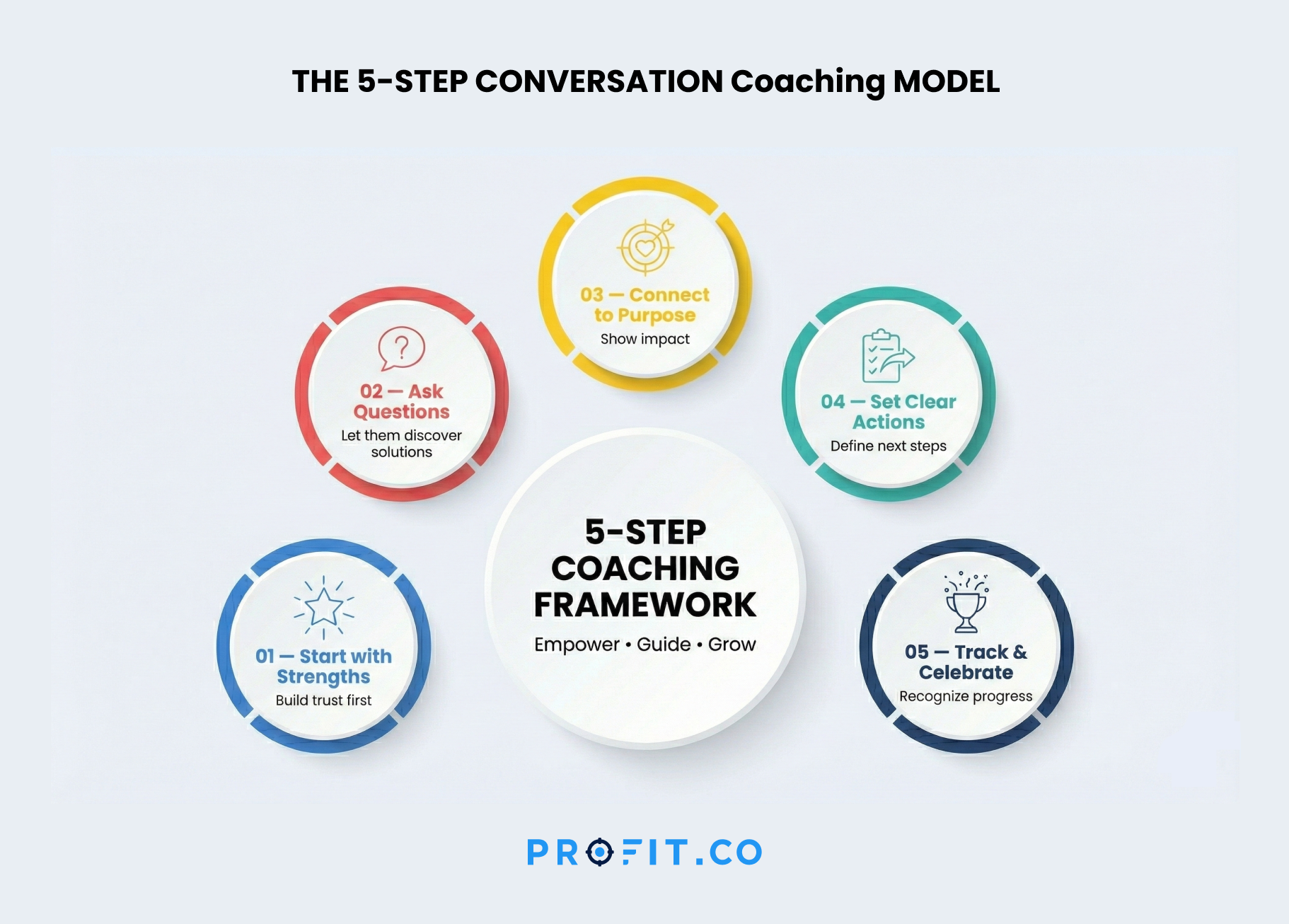
Useful Models for Better Coaching Conversations
Don’t know where to begin? You can use these frameworks to help youThe “What, So What, Now What” Model
- What: Objectively describe the exact behavior or situation “You missed the deadline for the client report (what).
- So What: Look into the effects and consequences together. This set off a chain reaction for the team and hurt our credibility with the client (so what).
- What to Do Now: Make a decision about what to do next “Let’s figure out what got in the way and how we can stop it from happening again.”
The Roadmap Method
This framework helps you have meaningful conversations about growth while keeping your teams’ goals and current reality clear:- Where to go: Set a goal for your career What does this person want to do with their career? You can give them useful opportunities today if you know what they want to do in the future and what skills they want to learn. One important question is, “What kind of work makes you feel most alive, and where do you see yourself in three years?”
- Where you are right now: Look at what you can do right now What are their skills, experience, and readiness levels right now? This honest evaluation finds strengths to build on and weaknesses to fix. Here, real-time performance data gives us objective information. The most important question is, “What are you best at right now, and where do you have the most room to grow?”
- Choices for routes: Look into different paths There is rarely only one way to reach a career goal. Talk about different ways to get there, like moving sideways, taking on new projects, getting formal training, getting a mentor, or working with people from other departments. Each has its own time frame and trade-offs. Important question: “What are two or three things you could do to get the experience you want?”
- Next Exit: Find something to do right away What is the next step they can take right now? This should be clear and doable and have a deadline. Instead of making plans that never end, you should build momentum through action.
This framework turns vague career talks into clear, accountable strategic development plans.
The Strength-Leverage Plan
Instead of focusing on weaknesses, think about how to use your team strengths to their advantage: Find two or three main strengths.Talk about how these strengths help them do well right now. Think of ways to use these strengths to face new problems or areas for growth. People grow faster when they build on their strengths than when they are always fixing their weaknesses.Dealing with Difficult Conversations
Some conversations about performance are just challenging. When someone is having a hard time, don’t shy away from hard talks. Talk about performance problems early, with understanding and clarity:- Be clear about what you’re seeing
- Don’t mix up behavior with identity (focus on what people do, not who they are)
- Look into the root causes together; there may be systemic problems you haven’t thought of yet.
- Set clear goals and help people reach them
Even people who do well need coaching. Give them stretch assignments, pair them with mentors, and talk to them honestly about their career paths, even if it means they might leave your team someday.
If team dynamics are bad, take on a coaching role that helps people work out their problems on their own. Help people talk instead of telling them what to do.
Using Measurements That Matter
How can you tell if dynamic performance conversations are effective? Look at more than just traditional metrics; look at qualitative indicators as well:- Are your team members coming to you with their problems sooner?
- Do they come to talks ready with their own ideas?
- Are the goals for development really moving forward between meetings?
- Has the level of employee engagement gone up?
- Is retention going up?
Also, think about how these conversations make you feel: do they give you energy or drain it? If every conversation feels like pulling teeth, something needs to change.
5 Things to Avoid During Your Performance Conversation
- Over-documenting. Don’t let taking notes take over the conversation. Take notes on important points, but stay present.
- If you’re doing 80% of the talking, you’re not coaching; you’re lecturing.
- Please remember to celebrate wins while you’re trying to solve problems. Recognition drives people to work harder.
- Canceling one-on-ones often sends the message that development is unimportant.
- If you say you’ll get someone a training resource or make an introduction, do it. When promises are broken, trust goes away.
The Bottom Line
Annual performance reviews look at people as data points. Dynamic performance conversations treat them like people who can do better. It’s not about having more meetings; it’s about having better ones. It’s about replacing judgment with curiosity, evaluation with empowerment, and yearly surprises with growth that never ends. Your team members don’t need your permission to grow. They’re looking for managers who will grow with them, who see potential instead of just problems, and who care enough to have regular, meaningful conversations about how they can improve. You could be that manager. Starting now.Start by scheduling regular one-on-ones with everyone on your team
At least once every two weeks, have one-on-ones, and check in once a week. It’s more important to be consistent than to do it often. Choose a rhythm that you can stick to.
First, ask better questions. They won’t listen if you’re the only one talking. Also, be patient. If they’re used to yearly reviews, it will take time for them to trust a new way of doing things.
Don’t look at them as two different things. Managing is coaching. Those 30-minute talks stop bigger problems from happening and make teams that work better and need less micromanagement.
Coaching is all about helping someone find their own answers by asking questions and giving them advice. When you mentor someone, you usually share your own experiences and give them advice. Both are useful, but coaching leads to growth that lasts longer.
Of course. In fact, they’re even more important when you don’t see people every day. Remote coaching works very well when people can talk to each other clearly, share documents, and make video calls.