Employee recognition and performance management software is a unified platform that connects peer recognition, manager feedback, goal tracking, and performance analytics in one system, so appreciation is tied directly to the work that earns it, not separated from performance outcomes. When recognition and performance live in separate tools, employees feel good in the moment but lack the strategic clarity that sustains engagement over time.
In this guide
- Why Is Employee Recognition Alone No Longer Enough to Drive Performance?
- What Does a Unified Recognition and Performance Platform Include?
- How Do Recognition and Performance Management Work Better Together?
- What Are the 6 Key Features to Look For?
- Standalone Tools vs Unified Platform: How Do They Compare?
- Why Does Connecting Recognition to Performance Outcomes Matter?
- What Business Benefits Can You Expect?
- Who Should Use This Software?
- Frequently asked questions
TL;DR
Employee recognition and performance management software bring motivation and accountability together on one platform. By connecting recognition, feedback, goals, and performance tracking, organizations can improve engagement, reduce attrition, and turn everyday work into measurable results.
Most organizations already have some form of recognition in place. The challenge isn’t that appreciation is absent. It’s that it’s disconnected from the system where work actually happens. This article breaks down how unified recognition and performance software solves that, and why the distinction between connected and standalone tools matters more than it looks.
Why Is Employee Recognition Alone No Longer Enough to Drive Performance?
Most organizations already recognize the importance of employee recognition. Shout-outs, rewards, and appreciation programs have become common. But here’s the catch: recognition without performance context feels good, but it doesn’t always move the needle.
The average recognition program doesn’t fail because employees don’t appreciate being recognized. It fails because recognition becomes decoupled from the work. A shout-out that isn’t anchored to a goal, a milestone, or a measurable outcome is just noise, and employees can tell the difference.
Employees want to know:
Why they are being recognized
How their work contributes to larger goals
What success looks like over time
How their work impacts team performance
That’s where employee recognition and performance management software helps. It connects appreciation to outcomes, ensuring recognition reinforces the behaviors and results that matter most.
What Does a Unified Employee Recognition and Performance Management Platform Include?
Goal and performance management software is a unified platform that connects:
Continuous employee recognition, peer-to-peer and manager-led
Goal and performance tracking
Feedback and check-ins
Analytics and insights on engagement and outcomes
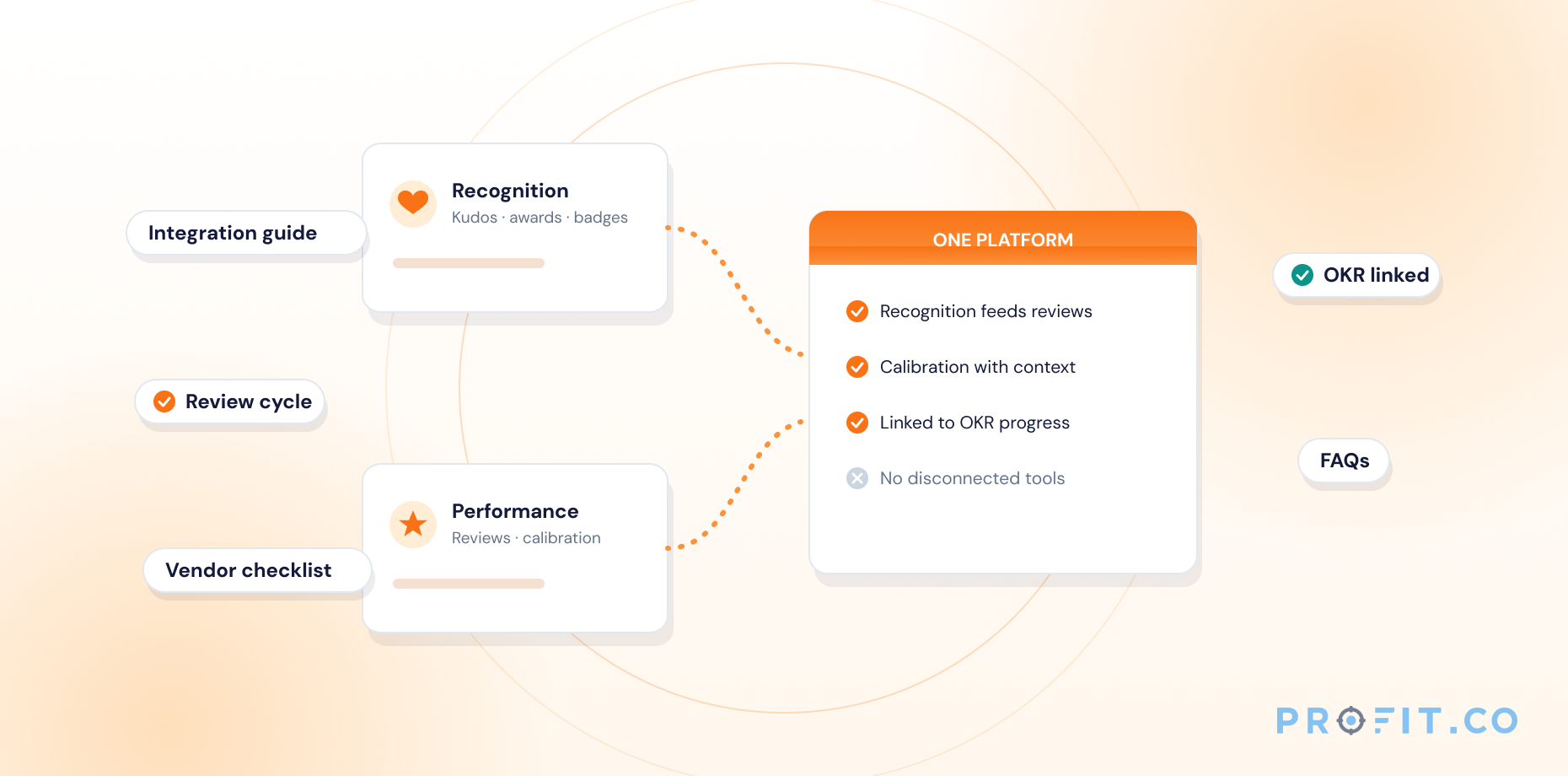
In a connected platform, these four components live in a single workspace, so a manager can view a team member’s check-in history, their active OKR progress, and any recognition they’ve received, all from one dashboard without switching systems.
Instead of running recognition programs and performance reviews in isolation, this software creates a shared system where motivation, execution, and results all have one single view.
How Do Recognition and Performance Management Work Better Together?
Recognition Reinforces the Right Behaviors
When recognition is tied to goals, OKRs, or performance milestones, employees clearly see what success looks like. Appreciation becomes strategic, not random.
Performance Feels More Human
Traditional performance management often feels transactional or stressful. Adding recognition introduces balance; employees receive acknowledgment alongside feedback and expectations.
Managers Get Real-Time Visibility
Managers can see who is contributing, collaborating, and delivering results, not just at review time, but continuously.
Employees Stay Engaged and Aligned
Recognition boosts morale. Performance clarity provides fairness and direction. Together, they reduce disengagement and burnout.
Explore How a Unified Recognition and Performance Platform Drives Engagement, Alignment, and Execution
What Are the 6 Key Features to Look for in Recognition and Performance Software?
Goal-linked recognition connects an appreciation moment directly to a specific objective, key result, or milestone, so recognition reinforces a measurable outcome rather than a general impression of effort.
Goal-Linked Recognition
Recognize employees directly on goals, projects, or outcomes.
Peer-to-Peer and Manager Recognition
Enable appreciation across teams while maintaining governance and consistency.
Performance Tracking and Insights
Track progress, contributions, and impact using dashboards and analytics.
Values-Based Recognition
Tie recognition to company values so culture is reinforced daily, not just on posters.
Continuous Feedback and Check-Ins
Replace annual reviews with ongoing conversations supported by real data.
Meaningful Rewards
Allow employees to redeem recognition points for rewards that actually matter to them.
Of these six features, goal-linked recognition is the one most organizations skip. They configure rewards and check-in templates but leave recognition floating as an independent gesture. That’s where the integration breaks. A platform that tracks goals without surfacing recognition on those goals is just two systems dressed up as one.
How Does Unified Recognition and Performance Software Compare to Standalone Tools?
Many organizations start with standalone employee recognition tools to improve morale. While these platforms serve a purpose, they often operate in isolation from how work is planned, executed, and evaluated.
| Dimension | Standalone Recognition Tools | Unified Recognition + Performance Platform |
|---|---|---|
| Goal connection | Operates separately from goals and performance systems | Recognizes employees on real work, goals, and milestones in the same system where performance is tracked |
| Focus | Rewards rather than outcomes | Reinforces behaviors that drive business results, not just activity |
| Manager visibility | Limited insight into how recognition impacts results | Continuous visibility into contributions tied to outcomes |
| Data utility | Relies on HR-driven programs instead of day-to-day execution | Turns recognition data into actionable performance insights |
The Connected Recognition Model
Instead of asking “Who is being recognized?”, leaders can answer: “What results are being reinforced?”
A unified platform embeds recognition directly into goal tracking, OKRs, projects, and performance conversations. AI-assisted progress monitoring surfaces recognition-worthy moments automatically, so managers don’t rely on memory or manual cues to identify high-impact contributions.
When appreciation, goals, and performance live in one system, recognition becomes a management tool rather than a morale program. Explore employee engagement features that connect recognition to measurable outcomes.
Why Does Connecting Recognition to Performance Outcomes Matter?
Recognition alone boosts morale. Recognition tied to performance builds accountability, clarity, and sustained engagement.
Here’s what most HR leaders discover too late: the organizations with the highest recognition program participation often have the same attrition rates as organizations with no program at all. Frequency of recognition without connection to performance outcomes doesn’t retain people. It just makes them feel better before they leave.
For growing organizations, this distinction has compounding effects. When recognition reinforces strategic behaviors, managers can reduce the amount of correction needed in performance reviews. When recognition is detached from strategy, it creates a culture where people feel good about the wrong things, and are surprised when reviews reflect a different reality.
For organizations focused on long-term growth, execution, and alignment, employee recognition and performance management software delivers far more value than standalone recognition tools.
What Business Benefits Can You Expect from a Unified Recognition and Performance Platform?
Higher employee engagement and morale
Improved goal alignment and execution
Stronger performance conversations
Reduced voluntary attrition
Clear visibility into who is driving results
The organizations that sustain these benefits share a common pattern: they changed when recognition happens. Instead of saving appreciation for all-hands or quarterly reviews, managers in high-performing teams recognize specific contributions in the same week, sometimes the same day, they occur. That timing is what makes recognition land as feedback rather than ceremony.
Organizations that connect recognition with performance build accountability and ownership.
Who Should Use This Software?
Employee recognition and performance management software delivers the most value where execution visibility and engagement are both strategic priorities, typically in organizations that have outgrown ad hoc appreciation programs and need recognition connected to how work is actually measured.
HR leaders building modern people strategies
Managers who want continuous visibility into team performance
Fast-growing companies scaling culture and accountability
Enterprises replacing fragmented HR tools
Final Thoughts
Employees don’t just want to be appreciated; they want clarity, growth, and purpose. Employee recognition and performance management software bridges the gap between feeling valued and delivering results. It turns recognition into a strategic lever, not just a morale booster.
Recognition that isn’t connected to performance is just applause. Recognition that is connected to performance is a management system.
When appreciation, goals, and performance live in one system, engagement becomes a measurable advantage.
Connect Recognition to Real Performance Outcomes
Frequently Asked Questions
It is a unified platform that combines recognition, feedback, goal tracking, and performance insights to improve engagement and outcomes.
Standalone tools focus mainly on rewards and appreciation. Combined software links recognition to goals, performance, and measurable results.
Yes. Many organizations use it to shift from annual reviews to continuous performance management with real-time feedback and recognition.
Yes. When recognition is timely and tied to outcomes, it reinforces desired behaviors and improves motivation and execution.
Absolutely. Digital recognition and performance tracking improve visibility and connection across distributed teams.