Goal and performance management software connects company OKRs, team goals, continuous feedback, and performance reviews in one system. Instead of annual cycles built on memory and spreadsheets, leaders get real-time visibility into execution progress, so performance is measured on outcomes, not activity, and course corrections happen in weeks, not quarters. This kind of goal management software gives every team member, not just HR, a live view of how their individual goals connect to company outcomes.
Goal and performance management software helps organizations move from static annual reviews to continuous, outcome-driven performance. By aligning goals, OKRs, feedback, and reviews in one system, leaders gain clarity, teams stay focused, and performance improves in real time and not in hindsight.
Most organizations already know that annual reviews are a lagging indicator. What they underestimate is how much of the problem sits in the system architecture rather than the people running it. This article breaks down what modern goal and performance management software actually needs to include, and why the difference between systems that change behavior and systems that document it comes down to how goals, execution data, and performance conversations connect.
In this guide
- Why Does Traditional Performance Management Fail Modern Organizations?
- What Is Goal and Performance Management Software?
- What Is Goal Management Software?
- Goal Management Software vs. OKR Software
- Why Is Continuous Performance Management More Effective Than Annual Reviews?
- What Are the Core Capabilities of Goal and Performance Management Software?
- How Does a Connected Platform Unify Goal Management, Execution, and Performance Reviews?
- What Business Benefits Can Organizations Expect?
- Who Should Use Goal and Performance Management Software?
- What Is the Future of Goal and Performance Management?
- Frequently Asked Questions
Why Does Traditional Performance Management Fail Modern Organizations?
Most performance management systems were built for a different era. Annual reviews. Static goals. Feedback that arrives months too late. Meanwhile, modern organizations move fast. Priorities shift quarterly or even monthly. Teams collaborate across functions. Leaders need visibility now, not at the end of the year.
This gap is why many performance programs fail: goals, execution, and feedback are tracked in different systems. That’s where goal and performance management software can connect fragmented systems into a single view.
Most organizations don’t have a performance problem. They have a visibility problem. Strategy exists at the top. Execution happens at the frontline. The gap between the two isn’t laziness or misalignment. It’s architecture. Goals set in January that nobody revisits until November aren’t goals. They’re aspirations. The software that closes this gap doesn’t just track goals. It makes goals consequential.
What Is Goal and Performance Management Software?
Goal and performance management software is a unified platform that connects:
- Company, team, and individual goals
- OKRs and strategic priorities
- Continuous feedback and check-ins
- Performance reviews and evaluations
- Development and growth plans
In a connected platform, these components operate in a single workspace, so a manager preparing for a review can see an employee’s OKR progress, check-in history, and peer feedback side-by-side, without pulling data from separate tools or building a manual summary.
Instead of treating goals and reviews as separate HR exercises, this software turns performance into a continuous, measurable process tied directly to business outcomes.
What Is Goal Management Software?
Goal management software is a system that helps organizations set, track, and review goals of any kind: SMART goals, KPIs, OKRs, or MBOs, in one connected platform, replacing scattered spreadsheets and annual planning documents with a live, continuously updated view of progress.
Mechanically, the loop is simple. Teams set goals at the start of a cycle, track progress through regular check-ins as the work happens, and roll the results into performance reviews once the cycle closes. Each step feeds the next, so a goal set in week one is still visible, and still accurate, by the time review season arrives.
Profit.co builds this loop around its OKR-native PEEL cycle (Plan, Execute, Engage, Learn), pairing it with a 300+ built-in KPI library and six Key Result types, so the same platform that sets the goal also tracks it and feeds it into the review, without exporting anything to a separate tool.
Goal Management Software vs. OKR Software
Goal management software vs OKR software comes down to structure. Goal management software can track any goal type: SMART goals, KPIs, or MBOs, with flexible formats for each. OKR software enforces one specific structure: every goal is written as an objective paired with one or more measurable key results, on a fixed cadence.
| Dimension | Goal Management Software | OKR Software |
|---|---|---|
| Structure | Any goal format: SMART, KPI, MBO, or free-form | Objective paired with one or more measurable Key Results |
| Cadence | Flexible: annual, quarterly, or ad hoc | Fixed quarterly cycle (Profit.co’s PEEL: Plan, Execute, Engage, Learn) |
| Measurement | Varies by goal type; not every goal is quantified | Always measurable; Profit.co offers six Key Result types and a 300+ built-in KPI library |
| Best fit | Organizations mixing goal types across teams | Organizations standardizing on one strategic-execution framework |
| Example tool | General goal-tracking platform | Profit.co OKR software |
If your organization is choosing between the two, the deciding factor is usually how strictly you want every goal measured. Teams that need one enforced structure across the company typically move to OKR software; teams juggling several goal formats at once tend to stay with more flexible goal management software.
Why Is Continuous Performance Management More Effective Than Annual Reviews?
The gap between organizations that improve performance and those that just measure it isn’t capability. It’s cadence. Annual cycles create a 12-month delay between what goes wrong and when a manager learns about it. That delay is where strategy misalignment compounds into retention problems and execution gaps no review cycle can retroactively fix.
High-performing organizations don’t wait 12 months to find out what worked. They:
- Track progress weekly or monthly
- Course-correct goals in real time
- Give frequent, contextual feedback
- Review performance based on outcomes
Continuous performance management helps teams stay aligned while giving leaders confidence that strategy is actually being executed.
What Are the Core Capabilities of Goal and Performance Management Software?
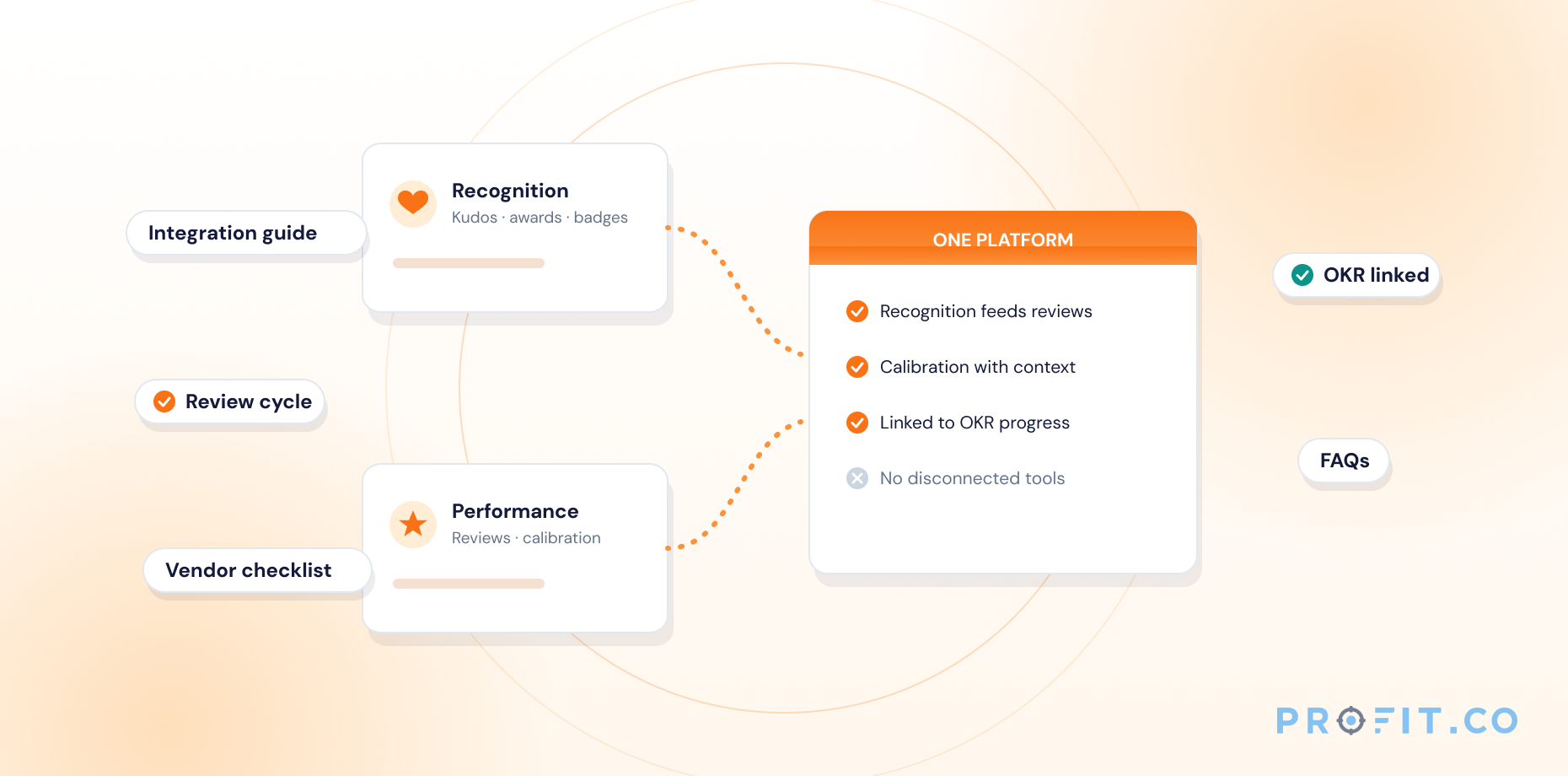
Modern goal and performance management software doesn’t operate in isolation. It connects tightly with OKR software, performance reviews, and continuous feedback systems to create a single execution and performance layer.
The critical distinction between platforms that change behavior and platforms that document it comes down to connectivity. A system where goals live separately from reviews forces managers to reconstruct a picture manually. A system where OKR completion rates, peer feedback, and check-in history surface in one view before a review conversation allows the data to speak before the manager has to.
1. Goal Setting and Alignment Across the Organization
At the heart of performance is clarity. Modern platforms allow organizations to cascade company goals to departments and teams, align individual goals to strategic objectives, and maintain visibility across all levels. With structured goal frameworks like OKRs, everyone understands not just what they’re working on but also why it matters.
2. OKR-Driven Execution, Not Just Tracking
Effective goal and performance management software connects OKRs to projects and initiatives, weekly check-ins and updates, and real-time progress dashboards. This creates a living system where execution data feeds performance conversations, making reviews factual, not subjective.
3. Continuous Feedback and Check-Ins
Annual feedback is outdated. Modern systems support continuous feedback through ongoing manager-employee check-ins, peer and cross-functional feedback, and feedback tied directly to goals and outcomes. This builds a culture where feedback is timely, relevant, and actionable.
4. Flexible Performance Reviews
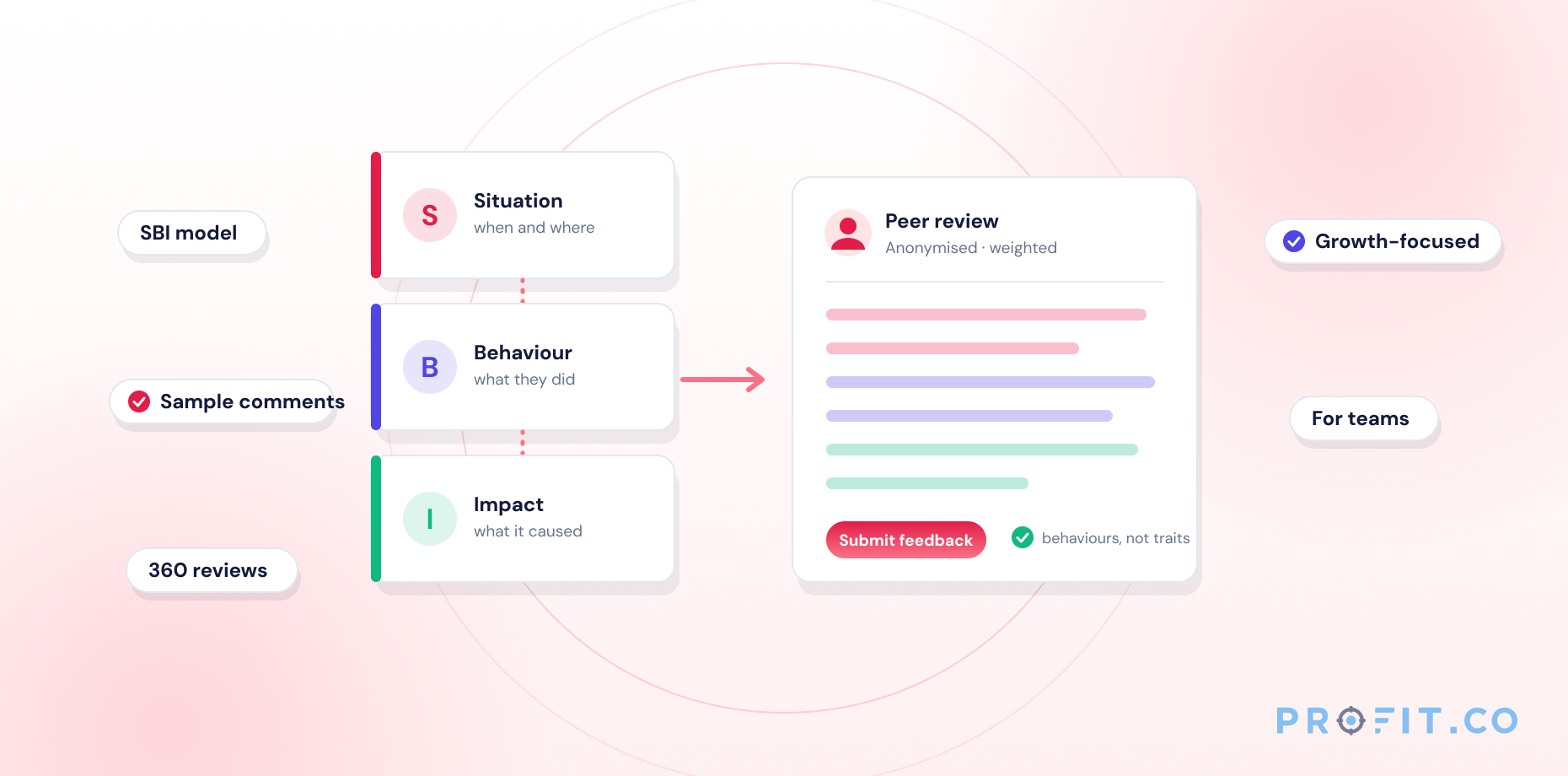
The best platforms support modern performance reviews, including quarterly, bi-annual, or annual reviews, self, manager, and peer reviews, 360-degree feedback, and custom review templates. Because reviews are connected to real goal data, evaluations feel fair, transparent, and defensible.
5. Calibration and Fair Evaluations
As organizations scale, consistency becomes critical. Goal and performance management software enables performance calibration across teams, data-backed evaluation discussions, and reduction of bias through shared metrics. Leaders can see performance trends clearly without relying on gut feelings.
6. Development and Growth Planning
Performance management isn’t just about ratings. It’s about growth. Modern platforms help organizations identify skill gaps based on performance data, create individual development plans, and link learning initiatives to strategic goals. This ensures that performance conversations lead to progress, not paperwork.
How Does a Connected Platform Unify Goal Management, Execution, and Performance Reviews?
The Connected Execution Model
Execution should drive performance, not the other way around
Organizations that shift from episodic reviews to continuous performance cycles close the gap between strategy and execution faster, and AI is what makes that shift operationally sustainable.
A connected platform unifies strategy, execution, and performance into a single, intelligent system. This means enterprise-grade OKR software that connects company strategy to team and individual execution, so performance is measured on outcomes, not activity. AI-powered continuous check-ins and feedback surface trends, risks, and wins early, without adding admin overhead for managers. Outcome-based performance reviews grounded in real execution data reduce recency bias and subjective evaluations.
Traditional performance systems rely heavily on memory, manager opinion, and manual data gathering. A connected system replaces that with objective, data-backed evaluations tied directly to OKRs and measurable results, reduced bias through shared metrics, transparent progress, and AI-assisted insights, and significant time savings by eliminating spreadsheets, duplicate tools, and manual review prep.
Managers spend less time chasing updates and more time coaching. HR teams spend less time administering cycles and more time driving impact. By unifying goals, execution, feedback, and reviews in one AI-enabled platform, organizations can move faster, evaluate more fairly, and build a shared language of performance that scales.
Align Goals, Execution, and Performance in One Platform
What Business Benefits Can Organizations Expect from Goal and Performance Software?
Organizations that adopt modern performance platforms typically see:
- Stronger alignment between strategy and execution
- Higher employee engagement
- Faster course correction when priorities change
- More objective, data-driven reviews
- Clear accountability at every level
The organizations that sustain these benefits share a structural pattern: they stopped treating performance data as an HR output and started treating it as an operational input. When goal completion rates and recognition frequency feed the same system as performance reviews, leaders stop making talent decisions from memory and start making them from evidence. That shift is what turns performance management from a compliance cycle into a strategic capability.
Most importantly, performance management becomes a business system, not just an HR process.
Who Should Use Goal and Performance Management Software?
This software is especially valuable for:
- Growing companies scaling beyond spreadsheets
- Enterprises managing complex, cross-functional goals
- Remote and hybrid teams needing alignment
- Leadership teams focused on execution visibility
If your organization struggles to connect goals to outcomes, or if managers routinely enter performance conversations without access to goal completion data, feedback history, or recognition patterns, that’s not a management problem. It’s a systems architecture problem that goal and performance management software is specifically designed to solve.
What Is the Future of Goal and Performance Management?
The direction is clear: performance management is moving from cyclical to dynamic, from calendar-driven events to continuous, data-informed conversations.
Here’s the distinction most organizations miss when evaluating goal and performance software: they look for a system that makes reviews easier. The question they should be asking is whether the system makes reviews unnecessary, because the conversation between manager and employee is already grounded in shared, real-time goal data, not reconstructed from memory during a scheduled 1:1.
In a dynamic performance model:
- Goals are updated as business priorities change
- Performance conversations happen continuously
- Feedback is event-driven, not scheduled
- Managers act as coaches, not just evaluators
Goal and performance management software plays a critical role here by allowing goals and OKRs to be revised without disrupting alignment, capturing performance signals continuously, enabling leaders to spot execution risks early, and supporting agile, fast-moving organizations. Dynamic performance management isn’t a future concept; it’s quickly becoming a competitive requirement. You can learn more about the shift in the ultimate guide to dynamic performance management.
Final Thoughts
Performance doesn’t happen once a year. It happens every week through goals set, progress made, feedback shared, and priorities refined. Goal and performance management software helps organizations turn those moments into a system, one that drives clarity, accountability, and results.
The best performance system isn’t the one that produces the most complete review. It’s the one that makes the review the least surprising moment of the year.
Connect Your Goals, Execution, and Performance in One Platform
Frequently Asked Questions
Performance management focuses on evaluating and developing employees, while goal management focuses on setting and tracking objectives. Modern software combines both into a single, continuous system.
OKR software provides measurable outcomes that feed directly into performance reviews, making evaluations objective and aligned with business results.
Yes. Continuous performance management provides real-time feedback and visibility, while annual reviews rely on outdated information and memory.
Yes. When reviews are based on tracked outcomes and shared metrics, evaluations become more transparent and consistent.
No. While HR enables the system, leaders, managers, and employees all actively use it to align goals and drive execution.
Goal management software is a system that helps organizations set, track, and review goals: SMART goals, KPIs, OKRs, or MBOs, in one connected platform, replacing scattered spreadsheets with a live, continuously updated view of progress from goal-setting through performance review.
Goal management software can track any goal format: SMART goals, KPIs, or MBOs, with flexible structure and cadence. OKR software enforces one specific structure: every goal is written as an objective paired with measurable Key Results on a fixed cycle, such as Profit.co’s quarterly PEEL cycle (Plan, Execute, Engage, Learn), with six Key Result types available.