When evaluating a Project Portfolio Management (PPM) platform, the demo often becomes the centerpiece of the decision process. Demos are useful. They show how the platform works, highlight the product’s capabilities, and help teams imagine how the system might fit into their environment.
However, a demo is only a starting point. During a demonstration, the vendor controls the environment. The data is prepared in advance, the workflows are polished, and the presenter knows exactly where every feature lives. Your real implementation will look very different. It will involve your data, your governance structures, and your stakeholders across the organization.
For a PMO Director, that difference matters. Once the contract is signed, the responsibility of making the platform work often falls on the PMO team. That is why it helps to ask a few deeper questions during the evaluation process. These questions reveal the realities that a demo cannot fully capture.
TL;DR
- A PPM demo shows the platform in its best possible environment.
- PMO Directors should test real configuration and governance workflows.
- Core portfolio capability should be evaluated directly.
- Reference calls should focus on implementation timelines and adoption.
- Evaluating support responsiveness during the selection process can provide useful signals.
Most vendors invest significant effort into crafting compelling demonstrations. The interface looks smooth, workflows appear effortless, and reports are generated instantly. That experience can create confidence in the platform.
At the same time, it represents a controlled scenario. The system has been configured ahead of time to showcase specific capabilities. In reality, your PMO team will need to configure governance models, adapt reporting structures, and integrate the platform into existing processes. Because of this gap between demo and deployment, PMO Directors often benefit from adding practical tests to the evaluation process.
“I am not a product of my circumstances. I am a product of my decisions.”

As a PMO Director, you are the person who will have to make the platform work after the contract is signed. Here are the questions that help you evaluate what the demo cannot show you.
Discover how Profit.co helps PMOs implement scalable and adaptable Project Portfolio Management practices
Q: What is the most revealing test you can run during a Project Portfolio Management evaluation?
One of the simplest and most informative tests is asking the vendor to configure one of your real governance workflows during the evaluation. This could be something like:
- Your project intake process
- A portfolio approval workflow
- Stage gate reviews for strategic initiatives
Rather than using a generic template, ask the vendor to model your actual approval tiers, document requirements, and notification rules. While observing the configuration process, pay attention to a few details:
- How long does the setup take?
- How much vendor involvement is required?
- Could your internal team manage similar changes after implementation?
This exercise often reveals more about implementation complexity than a standard demonstration.
Q: How do you test whether a vendor’s scenario planning is real?
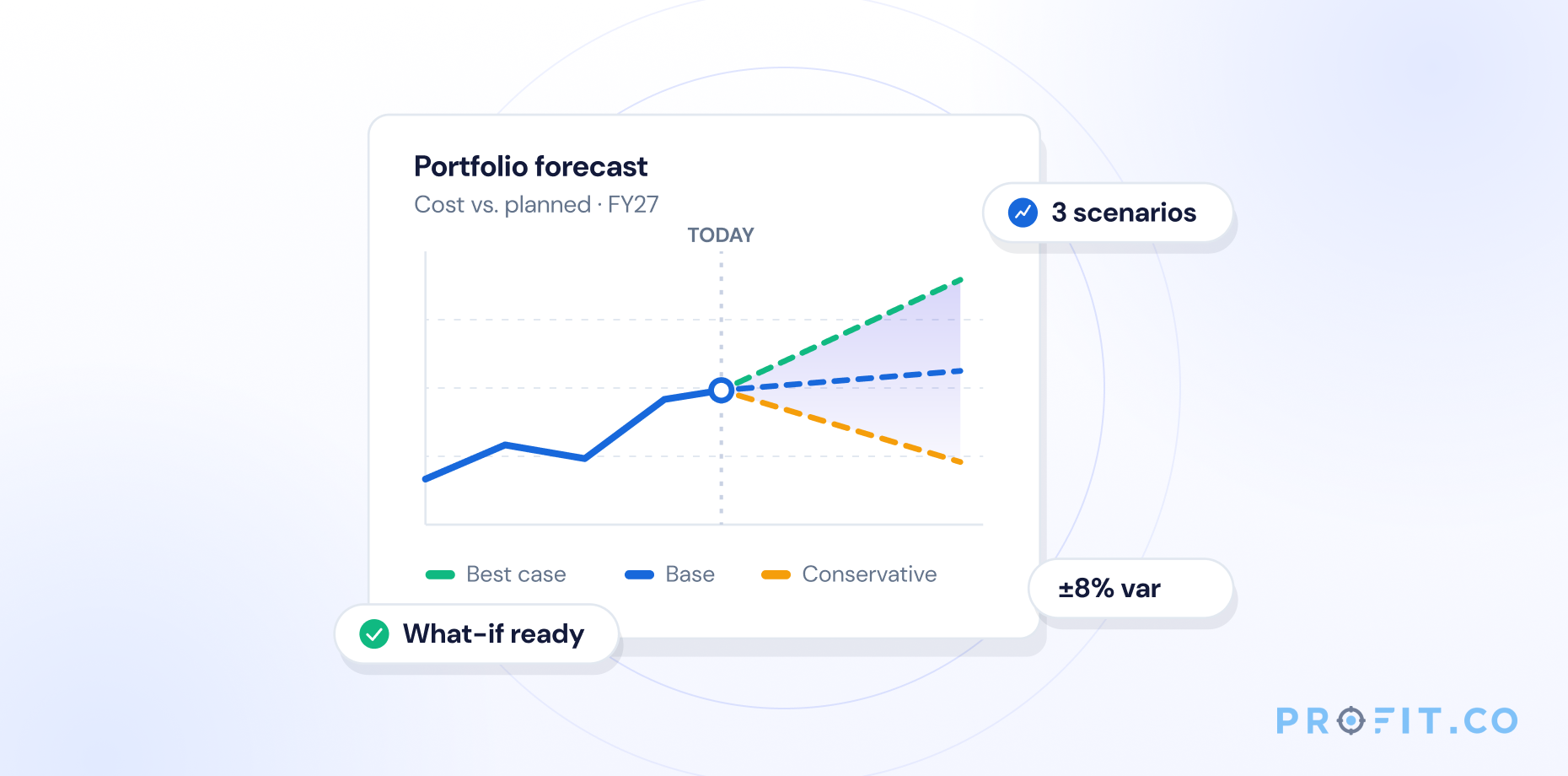
Ask them to run a live scenario using your actual context during or after the demo. If you accelerated one initiative by one quarter, what would happen to resource capacity across the rest of the portfolio? Ask them to show you that analysis live in the platform, not in a spreadsheet. How a vendor handles that request is one of the most useful signals in the entire evaluation.
Q: What questions should we ask during reference calls?
Reference calls provide valuable insights, especially when the questions focus on practical experience rather than general satisfaction. Some useful questions include:
- What was the actual implementation timeline compared to the original estimate?
- How many internal team members were involved and for how long?
- After twelve months, what percentage of intended users actively use the platform?
- What surprised you most during the implementation process?
- If you started again today, what would you configure differently?
These questions often produce the most realistic picture of what adoption looks like.
Q: Who should we specifically request as a reference?
The most helpful references usually come from organizations with similar characteristics to your own. A strong reference profile might include:
- A PMO Director at a comparable organization size
- A company operating in a similar industry
- An implementation that went live at least twelve months ago
Speaking with someone who has already navigated the full rollout cycle provides perspective that short-term implementations cannot yet offer.
Q: How do you evaluate support quality before you have actually used the support?
Support quality becomes very important after implementation. While it may be difficult to fully evaluate beforehand, there is a simple way to gather early signals. During the evaluation period, submit a technical question by email to the vendor’s support team. Then observe:
- How quickly they respond
- Whether the response addresses the specific question
- Whether the explanation demonstrates an understanding of your context
This small test often provides the closest preview of what the support experience might look like after deployment.
Q: What should we ask about platform maturity and growth?
PPM platforms often support organizations at different stages of project management maturity. During the evaluation, it helps to ask vendors how their clients typically evolve on the platform. For example:
- What capabilities do organizations usually activate first?
- How does adoption expand as the PMO grows?
- Can the vendor show examples of clients who started with basic portfolio visibility and gradually added resource and financial planning?
Vendors with strong implementation experience usually provide clear examples of this progression.
Q: What is the biggest adoption risk in a Project Portfolio Management implementation and how do we evaluate for it?
The biggest adoption risk is asking your teams to completely change how they work to fit the tool’s prescribed workflows. Ask vendors directly: how does your platform accommodate our existing governance processes rather than replacing them? A flexible platform that starts where your organization is will consistently outperform a rigid one that requires process transformation alongside technology change.
Q: How do we evaluate whether the platform will still work for us in three years?
Ask about the vendor’s product roadmap and how customer requirements feed into it. Ask for examples of capabilities that were added based on client feedback. Ask what the largest and most complex implementation they have delivered looks like. A platform that is right for you today but cannot grow with your portfolio is a risk worth identifying early.
The Bottom Line
A thorough evaluation protects you as a PMO Director and it protects the organization. The vendors who are confident in their platform welcome the harder questions: the configuration test, the live scenario exercise, the honest reference conversations. Going beyond the demo is not a barrier to making a decision. It is what makes the decision a good one.