

Published Date: March 31, 2026
TLDR:
Static dashboards show you what happened. Conversational AI tells you what is about to happen and why. This post breaks down the shift from reactive reporting to real-time portfolio intelligence and what your organization needs to get there.
Picture a Friday morning portfolio review. The CIO, PMO Director, two Program Directors, and a CFO are in the room. Fourteen slides are on screen. Three dashboards are open on separate monitors.
Then someone asks: “Is the ERP transformation still on track financially?”
Three people reach for three different data sources. One cites last week’s status report. Another opens the financial tracker, last updated ten days ago. A third references a slide built for last month’s steering committee. Nobody gives the wrong answer. They each give a different one.
That is a reporting architecture problem. And it is the most expensive meeting failure in enterprise Project Portfolio Management today.
Why is Your Dashboard Not Working?
Dashboards were built around a specific assumption: that users already know what they want to see. They are excellent at presenting data that you have already decided is important. They are poor at surfacing what you do not yet know you need to know. The deeper issue is timing. Most Project Portfolio Management reporting is lagging.
Status reports are compiled weekly. Financial data is reconciled monthly. Risk registers are reviewed at the next steering committee. By the time information travels from the project manager to the PMO to the dashboard to the executive, the window for effective intervention has often already closed.
A McKinsey and University of Oxford study of more than 5,400 large IT projects found that the average budget overrun was 45% and that these same projects delivered 56% less value than originally forecast.
The cause is consistent across that data: decisions made too slowly, with information that was too old. The more sophisticated the dashboard, the more confidence the organization places in it and the less likely anyone is to question whether that information is actually current enough to support the decisions being made.
What Conversational AI Actually Means in a Context
Before this gets buried in vendor marketing, it is worth being precise.
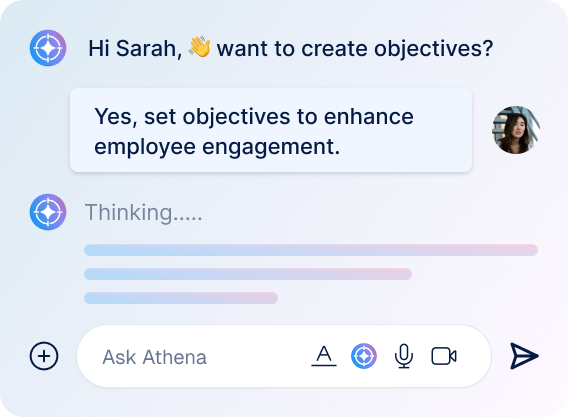
Conversational AI in Project Portfolio Management is not a chatbot layered on top of a project database. It is not a smarter search bar. It is a synthesis engine that connects signals across structured data sources such as schedules, financial actuals, resource capacity, risk registers, and procurement commitments and responds to natural-language questions with contextually relevant, traceable answers.
The practical difference is significant.
A PMO Director does not need to know which dashboard to open or which filter to apply. They can ask: “Which infrastructure projects are at risk of missing Q3 milestones due to resource constraints?” The system answers by synthesizing live data across the portfolio, not by retrieving a pre-built report.
There are four distinct levels of intelligence that this creates:
| Intelligence Layer | Question Answered | Where Most Tools Sit Today |
|---|---|---|
| Layer 1: Status | What is happening right now? | Most PPM tools |
| Layer 2: Diagnosis | Why is this happening? | Some advanced tools |
| Layer 3: Prediction | What is likely to happen next? | Very few |
| Layer 4: Prescription | What should we do about it? | Almost none |
Most enterprise PPM platforms sit at Layers 1 and 2. They have connectivity and visualization. What they are missing is the synthesis layer that moves from diagnosis to forecast.
Gartner projects that 40% of enterprise applications will have task-specific AI agents integrated by the end of 2026, up from less than 5% in 2025.
The organizations that move to Layers 3 and 4 will not just have better dashboards. They will have fundamentally different portfolio governance conversations.

The ERP Gap That Nobody Talks About
Here is where most Project Portfolio Management AI narratives fall short: they stop at project data.
Consider what a CFO actually needs to make a portfolio investment decision. She does not just want to know if a project is on schedule. She needs to know if the financial commitments in the original business case are still sound.
Is procurement spending aligned with the project’s phase? Are invoices running ahead of milestone completion? Is the committed spending in SAP consistent with what the PPM system shows as an approved budget?
These are not complicated questions. They are the standard questions asked in every capital review. And they are hard to answer today because the PPM system and ERP system are speaking different languages, refreshed at different intervals, and managed by different teams.
When you connect financial actuals, procurement commitments, and invoice status into a unified conversational interface, you are no longer doing project reporting. You are doing investment intelligence.
Connecting a Project Portfolio Management platform to SAP S/4HANA or Oracle Fusion Cloud creates a data fabric that makes conversational AI genuinely useful at the executive level.
Here is a hypothetical example (illustrative, not based on a specific client): imagine the AI can see that procurement commitments in SAP are running at 78% of budget while the project is only 52% complete on the schedule side. It can reveal a cost-trajectory risk that no dashboard tile would ever show, because the signal spans two separate systems.
What this unlocks:
- Invoice burn vs. schedule progress. When actual invoiced amounts outpace earned value, the system flags a potential overrun weeks before the next financial review.
- Procurement readiness gaps. If a project is entering a high-spend phase but purchase orders are not yet raised in the ERP, the AI surfaces that risk before it becomes a delivery delay.
- Forecast-to-actual variance, explained. Rather than presenting a number, the AI tells you whether the variance is driven by scope change, resource cost escalation, or delayed vendor invoicing. Each requires a different management response.
Profit.co is building the conversational intelligence layer for enterprise Project Portfolio Management
Proactive Risk: From Flag to Forecast
The standard enterprise risk process in Project Portfolio Management follows a predictable pattern.
A PM identifies a risk. It gets logged with a probability and impact score. It gets reviewed at the next steering committee. If it escalates to red, it gets escalated to the PMO. By the time action is taken, the risk has usually become an issue.
This is not a process failure. It is an information architecture failure.
Conversational AI enables pattern-based risk detection across connected data sources. Three examples worth considering:
- Cross-project resource conflict. A senior architect is committed to three parallel infrastructure projects, all in active delivery. The AI surfaces this proactively because the resource allocation data shows a structural overcommitment that will create a milestone bottleneck in six weeks. No PM flagged it. The data did.
- Financial trajectory risk. A project’s ERP spend is trending 18% above the rate consistent with its earned value at this stage. Historically, projects with this spend-to-progress ratio at this lifecycle stage have overrun significantly. The AI surfaces this as a predictive signal, not a red status flag, before the variance appears in any dashboard.
- Procurement dependency risk. A capital project entering its construction phase in eight weeks has three critical vendor contracts still in negotiation in the procurement system. The AI connects the project schedule to the procurement tracker and surfaces a dependency risk that lives across systems no single person is watching end-to-end.
The Persona Problem: Same Question, Five Different Answers Needed
Here is a scenario that reveals a critical gap in most AI implementations.
Five people in the same portfolio review ask the same question: “How is the cloud migration program going?” All five need a completely different answer.
| Persona | Their Real Question |
|---|---|
| CIO | Is this program delivering the strategic capability it was approved to deliver? |
| CFO | Is spend tracking against the approved investment case? |
| PMO Director | What governance flags need my attention today? |
| Program Director | Is my program still on track to deliver the promised benefit? |
| Project Manager | What is blocking my team right now? |
Generic answers do not serve any of them well.
Role-aware intelligence is not a UX preference. It is the core enterprise adoption challenge for conversational AI in PPM.
According to PMI’s Pulse of the Profession 2025, only 18% of project professionals demonstrate high business acumen proficiency, yet these individuals achieve 27% lower project failure rates.
Conversational AI with role-aware response logic can close that gap. It democratizes the kind of insight that today lives only with the most experienced practitioners.
The Trust Equation
There is a well-documented failure mode for enterprise AI adoption. An executive receives an AI-generated insight. It turns out to be wrong, or simply not traceable. She cannot find the data behind the conclusion. From that moment on, she stops trusting the system.
This is the trust cliff. And it is steeper in Project Portfolio Management than almost anywhere else.
Portfolio decisions involve capital allocation, strategic prioritization, and in some cases, the careers of programme leaders. Executives will not delegate judgment to a system they cannot interrogate.
Every AI-generated portfolio insight must have a traceable path back to source data. Not because the AI will always be wrong. Because the humans making the decisions need to own them.
This means building the conversational interface to always surface the data source alongside the insight, flag when underlying data is stale or incomplete, and present confidence levels transparently rather than projecting certainty it does not have.
What Good Looks Like: The Project Portfolio Management AI Maturity Stages
Most enterprise PPM environments are not starting from scratch. They already have data infrastructure, governance frameworks, and reporting processes. The path to conversational intelligence is a maturity progression, not a rip-and-replace.
| Stage | Label | What It Looks Like |
|---|---|---|
| Stage 1 | Reactive Reporting | Manual status decks, spreadsheet-driven updates, lagging indicators |
| Stage 2 | Connected Dashboards | Live RAG status, KPI tiles, automated data feeds |
| Stage 3 | Conversational Intelligence | Natural language queries, contextual answers, cross-source synthesis |
| Stage 4 | Prescriptive Governance | AI-suggested actions, scenario modeling, ERP-connected risk forecasting |
Most organizations sit at Stage 1 or early Stage 2. Stage 3 requires not just technology investment, but a foundational data quality commitment. Stage 4 is where the market is heading.
Gartner’s 2025 AI Hype Cycle designated Decision Intelligence as a “transformational” technology, defining it as a practical discipline that advances decision-making by understanding and engineering how decisions are made and how outcomes are evaluated and improved over time.
For Project Portfolio Management leaders, that is a precise description of what Stage 4 looks like in practice.
Your Portfolio AI Readiness Checklist
Before investing in conversational AI capabilities, verify your foundation across these six areas:
- [ ] Project data is updated in real time or near-real time, not batch-loaded weekly from spreadsheets
- [ ] Your PPM platform has live integration with your ERP (SAP S/4HANA, Oracle Fusion, or equivalent) for financial actuals and commitments
- [ ] Resource data is governed centrally, not maintained in parallel by individual project managers
- [ ] Risk and issue logs are maintained consistently across the portfolio, not selectively updated before steering committees
- [ ] Financial data at the project level is aligned with the ERP’s cost object structure
- [ ] Governance roles and data access are defined clearly enough to support role-aware AI responses
If you cannot check most of these boxes today, the AI is not your first problem. The data infrastructure is.
Profit.co is building the conversational intelligence layer for enterprise Project Portfolio Management
Profit.co is building the conversational intelligence layer for enterprise Project Portfolio Management that connects project performance, resource capacity, and ERP financial data into a single, queryable portfolio intelligence fabric.
If your organization is evaluating what AI-ready portfolio governance looks like in practice, we would welcome the conversation.
If your organization is evaluating what AI-ready portfolio governance looks like in practice, we would welcome the conversation
Conversational AI in PPM allows portfolio leaders to ask natural language questions about project status, financial performance, and risk and receive synthesized, real-time answers drawn from connected data sources, including Project Portfolio Management and ERP systems
Dashboards present data you have already decided to monitor. Conversational AI synthesizes signals across connected systems to answer questions you have not yet thought to ask. It moves from reporting to diagnosis to prediction
For executive-level financial intelligence, yes. Connecting project data to SAP S/4HANA or Oracle Fusion Cloud enables the system to surface cost trajectory risks, procurement dependency gaps, and forecast-to-actual variances that span both systems.
Your project data should be updated in near-real time, your ERP should be integrated with your PPM platform, and resource and risk data should be governed centrally. Without this foundation, AI outputs will not be reliable enough for executive decision-making
CIOs, CFOs, PMO Directors, and Program Directors benefit most. Each has different information needs. Role-aware AI delivers the right answer to the right person rather than generating generic portfolio summaries
Related Articles
-
How to Choose a Project Portfolio Management Platform
TL;DR Most project portfolio management platform evaluations are structured around feature comparisons, such as which tool has the best Gantt... Read more
-
When Staying With Legacy Project Portfolio Management is Actually the Right Decision
TL;DR Project portfolio management modernization has a compelling business case for most large enterprises. It does not have a compelling... Read more
-
How to Build the Project Portfolio Management Business Case Your CFO Will Actually Approve
Karthick Nethaji Kaleeswaran Director of Products | Strategy Consultant Published Date: March 31, 2026 TL;DR Most internal project portfolio management... Read more
-
The Hybrid Portfolio Governance Gap
Karthick Nethaji Kaleeswaran Director of Products | Strategy Consultant Published Date: March 31, 2026 TLDR Most enterprise portfolios mix agile... Read more