Published Date: March 23, 2026
TL;DR
Most project resource plans focus only on people. That narrow view is why many enterprise programs stall even when teams are fully staffed. A resilient project portfolio requires managing five resource types together: human resources, financial resources, physical resources, technology and infrastructure resources, and knowledge resources. When PMOs plan, monitor, and model these resource dimensions together, they move from reactive project firefighting to proactive portfolio governance.
Most enterprise programs do not fail because of a lack of people. They fail because the organization planned the team but did not plan the environment the team needed to succeed.
Consider a common scenario. A program launches with strong executive support, a capable project manager, and a fully staffed delivery team. The kickoff presentation goes well. The schedule looks realistic. Stakeholders feel confident. A few months later, the program starts slipping. The development environment is still waiting for approval. A set of integration licenses was not purchased in time. Hardware procurement is stuck in a queue. A critical subject-matter expert resigns, taking years of system knowledge with them. The finance team questions a spike in early spending that the project budget did not anticipate.
None of these problems are about staffing. They are about resource planning. Yet in most enterprise Project Portfolio Management programs, resource management is treated almost entirely as a headcount exercise. Teams track who is allocated to which project and at what percentage of their time. While that visibility is important, it represents only one part of the resource picture. A project with perfect staffing can still fail if its financial assumptions, infrastructure readiness, equipment dependencies, or knowledge transfer plans are incomplete. In other words, a staffing plan is not a resource plan.

The Narrow Lens Problem in Project Resource Planning
In many organizations, project planning begins with a simple question: who do we need for this project? Program managers identify roles, assign people, and confirm availability. Capacity planning tools show that the organization has the necessary headcount to execute the initiative. From a human resource perspective, the project appears ready to begin.
“The great challenge to management today is to make productive the tremendous new resource, the knowledge worker. This, rather than the productivity of the manual worker, is the key to economic growth and economic performance in today’s society.”

But several other questions remain unanswered:
- When will the required infrastructure be provisioned?
- How will the project budget flow across milestones?
- Which physical assets must be procured before work can start?
- Who holds the critical institutional knowledge required to make decisions?
These questions often surface only after the project begins execution. By that point, the consequences are already visible. Teams sit idle waiting for environments. Procurement delays block critical tasks. Financial reporting surprises escalate to the executive level. These failures are rarely unpredictable. They are usually the result of a resource planning model that focuses on people while ignoring the broader ecosystem of resources that enable delivery. To solve this problem, organizations need a broader view of project resources.
Explore the Profit.co platform and learn how strategic resource management can improve project delivery outcomes
The Five Resource Dimensions Every PMO Should Manage
A comprehensive resource management framework considers five categories of resources that influence project outcomes. Each category has its own planning requirements, risk profile, and governance mechanisms.
1. Human Resources
Human resources remain the most visible dimension of project resource planning. This includes identifying required roles, matching skills to tasks, and ensuring individuals have sufficient capacity to contribute. Mature PMOs move beyond simple availability tracking and focus on skill alignment, dependency mapping, and real-time utilization monitoring. When human resources are managed strategically, teams can avoid common problems such as hidden overallocations, capability gaps, and unbalanced workloads.
2. Financial Resources
Every project has a budget, but not every project has a financial resource plan. A budget sets a spending ceiling. A financial resource plan explains how money flows across the lifecycle of the project. In practice, project expenditure rarely occurs evenly over time. Infrastructure investments often occur early. Testing phases may require additional contractors. Stabilization and support activities can extend the financial tail of a project. Without a phased financial model, project leaders often encounter unexpected budget variances that trigger unnecessary escalations. Strategic financial resource planning aligns spending patterns with project milestones and ensures finance teams have clear visibility into how resources are consumed.
3. Physical Resources
Physical resources include hardware, equipment, facilities, and any tangible asset required to execute project work. Unlike human resources, physical assets usually involve procurement lead times. A developer can start work tomorrow. A specialized server rack might take twelve weeks to arrive. If these lead times are not incorporated into the project schedule, downstream tasks quickly become blocked. Teams remain ready to work but cannot progress because the necessary equipment is unavailable. Organizations that treat physical assets as first-class scheduled resources can avoid these bottlenecks.
4. Technology and Infrastructure Resources
Technology resources are among the most commonly overlooked dependencies in digital transformation programs. These include development environments, testing platforms, cloud infrastructure, security access, integration tools, and software licenses. These resources are often shared across multiple projects and managed by centralized platform teams. As a result, they are provisioned through request queues that operate independently of project schedules. Without coordinated planning, infrastructure availability becomes a hidden constraint that delays delivery. Forward-looking PMOs treat environment readiness as a project gate and coordinate infrastructure demand across the entire portfolio.
5. Knowledge Resources
Knowledge is the most intangible and often the most fragile resource in any project. Institutional knowledge can reside in system architects, domain experts, contractors, or long-tenured employees who understand the nuances of legacy systems. When this knowledge is concentrated in a small number of individuals, the project carries significant risk. If one of those individuals becomes unavailable, progress can stall while teams attempt to reconstruct undocumented context. Effective resource planning treats knowledge transfer as a scheduled deliverable rather than an informal activity that occurs at the end of a project.
Why These Resource Types Are Interconnected
Managing these five resource dimensions independently is not enough. In practice, they are deeply interconnected. A delay in cloud infrastructure provisioning can leave development teams idle. Idle teams increase project costs without delivering value. Budget pressure may trigger scope adjustments or executive escalations. Similarly, the departure of a critical subject matter expert may require additional contractors, extending both the project timeline and the financial budget.
Because these resource types interact with one another, project leaders need visibility into all of them simultaneously. When PMOs understand how these resources interact, they can anticipate constraints before they disrupt delivery.
The Strategic Resource Management Framework for PMOs
Organizations that consistently deliver complex programs often follow a structured operating model for resource management. This model typically includes four stages.
Identify
The first step is defining the full resource landscape required for a project. This includes people, funding, infrastructure, equipment, and knowledge dependencies.
Plan and Schedule
Each resource must be incorporated into the project timeline. Procurement activities, financial expenditure curves, and knowledge transfer milestones should appear directly within the schedule.
Monitor
During execution, PMOs track signals across all resource categories. These signals include utilization rates, procurement progress, financial variance, infrastructure availability, and documentation milestones.
Model and Respond
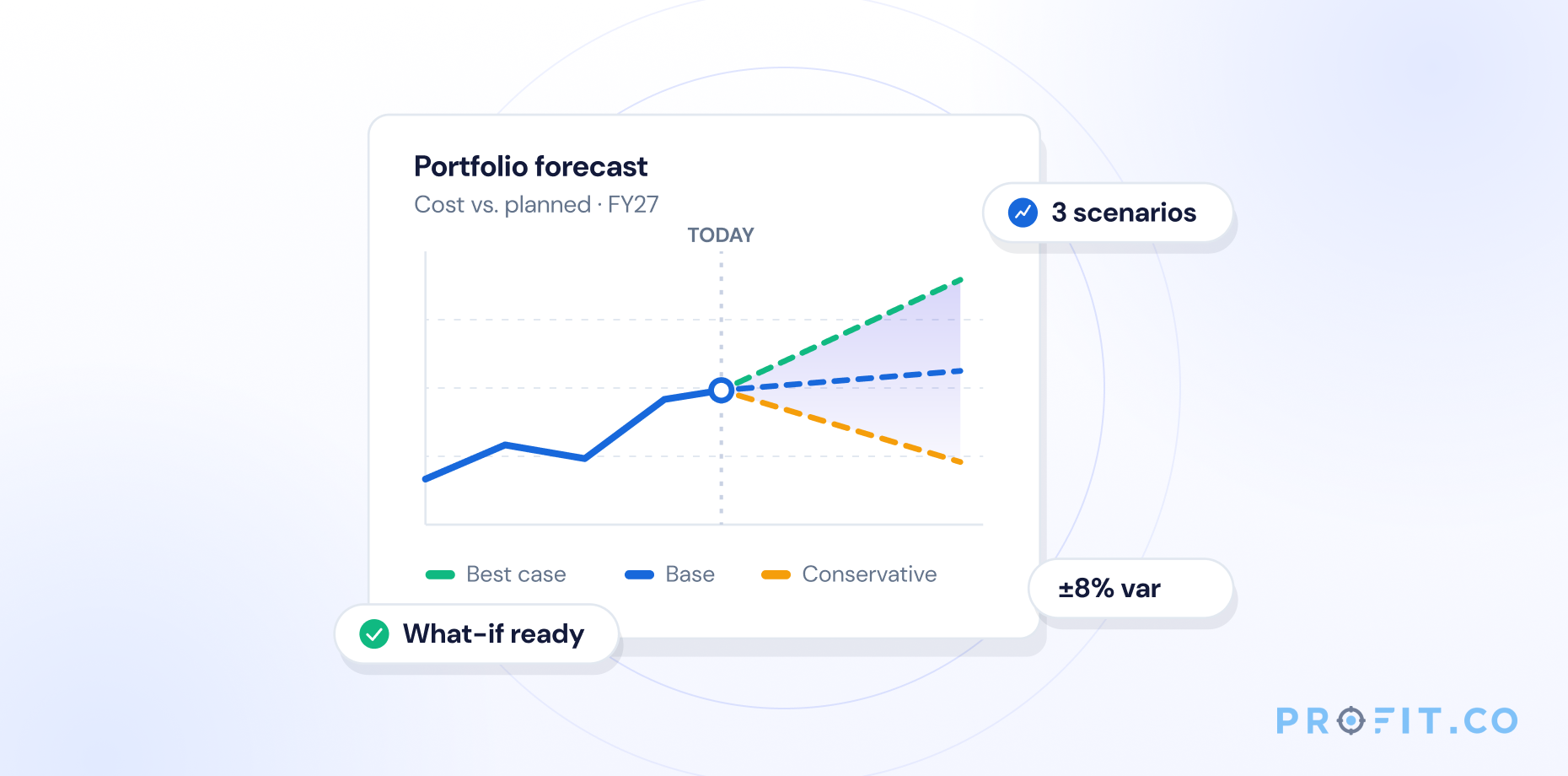
Even well-planned projects encounter resource constraints. Advanced PMOs use scenario modeling to evaluate the impact of potential disruptions before they occur. This capability allows leadership teams to make informed decisions about resource allocation and portfolio priorities.
Moving From Project Firefighting to Portfolio Governance
Many PMOs operate in reactive mode. They respond to problems as they appear during execution. A strategic resource management approach changes this dynamic. When organizations plan all five resource dimensions, they gain a clearer view of potential risks and dependencies. When they monitor those resources in real time, they can detect early warning signals. When they simulate potential constraints, they can prepare response strategies before issues escalate. The result is a portfolio that is not only better planned but also more resilient.
How Modern Platforms Support Strategic Resource Management
Managing multiple resource dimensions across a portfolio can quickly become complex. This is where platforms like Profit.co help PMOs bring structure and visibility to resource planning. Profit.co enables organizations to track human capacity, financial resources, infrastructure dependencies, and knowledge assets within a single portfolio view. Leaders can monitor utilization trends, align resource allocation with strategic priorities, and run scenario simulations to understand the potential impact of resource constraints. For PMOs managing large portfolios, this level of visibility turns resource management from a tactical activity into a strategic governance capability.
Conclusion
Project success rarely depends on staffing alone. Enterprise programs rely on a complex network of financial commitments, infrastructure dependencies, equipment procurement, and institutional knowledge. When organizations focus exclusively on headcount, they overlook the resource interactions that ultimately determine whether a project succeeds or stalls.
By expanding resource planning to include all five resource dimensions and by monitoring these resources throughout the project lifecycle, PMOs can significantly reduce delivery risk. Resource management then becomes more than a planning activity. It becomes a strategic discipline that strengthens the resilience of the entire portfolio.
See how Profit.co helps PMOs manage human, financial, technology, and knowledge resources in a unified portfolio view
Resource management in Project Portfolio Management involves planning, allocating, and monitoring the resources required to deliver projects. These resources include people, budget, infrastructure, equipment, and institutional knowledge
Projects often fail because organizations plan staffing but overlook other dependencies such as infrastructure availability, procurement timelines, financial assumptions, and knowledge transfer
Enterprise resource management typically involves five categories: human resources, financial resources, physical resources, technology and infrastructure resources, and knowledge resources
PMOs can improve resource planning by identifying all resource types early, integrating them into project schedules, monitoring execution signals across the portfolio, and modeling potential constraint scenarios
Modern strategy execution and portfolio management platforms such as Profit.co provide visibility into multiple resource types and enable PMOs to monitor utilization, track financial performance, and model resource allocation scenarios