

A calibration guide is a structured process HR teams and managers follow to align employee performance ratings before they are finalized. It uses shared criteria to remove bias and rating inflation, producing consistent, defensible standards across departments and review cycles.
In this guide
- What is a Calibration Guide in Performance Management?
- How does a Talent Calibration Process work?
- Why do most Performance Calibration Sessions Produce inconsistent Ratings?
- What data should go into a Calibration Session?
- How do OKRs Transform Performance Calibration?
- What does a Best-Practice Calibration Guide look like step by step?
- Why does the OKR-PPM Connection change Calibration outcomes?
- Frequently asked questions
What is a Calibration Guide in Performance Management?
Performance calibration is the process of comparing employee ratings across managers before those ratings are made final. A calibration guide is the framework that makes that comparison structured, covering who participates, what data gets reviewed, how disagreements get resolved, and what constitutes a defensible final score.
Without a calibration guide, each manager runs their own performance process in isolation. One grades on a curve. Another grades on gut feel. A third grades on recency. The last six weeks dominate the full year’s rating. The result is a set of scores that is internally inconsistent, legally vulnerable, and useless for succession planning or compensation decisions.
A well-designed calibration guide solves a structural problem, not a behavioral one. The issue is not that managers are careless. It’s that they each operate from a different mental model of performance, and no one has given them a shared one. That’s the gap a calibration guide closes.
Rating inflation is one of the most predictable outcomes when calibration is absent. When high performers receive the same rating as average performers, the signal to stay and grow disappears, along with the people most worth keeping. That attrition cost is invisible in a spreadsheet, but it shows up in every Q2 talent review.
How does a Talent Calibration Process work?
A well-designed calibration process runs in three stages. Each stage has a specific job, and collapsing them into one meeting is how calibration breaks down in practice.
Independent Ratings
Each manager submits performance scores independently, before the calibration session begins. This captures initial instinct without social influence. The baseline the group tests against is only useful if it was formed in isolation. Once managers hear each other’s views, the baseline is contaminated.
Group Calibration Session
Managers meet, ideally with HR facilitating, to compare ratings on outliers: the highest, the lowest, and the most debated. Data is presented. Scores are defended. Inconsistencies are flagged and resolved against shared criteria. Sixty to ninety minutes per team is the target. Anything longer means the data going in wasn’t structured well enough to support fast decisions.
Finalized, Auditable Scores
Scores are locked after calibration, with documented rationale for every adjustment. These become the inputs to compensation bands, promotion decisions, and development plans. A calibrated score without documentation of why it changed is not a calibrated score. It is a negotiated one.
A calibration session is a decision-making meeting, not a debate club. When it runs long, it’s almost always because managers arrived without objective data. Fixing the session length means fixing the inputs, not the agenda.
Why do most Performance Calibration Sessions Produce inconsistent ratings?
The common belief is that calibration sessions fail because managers are biased. That is partly true, but it is the wrong diagnosis. Calibration sessions fail structurally because the wrong inputs go in. Bias is the symptom. Missing data is the cause.
Most calibration sessions run on manager memory and manager opinion. A manager who advocated strongly for an employee in a high-visibility project will advocate again in the calibration room, regardless of that employee’s actual goal completion across the rest of the year. A manager who delivered a poor presentation in a sensitive meeting will be remembered for that one moment. The session recalibrates impressions, not performance.
A calibration session without goal data is just a group opinion contest.
The second failure mode is power dynamics. In a room without objective data, the most senior voice wins. This is not calibration. It is endorsement. When the business unit head defends a direct report, few managers in the room push back with opinion alone. A data anchor (an OKR completion score, a project delivery rate) gives them something to point to that isn’t a personal challenge.
The third failure mode is timing. Organizations that run calibration annually find that managers are recalling performance from eleven months ago. Memory decays, and decay is not uniform. Dramatic moments (positive or negative) survive far longer than steady, consistent delivery. Annual calibration doesn’t just have a data problem; it has a memory problem that no amount of process can fix.
To understand how structured delivery frameworks anchor performance conversations with milestone data, see how stage-gate governance connects delivery milestones to performance criteria, and the same principle applies directly to calibration inputs.
What data should go into a Calibration Session?
The quality of a calibration session is determined entirely by the quality of its inputs. Four data types make calibration sessions defensible and produce ratings that hold up to scrutiny from both employees and legal review.
OKR Completion Rate
The percentage of key results achieved at the end of each quarter, scored 0.0 to 1.0. This is the most objective single data point available in most organizations. It measures output against a pre-agreed target, not a manager’s perception of effort or visibility.
360-Degree Feedback Scores
Peer and manager feedback collected across the full review period, not just the final quarter. Pattern data matters more than single data points. An employee consistently rated as collaborative across eight quarters tells a different story than one strong sprint of visibility.
Project Delivery Rate
How consistently an employee delivers projects on time and on scope. This data comes from PPM systems, and most organizations don’t connect it to their performance review process. That gap allows employees to hit personal OKRs while quietly blocking team delivery.
Self-Assessment Data
What the employee believes about their own performance. Not used as a final score. It is used as a diagnostic. A large gap between self-assessment and manager rating almost always reveals a coaching or communication failure. A self-rating that runs five points above the manager’s score almost always means the employee has never had a direct conversation about their actual performance trajectory. That is a management failure, not an employee one.
Most organizations have some of this data. Very few have it in one place at calibration time. The most common outcome is that calibration sessions run on the data that is easiest to access, which is usually manager recollection, rather than the data that would produce the most accurate result.
For context on how agile delivery methodologies change data collection cadences, see this breakdown of agile vs. waterfall approaches to project tracking and performance measurement. The cadence differences matter directly to calibration frequency.
How do OKRs Transform Performance Calibration?
OKRs change calibration from a subjective debate into a data-driven decision. OKRs produce a score (0.0 to 1.0) for every employee, every quarter, against pre-agreed targets. When calibration sessions use OKR scores as a primary input, the conversation shifts from “I think this person performed well” to “this person hit 0.8 on three of four key results: what explains the fourth?”
That shift is not subtle. It changes who controls the conversation. Data controls the conversation, not seniority, not advocacy, not the ability to recall a story about a difficult quarter.
Most performance management systems measure how well a manager communicates, not how well an employee performs. OKRs break that dynamic.
The OKR quarterly cycle is also the natural calibration cadence. When key results are set for the quarter and scored at quarter-end, calibration sessions run immediately after, using fresh, complete data. This removes the “it was too long ago” problem that makes annual calibration structurally unreliable.
| Traditional Calibration | OKR-Connected Calibration |
|---|---|
| Manager memory as primary input | OKR completion scores (0.0-1.0) as primary input |
| Recency bias dominates the session | Full-quarter data reviewed against agreed targets |
| Senior voices determine the outcome | Data anchors override advocacy |
| Inconsistent standards across teams | Shared scoring framework applied consistently |
| Ratings hard to explain to employees | Ratings backed by traceable goal data |
| Annual or biannual cycle | Quarterly cycle aligned to OKR cadence |
The OKR University provides frameworks on how to structure goal-setting cycles that feed directly into performance calibration, covering cadence, scoring methodology, and the connection between quarterly check-ins and review data.
Connect OKR Scores to Your Calibration Workflow
What does a Best-Practice Calibration Guide look like step by step?
A calibration guide has five components. Organizations that skip any one of them typically find the process breaks down at the same point every cycle, and blame the wrong thing when it does.
Step 1: Define the Rating Scale Before the Cycle Begins
Every manager must know what a “3 out of 5” means before they assign one. Define each rating level with behavioral anchors, meaning specific descriptions of what that score looks like in practice. Ambiguity in the scale becomes disagreement in the calibration session. Resolve it upstream, not in the room.
Step 2: Collect OKR and Project Data Two Weeks Before the Session
Data should be available before anyone assigns a rating, not after. When managers see OKR completion scores and project delivery rates before they score, recency bias decreases because the full-quarter record is visible. The data anchors the rating before the manager’s narrative takes over.
Step 3: Run the Calibration Session as a Decision Meeting
Calibration sessions that feel like open discussions produce inconsistent outcomes. Run the session with a precise agenda: review score distribution, flag outliers, challenge extreme scores with data, lock decisions. If a score can’t be defended with data in 60-90 minutes, it gets revised. Speed is a signal that the data is doing its job.
Step 4: Document Every Adjustment and Its Rationale
Any score that changes during calibration should have a written rationale. This protects the organization legally, helps managers explain decisions to employees, and creates a feedback loop that improves calibration quality over time. Organizations that skip documentation find that calibration scores drift back toward subjective opinion within two cycles.
Step 5: Connect Calibrated Scores Directly to Development Decisions
A calibrated score that ends in a spreadsheet has failed. Calibration outputs must connect directly to compensation bands, promotion decisions, and development plans. If the score doesn’t change anything downstream, the process will be treated as compliance theatre, and it will be done carelessly next cycle.
Why does the OKR-PPM Connection change Calibration outcomes?
Most calibration guides treat goal data and project data as separate inputs. They are not. An employee who hits every OKR target but consistently delivers projects late is not a high performer. They are hitting personal goals at the expense of team delivery. An employee who delivers projects reliably but scores low on OKRs may be carrying workload that isn’t reflected in their key results. Both misreadings are invisible without connected data.
Consistency is not fairness. Calibrating to the wrong standard consistently just distributes unfairness evenly.
The Connected Calibration Model
OKR scores, project delivery, and 360 feedback in one calibration view
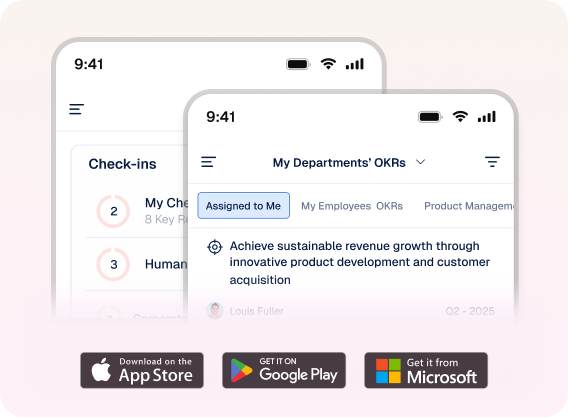
A connected performance management platform pulls OKR management, PPM (project portfolio management), and performance reviews into a single data model. OKR scores, project delivery rates, 360 feedback, and self-assessment data are all available in one calibration view, not pulled from four separate systems the night before the meeting.
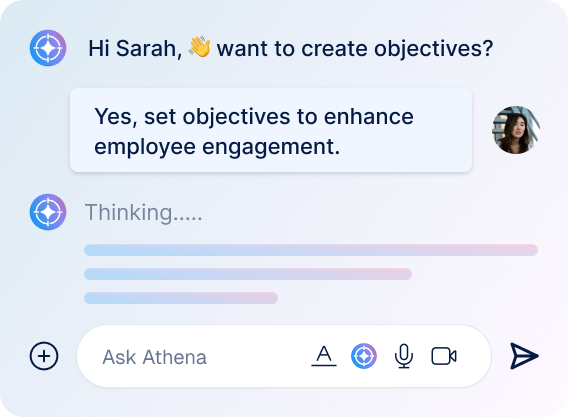
AI-assisted review workflows reduce calibration prep time by drafting performance summaries from live goal and project data. A manager who previously spent three hours preparing for a calibration session can review an AI-drafted summary, verify it against underlying data, and arrive ready in under 30 minutes.
Cutting prep time makes quarterly calibration operationally realistic. That is the only cadence that produces accurate, defensible ratings. A connected system linking OKR scoring, project delivery, and 360 feedback into a single calibration workflow means HR teams can run evidence-based calibration every quarter, not just annually.
See It in Action
Frequently Asked Questions
A calibration guide is a structured process HR teams and managers follow to align employee performance ratings before they are finalized. It uses shared criteria to remove bias and rating inflation, producing consistent, defensible standards across departments and review cycles.
Talent calibration runs in three stages: managers submit ratings independently, meet as a group to compare outliers, then finalize scores using shared criteria. Most effective calibration sessions run quarterly and last 60-90 minutes per team.
Calibration sessions fail when managers calibrate opinions rather than outcomes. Without objective data (OKR completion rates, project delivery, peer feedback), the loudest voice sets the rating. Bias hides in conversations without data anchors.
Effective calibration sessions use four data inputs: OKR completion percentage, peer and manager feedback scores, project delivery rate, and tenure in role. Ratings built on these inputs are defensible and harder to reverse with subjective arguments.
OKRs improve calibration accuracy by replacing manager opinion with goal completion data. When calibration sessions include OKR scores (0.0 to 1.0 per quarter), managers compare achievement against targets, not impressions. Ratings become consistent and auditable across teams.