TL;DR
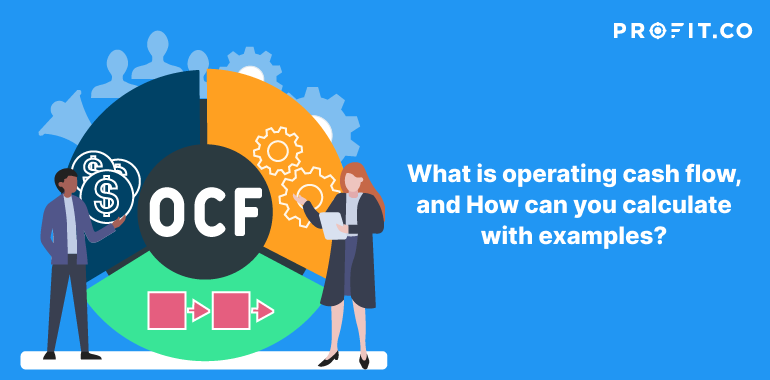
Operating Cash Flow (OCF) measures the cash a business generates from its core operations, excluding investing and financing activities. It indicates whether a company can sustain and grow its operations using internally generated cash. OCF can be calculated using either the direct method (revenue minus operating expenses) or the indirect method (net income adjusted for non-cash items and changes in working capital). A positive OCF signals strong financial health, while a negative OCF may indicate the need for external funding or cost control.Operating cash flow (OCF) is the cash a business generates from regular operations. It doesn’t consider secondary revenue sources such as investments.
The operating cash flow shows your financial performance on the primary business operations. Let’s dive deeper into why operational cash flow is essential and how to calculate and present this key performance indicator (KPI).
If you don’t collect any metrics, you’re flying blind. If you collect and focus on too many, they may be obstructing your field of view.

Why Is Operating Cash Flow Important?
Operating cash flow is the best way to determine whether your business is profitable. A positive figure indicates that your company has a good operating cash flow ratio or adequate cash to sustain operations and grow.
A negative figure shows that the business cannot cover expenses without additional capital, expense cuts, or borrowing money. A negative figure shows that the business cannot cover expenses without additional capital, expense cuts, or borrowing money.
OCF helps you decide the best time to minimize debt, expand, pay dividends and launch new products or services.
What Are the Types of Cash Flows?
There are three main types of cash flow:
1. Cash Flow from Operations (OCF)
OCF is the cash consumed or generated by the standard operations or processes during a specific period. It shows how and where the money goes and provides insights into the areas that need improvement.
OCF includes items like:
- Cash received from sales
- Money spent on daily supplies and inventory
- Utility bills and salaries
2. Cash Flow from Investing (CFI)
Cash flow from investing indicates the amount of cash your business spends or makes from investment activities—for instance, mergers or acquisitions, marketable securities like bonds, or purchasing fixed and long-term assets.
3. Cash Flow from Financing (CFF)
Cash flow from financing is the net income from financing activities within a specific period. It indicates how cash moves between creditors, business owners, and investors.
CFF includes items like:
- Cash inflow from external sources such as short-term and long-term lenders
- Dividend payments to investors
- Repurchase of shares previously traded and issued
Calculating Operating Cash Flow
The main steps when calculating the Operating Cash Flow include:
- Start with the net income
- Add all non-cash items such as deferred taxes, stocks, depreciation, and other income or expenses
- Factor in the changes in working capital such as inventory account receivable
- Direct method: Revenue – Operating Expenses
- Indirect method: Net Income + Non-cash expenses – Changes in working capital
- Operating Cash Flow (OCF)
- Cash Flow from Investing (CFI)
- Cash Flow from Financing (CFF)
The complete Operating Cash Flow formula is:
Methods for Calculating OCF
When calculating the operating cash flow, you can use two methods: Direct and indirect.
1. The Direct Method
The direct method is more straightforward, but it doesn’t provide enough information to determine performance on a detailed level.
The formula to calculate OCF via the direct approach is:
2. The Indirect Method
The indirect method is more complex but offers more detailed information on how specific business areas perform. It adjusts the net income based on changes in all non-cash accounts in the balance sheet to determine the total cash generated.
This method adjusts cash receivables and inventory changes and adds depreciation to the net income.
The OCF formula using the indirect method is:
Methods for Presenting OCF
There are two methods of presenting OCF: direct and indirect. The direct method involves tallying all the individual cash instances paid or received to show the total cash flow.
The indirect method involves accounting for the line items that determine the cash flow, such as depreciation and net income.
Operating Cash Flow Examples
Example 1: Direct method
Let’s say a company has total revenue of $1,200 and a total operating expense of $800.
| Particulars | Amount |
|---|---|
| Total Revenue | $1,200 |
| Operating Expense | $800 |
| Operating Cash Flow (OCF) | ? |
OCF is 1,200 – 800 = $400
Example 2: Indirect Method
Let’s say a company has: a net income of $750, non-cash expenses of $250 and changes in asset-liability, inventory of $150, and account receivable of $100.
| Particulars | Amount |
|---|---|
| Net Income | $750 |
| Non-Cash Expense | $250 |
| Changes in Operating Assets and Liabilities | ? |
| Inventory | $150 |
| Account Receivable | $100 |
| Operating Cash Flow (OCF) | ? |
OCF is- 750+ 250 – 150 – 100 = $750
FAQs
What Is the Difference Between Cash Flow and Net Income?
Net income is the profit generated within a certain period, while cash flow is cash generated from primary business operations.
What is Free Cash Flow?
Free Cash Flow (FCF) is the cash your business generates after deducting capital expenditures.
Can Cash Flow Be Negative?
Yes, negative cash flow indicates your expenditures exceed your income. A negative OCF is not always a cause for alarm unless it becomes a habit.
If the negative is from temporary costs such as expansion, it’s acceptable. However, if it’s due to mistakes like poor investments, there’s a high chance you will not recover the amount.
Conclusion
Understanding the operating cash flow helps you make strategic business decisions with confidence. It gives you a comprehensive view of your business’s financial status. You can easily anticipate and manage cash flow issues before they affect your operations. Operating cash flow is just one of many important KPIs that your business must keep an eye on in order to monitor business performance and overall organizational health. This indicator allows you to take the pulse of your business. It can be difficult to track your KPIs on an Excel sheet or on multiple platforms. With Profit.co’s OKR management software, you can easily track your key metrics using customizable KPI dashboards, and see how your KPIs affect your key results and overall business objectives with full transparency throughout your departments and teams. To learn more about how Profit.co can help you seamlessly track your most important KPIs, book a demo with our OKR experts! Also, you can get started on Profit.co completely free today!Ready to start your OKR Journey for FREE?
Operating Cash Flow is the cash generated from a company’s core business operations, showing how well it can maintain and grow its activities
OCF can be calculated using:
OCF helps businesses assess financial health, ensure they can cover expenses, and make decisions about expansion, debt repayment, and investments
There are three types:
Net income is profit after expenses, while cash flow reflects the actual cash generated or used in operations.