
TL;DR
In the AI era, execution depends on brainpower. The brain economy reframes employee brain health and cognitive skills as critical business assets. Organizations that invest in brain capital see stronger OKR outcomes, higher productivity, and better retention. If your people are burned out, even the best OKRs will fail. Build brain capital to build results.Your company’s most valuable asset isn’t data, technology, or even your product roadmap. It’s the collective brainpower of your team.
Yet most organizations are burning out that asset faster than they’re building it.
Recent research reveals that investing in what economists now call “brain capital”, the combination of cognitive health and critical thinking skills, could unlock up to $6.2 trillion in global economic value by 2050. For individual companies, the math is even more compelling: organizations that proactively support employee brain health see productivity gains and ROI improvements.
If you’re setting OKRs for growth, retention, or innovation, you can’t afford to ignore this.
What Is Brain Capital, and Why Should You Care?
Brain capital breaks down into two parts:Brain Health
The foundation. This includes mental wellness, stress management, quality sleep, and the prevention or treatment of conditions like burnout, anxiety, and depression.Brain Skills
The output. These are the cognitive and interpersonal abilities that drive performance: adaptability, creative thinking, emotional intelligence, decision-making under pressure, and the capacity to learn new systems fast.Together, they form the operating system your team runs on. When brain capital is low, execution suffers. When it’s high, your OKRs don’t just get completed; they get exceeded.
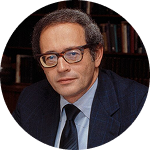
“Many cognitive psychologists see the brain as a computer. But every single brain is absoultely individual, both in its development and in the way it encounters the world.”
The Data Behind the Opportunity
The numbers make a clear case:- McKinsey’s research shows scaling brain health interventions could avert 267 million disability-adjusted life years (DALYs) globally by 2050, preserving health and economic potential.
- Holistic employee health investments could unlock up to $11.7 trillion in annual economic value worldwide by improving productivity and reducing health-related losses.
- Meanwhile, around 40-59% of the workforce may need reskilling by 2030 due to AI-driven changes, underscoring the urgency of cognitive wellness.
For context: if your team is hitting some of their quarterly OKRs today, prioritizing brain capital could lead to better results. That’s transformational.
Why Brain Capital Matters More Now
Two forces are colliding:First, cognitive demands are skyrocketing. AI tools are automating routine tasks, which means the work left for humans requires higher-order thinking: strategy, creativity, collaboration, and complex problem-solving. These are all brain-intensive activities.
Second, brain health is declining. More than one in five employees globally show symptoms of burnout. Mental health challenges are costing the economy. The toll shows up in absenteeism, disengagement, and high turnover.
Bottom line: You’re asking more from your people’s brains at exactly the moment those brains are under the most stress.
What This Means for Your OKRs
Here’s where it gets practical. Your OKRs are only as strong as the team executing them.If your objectives focus on launching new products, scaling revenue, or improving customer experience, you need people who can:
- Think strategically when priorities shift
- Collaborate across functions without friction
- Learn fast and adapt to new tools
- Sustain energy through long cycles
- Make smart decisions under pressure
These aren’t soft skills. They’re cognitive capabilities, and they directly depend on brain health.
When teams are burned out, distracted, or mentally exhausted, even the best-written OKRs fail. Not because the goals were wrong, but because the brainpower needed to achieve them wasn’t there.
Five Levers to Build Brain Capital in Your Organization
The good news? Building brain capital isn’t abstract. Here are five evidence-backed levers you can pull:1. Safeguard Brain Health
Make mental wellness non-negotiable. This means:- Offering access to mental health resources (therapy, coaching, apps)
- Designing workflows that prevent chronic overload
- Building a culture where taking time off is normalized, not punished
- Training managers to recognize early signs of burnout
Employees with strong mental health are less likely to develop physical health issues and perform consistently better over time.
2. Foster Brain Skills
Invest in the capabilities that matter most:- Resilience training to help teams navigate uncertainty
- Creative problem-solving workshops
- Communication and collaboration programs
- Time management and focus techniques
The World Economic Forum identifies analytical thinking, creative problem-solving, and resilience as the top three skills employers need by 2030. Start building them now.
3. Study What’s Working
Track brain capital the way you track revenue. Measure:- Burnout indicators (absenteeism, turnover, engagement scores)
- Cognitive performance (decision quality, meeting effectiveness)
- Skill development (training completion, internal mobility)
You can’t improve what you don’t measure. Data tells you where to invest next.
4. Invest Strategically
Allocate a real budget. Brain capital initiatives are performance drivers. Consider:- Early-intervention programs that catch issues before they escalate
- Flexible work arrangements that reduce cognitive overload
- Leadership development focused on brain-positive management
- Technology that augments (not replaces) human thinking
Organizations that embed brain health into operations see increased ROI.
5. Mobilize Leadership
This only works if it’s a priority from the top. CEOs and executives need to:- Model healthy behaviors (taking breaks, setting boundaries)
- Align brain capital initiatives with business strategy
- Hold managers accountable for team well-being
- Communicate the “why” clearly and often
Culture flows from leadership. If your C-suite doesn’t prioritize brain capital, your teams won’t either.
The OKR Connection: Execution Depends on Brain Power
Let’s bring this full circle. You’re probably already setting OKRs around growth, innovation, or efficiency. But if you’re not also setting OKRs around brain capital, you’re missing the foundation those goals depend on.Example OKRs for Brain Capital:
Objective: Build a resilient, high-performing team
Key Result 1: Reduce employee burnout scores by 30% in Q2
Key Result 2: Achieve 80% participation in brain skills training
Key Result 3: Increase manager-reported team engagement from 65% to 80%
Objective: Enable AI-era skill development
Key Result 1: Train 100% of the product team on AI-human collaboration workflows
Key Result 2: Launch adaptability workshops with 90% attendance
Key Result 3: Improve problem-solving speed by 20% (measured via decision latency)
These aren’t separate from your business OKRs; they enable them.
Build OKRs that strengthen execution, not burnout
What Happens If You Don’t Act
Ignoring brain capital carries real costs:- Lower productivity as cognitive fatigue compounds
- Higher turnover as burned-out employees leave
- Missed goals as execution quality declines
- Competitive disadvantage as rivals invest in their people
The brain economy isn’t a future trend. It’s here. Companies that recognize this early will outperform those that treat people like machines.
Start Small, Scale Fast
You don’t need to overhaul everything at once. Start with one lever:- Launch a mental health resource program
- Run a pilot brain skills workshop
- Survey your team on burnout indicators
- Train one manager cohort on brain-positive leadership
Track what works. Double down. Scale from there. The teams that win over the next decade won’t just be the ones with the best strategy. They’ll be the ones with the strongest brains executing that strategy.
Ready to Build Brain Capital?
Your OKRs are already telling you where your team needs to focus. Now it’s time to ensure they have the cognitive capacity to deliver.Want to align your goals with employee well-being? Start by tracking brain capital as rigorously as you track revenue. Use Profit.co to set OKRs that measure what truly drives performance, including the health and skills of the people behind the work.
Because in the brain economy, the best competitive advantage isn’t your technology. It’s your team operating at full capacity.
Use Profit.co to track business outcomes and the brain capital that powers them
The brain economy focuses on human cognitive capacity as a core economic driver. It emphasizes brain health (mental well-being) and brain skills (critical thinking, adaptability, and creativity) as essential to productivity and growth.
Brain capital combines employee mental health and cognitive skills. In organizations, it directly impacts decision-making quality, execution speed, innovation, and OKR success.
OKRs require sustained focus, adaptability, and collaboration. Burnout, stress, and cognitive overload reduce execution quality, leading to missed key results—even when goals are well-defined.
Yes. Companies can track burnout indicators, engagement scores, absenteeism, turnover, skill development, and decision effectiveness—just like any other performance metric.
As AI automates routine work, human value shifts to higher-order thinking: strategy, creativity, judgment, and collaboration. These capabilities depend directly on strong brain health.
Absolutely. Many organizations now set OKRs around burnout reduction, skill development, engagement, and adaptability—because these enable business outcomes, not distract from them.
Start small: introduce mental health resources, pilot brain skills training, or set one OKR focused on team well-being. Measure results, then scale.
Related Articles
-
OKR Software with Mobile App: Track Your Goals Anywhere
TL;DR OKR software with a mobile app keeps your team aligned and productive wherever they are. Profit.co's mobile app allows... Read more
-
Top OKR Tools That Integrate Seamlessly with Microsoft 365
TL;DR If your company runs on Microsoft 365, your OKR tool should too. The best platforms integrate deeply with Teams,... Read more
-
The 6 Biggest Goal Management Challenges During M&A And How to Solve Them
TL;DR M&A integrations create unique goal management challenges that don't exist in normal operations: cultural conflicts, system incompatibility, talent loss,... Read more
-
6 Adaptations Required to Implement OKRs in Government
TL;DR The Objectives and Key Results (OKR) framework helps organizations align strategy, measure outcomes, and improve execution. However, government agencies... Read more