Published Date: Dec 29, 2025
TL;DR
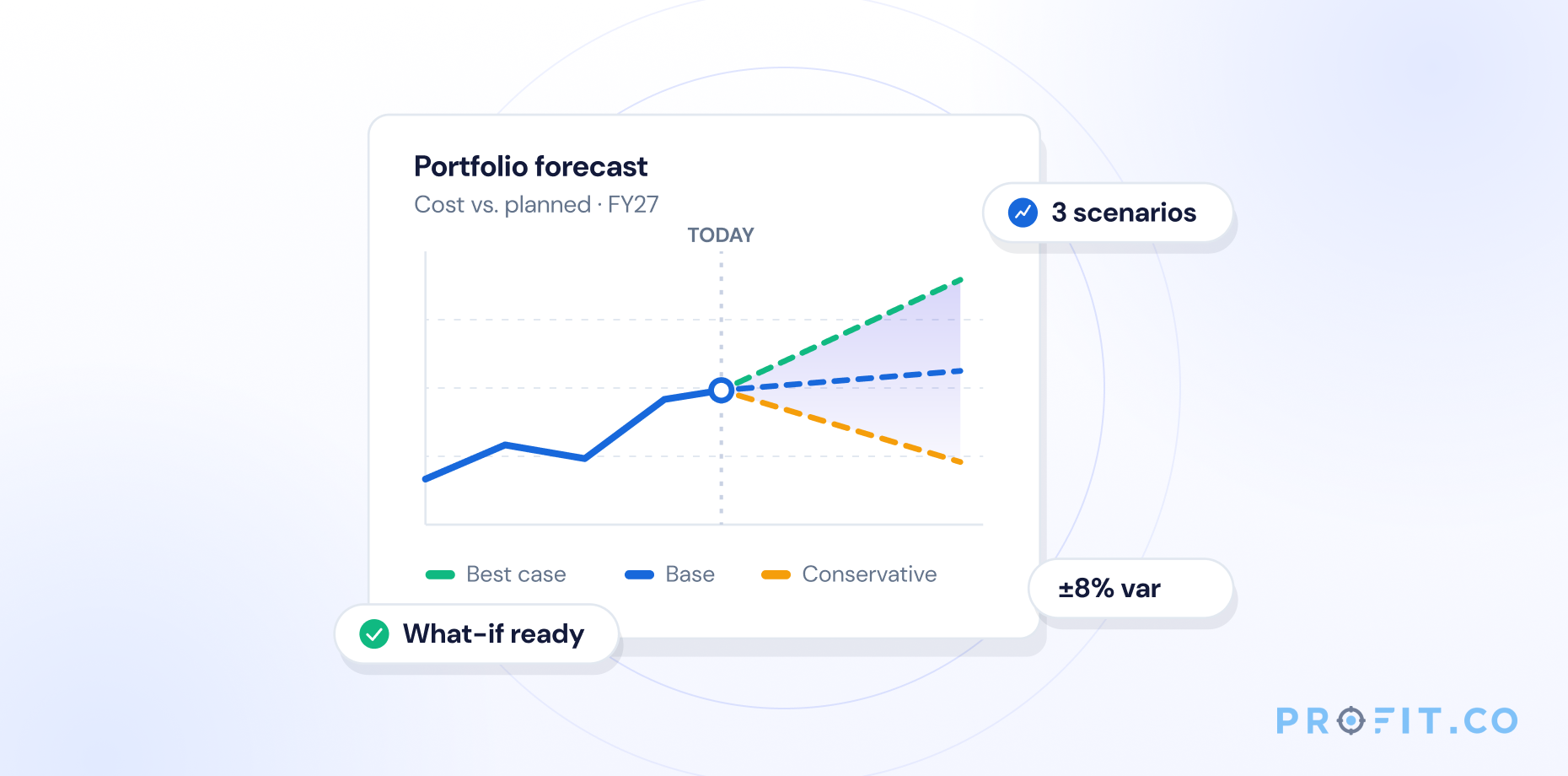
Many projects deliver exactly what they promised, yet the business still doesn’t win. That’s the Output Illusion, celebrating delivery outputs while missing real outcomes. Strategic portfolio management fixes this problem with two-track measurement: track outputs and outcomes during execution using leading indicators. Profit.co facilitates this process by providing benefits realization plans, outcome metrics linked to OKRs, live dashboards, and governance for course correctionWhen “successful delivery” still feels like failure
Let’s start with a reality most leaders have lived through. A project finishes on time.The budget is fine. Scope is delivered. Everyone celebrates.
Then a month later someone asks, “Did these efforts actually improve the business?” And the answer is awkward. This is not due to the team’s lack of hard work. Because what got delivered wasn’t the same as what the business needed.
That disconnect is the output illusion. We mistake delivery for impact.
Once you see it, you can’t unsee it. So let’s break down what’s really happening and how to fix it.
Output vs outcome
Let’s keep this super clear, because this is where many portfolios go wrong. Outputs are what a project delivers. Outcomes are the business results that show up because of that delivery.In other words, outputs are what you build or launch. Outcomes refer to the improvements that occur after you build or launch a product or service. Once you look at work this way, it becomes obvious why projects can finish “successfully” and still fail to move the business forward. A few quick examples make it obvious:
- Shipping a CRM system is an output. Improving customer satisfaction or retention is the outcome.
- Installing a new manufacturing line is an output. Increasing OEE or reducing defects is the outcome
- Launching a digital platform is an output. Getting real adoption and behavior change is the outcome
So a project can be “green” on the tracker, while the business result stays “red.”

If that sounds familiar, the good news is that the fix is not complicated. It just requires changing what and when you measure it.
The two-track measurement model
- Traditional portfolio management tracks one thing really well: outputs.
You’ll see:
- milestones
- budget burn
- schedule variance
- resource usage
That’s useful. However, this approach only provides a partial picture.
- Strategic portfolio management adds a second track: outcomes
So alongside delivery progress, you track:
- benefits realized
- strategic objectives advanced
- adoption rates
- operational KPIs moving
- customer or employee impact
Track the delivery to stay informed about the project’s progress. Track outcomes to see whether the project matters. Now here’s where most teams go wrong: they measure outcomes only after the project closes. By then, it’s too late.
“Show me the incentive and I will show you the outcome.”

Why leading indicators change everything
Outcomes shouldn’t be a post-mortem. Instead, they should serve as a guide.That’s where leading indicators come in.
Leading indicators are early signals that tell you if the outcome is forming while the project is still running.
For example:
- A CRM rollout is 70% complete, but adoption is only 20%; it’s a red flag now.
- A plant upgrade is “on track,” but OEE hasn’t moved, indicating something is off.
- A new platform launched, but active users are flat, indicating a course correction this month, not next quarter.
This takes you from:
- Budget variance → Value realization rate
- Schedule performance → Outcome velocity
- Resource utilization → Strategic contribution
And once you run portfolios this way, teams stop delivering blindly. They adjust early and protect value. So how do you make leading indicator tracking a real habit and not a manual headache?
How Profit.co helps you track value while work is in progress
Profit.co supports value realization as part of daily execution, not a quarterly review cleanup.Here’s how:
Benefits realization plans
Each initiative can carry a benefits plan:
- what value is expected
- when it should show up
- how it will be measured
So the “why” is never lost behind the “what.”
Outcome metrics tied to OKRs
Projects link directly to OKRs or Balanced Scorecard goals, with outcome measures attached. That way, delivery and strategy stay connected in one view.Leading-indicator dashboards
Profit.co dashboards highlight real-time signals:- adoption trends
- KPI movement
- benefit realization pace
- strategic contribution
This allows you to identify drift early, before the value is lost.
Course-correction governance
When outcomes aren’t going to surface, Profit.co makes it easy to:- flag risk
- adjust scope
- shift resources
- revisit priority
- re-approve changes fast
You can proactively adjust your approach instead of waiting for a “failed success” to happen at the end of the process. The result is that you deliver a strategy
A Digital Platform Launch: How Profit.co Strategic Portfolio Management Tracks Output and Outcome
Launching a digital platform is a classic output. Real adoption and behavior change are the outcomes.This is where Profit.co Strategic Portfolio Management (SPM) helps. Instead of treating value as something you check after go-live, Profit.co SPM tracks delivery and value together while the work is still in progress
Track outputs with Earned Value Management (EVM) delivery metrics
On the delivery side, Earned Value Management (EVM) helps answer: “Are we delivering what we planned, on time and within budget?”With Profit.co EVM SPM, teams can track delivery signals like:
- Milestones and phase completion (track progress checkpoints against the plan).
- Schedule progress and delivery status (spot timeline slippage early).
- Budget and effort usage (monitor consumption versus progress)
- Scope completion and dependencies (validate what’s done and what could block delivery).
- EVM-style indicators like planned work vs completed work (detect schedule or cost drift before it escalates).
This ensures the platform is not just being worked on but is actually moving toward completion in a controlled way.
Track outcomes with Benefits Value Management (BVM) value metrics
At the same time, Benefits Value Management (BVM) answers the question that delivery metrics can’t: “Is the business value forming while we’re building this?”For a digital platform, Profit.co SPM can track outcome signals such as
- Adoption rate (how many target users are active)
- Activation milestones (first login, first key workflow completed)
- Behavior change (new process usage replacing the old process)
- Early movement in operational KPIs (cycle time, ticket reduction, self-serve completion)
- Benefits realized vs benefits planned (value pace compared to expectations)
This is the key shift: value becomes measurable during execution, not a post-launch surprise.
Why tracking both matters
If the platform is 80% delivered (EVM looks green) but only 15% of users are active (BVM looks red), Profit.co SPM makes that gap visible immediately. That gives teams time to course-correct by improving enablement, fixing adoption blockers, adjusting rollout plans, or reprioritizing features – before the initiative becomes a “successful delivery” that fails to create real impact.What changes when you beat the Output Illusion?
Once you start tracking outcomes as part of day-to-day execution, something shifts. Portfolio reviews stop feeling like status updates and start feeling like real business conversations.Here’s what you notice pretty quickly:
- Projects don’t feel “done” just because delivery is complete. They’re only done when the value actually shows up
- Leaders discover the truth early. Not six months later, when the project is closed and nothing can be fixed
- Teams course-correct while there’s still time. Small adjustments mid-flight prevent big disappointments at the end
- The portfolio produces real strategic wins. This is not a long list of busy projects that merely look good on paper.
And just to be clear, you’re not ignoring delivery. Delivery still matters.
What changes when you beat the output illusion?
Once outcome tracking becomes normal, portfolios feel different:
- Projects stop being “done” until value shows up.
- Leaders get early truth, not late surprises
- Teams course-correct before damage happens
- Your portfolio starts producing strategic wins, not busywork.
Track outcomes before it’s too late with Profit.co
Conclusion
Projects don’t create value just because they finish; value shows up only when outcomes move. Strategic portfolio management brings that truth into everyday execution by linking work to strategy, funding it like an investment, rebalancing quickly, and tracking outcomes while the work is still alive.If you want the full picture of how all four pillars fit together, head back to the article on the $2 trillion strategy-execution gap. It ties the entire story, alignment, investment clarity, flexibility, and value realization into a straightforward framework.
Want to know more about how you can achieve this?
It’s when projects are delivered on time and on budget, but business value doesn’t improve because only outputs were tracked, not outcomes.
Because delivery metrics don’t tell you whether adoption, KPIs, or strategic goals are moving. You can build the thing and still miss the change
Leading indicators show outcome formation during execution (so you can fix issues early). Lagging indicators show results after the project ends.
Outcomes tied to strategy: revenue impact, cost reduction, adoption, customer satisfaction, operational KPIs, compliance, productivity, and retention.
During execution—at least monthly, and more often for high-value initiatives.
By linking projects to objectives, tracking benefits plans and outcome metrics, showing leading indicators in dashboards, and enabling quick course correction,