

TL;DR
The recognition practices a new employee experiences during their first 30 to 90 days shape their expectations of how the organization values people, making it more powerful than almost any other experience they have at work. Organizations that build genuine recognition into the onboarding process, not just welcome emails and orientation schedules, establish a psychological foundation that influences engagement, retention, and performance for years. This article covers how to do that deliberately and well.
Key Takeaways
- New employees form lasting impressions about organizational culture within the first 30 days. Recognition practices during this period shape those impressions significantly.
- Recognition during onboarding communicates psychological safety: when new employees see appreciation flowing freely and genuinely, they are more willing to contribute, ask questions, and take initiative.
- Early recognition should be specific and timely: acknowledging a new employee’s contribution in their first week is more impactful than waiting for a 90-day review.
- Manager-led recognition in the first 30 days is the most powerful signal a new employee receives about whether their contributions will matter here.
- Peer recognition during onboarding builds belonging faster than any formal orientation activity.
- Organizations with strong onboarding recognition practices see higher 90-day retention and faster time to full productivity than those without (SHRM Research).
The first week at a new job is one of the most psychologically complex experiences in a professional career. A new employee is simultaneously performing competence for an audience of strangers, absorbing enormous amounts of new information, attempting to build relationships without the context that makes relationships natural, and making rapid unconscious assessments about whether they made the right decision in accepting this offer.
In the middle of all of that, they are watching how the organization treats people. Not how it says it treats people in the culture deck. Not how the recruiter described it in the final interview stage. How it actually treats people in the ordinary moments of the work week: whether contributions get noticed, whether questions get welcomed, whether managers engage with their team members as people or as functions, whether the recognition language in the job listing matches the recognition behavior in the team meeting.
New employees who observe genuine, specific recognition in their early weeks update their assessment of the organization upward. They feel safer contributing early, asking for help, and taking the initiative that organizations claim to want from new hires. New employees who observe a recognition culture where effort goes unacknowledged and where the stated values about people are visibly different from the actual practices update their assessment in the other direction, often within the first thirty days.
The stakes are not abstract. SHRM research indicates that strong onboarding experiences increase 90-day retention by up to 82% compared to weak ones, and recognition is one of the most influential components of what employees experience as strong.
“Treat employees like partners, and they act like partners.”

Why Recognition During Onboarding Has an Outsized Impact
The reason onboarding recognition carries disproportionate influence is psychological. The early weeks at a new organization are a period of heightened sensitivity to social signals. New employees are actively updating their mental model of how this organization works, what behaviors are valued, and whether they will be able to thrive here. Every interaction during this period is weighted more heavily in that updating process than the same interaction would be six months into tenure.
This means that recognition delivered in the first 30 days does not carry the same weight as recognition delivered at 90 days or a year in. It carries significantly more. A manager who notices and specifically acknowledges a new employee’s contribution in week two is telling that employee something powerful: you are seen here, your work registers, and this is the kind of organization that pays attention to people. That impression, formed early, tends to be durable.
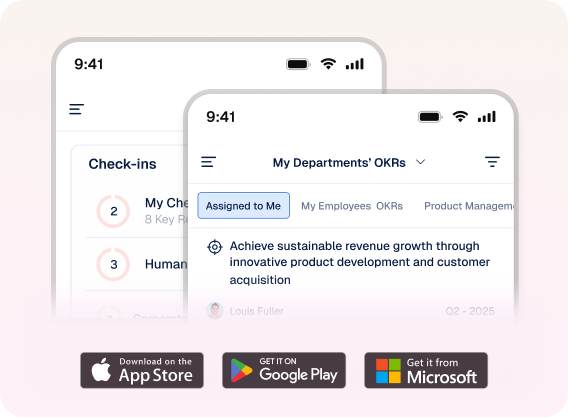
Profit.co’s 1:1 meeting templates, goal-linked recognition, and pulse surveys give managers the structure and the data to make early recognition specific, consistent, and genuinely impactful.
Ready to try?
Recognition Before Day One: The Pre-Boarding Opportunity
The recognition experience for a new employee begins before they arrive. The period between accepting the offer and starting work, which has come to be called pre-boarding, is a window where many organizations miss an early opportunity to establish a recognition culture.
Pre-boarding recognition looks like this in practice:
- A personal message from the direct manager a week before the start date, expressing genuine excitement about specific things the new hire will bring to the team and naming particular aspects of their background or skills that are relevant to the work ahead. Not a template welcome email with the hire’s name inserted, but a message that demonstrates the manager has thought about this person specifically.
- Some organizations extend this to include a pre-arrival team introduction where colleagues share a brief, specific welcome message describing what they are looking forward to working on together. This gives the new employee a sense of their colleagues as real people with genuine perspectives before they walk through the door.
The impact of a warm, specific pre-boarding communication is meaningful. It reduces the psychological friction of the first day by giving the new employee a foundation of relationship awareness before the relationship has formally begun.
Day One Recognition: First Impressions That Last
Below are three specific activities that can have a positive impact on a new employee.
Welcome the Person, Not Just the Role
Day one recognition should acknowledge the person who has joined, not just the function they will perform. A welcome that says “we are so glad to have your skills on the team” is less powerful than one that says “we have been looking forward to having someone with your background in customer research working on the product team, and specifically because of X.” The specificity communicates that the organization has thought about this hire as an individual rather than as a headcount addition. That distinction is registered immediately.
Set Up a Peer Welcome Structure
Rather than leaving the social dimension of day one to chance, build a structured peer welcome into the day. Assign two or three specific colleagues to reach out to the new employee with a brief personal message during their first day, each connecting something specific about their own work to something they know about the new hire. This structured welcome serves two purposes simultaneously. The new employee experiences genuine, specific peer appreciation in their first hours of work, which establishes psychological safety faster than any orientation activity. And the colleagues involved have a specific reason to initiate a relationship rather than waiting for the organic opportunity that often takes weeks to arise.
Acknowledge the Decision
A small but impactful day one recognition practice is for the manager to explicitly acknowledge that the employee made a choice in accepting this offer and that the organization is glad they made that choice. “There were multiple organizations competing for your time and attention, and we are genuinely glad you chose this one” is a recognition that goes beyond professional welcome into personal acknowledgment of the decision the employee made. This is more common at companies with strong cultures of recognition and notably rare everywhere else. The employees who receive it consistently mention it when asked about their early organizational impressions.
The First 30 Days: Building a Recognition Foundation
The first 30 days are when a new employee’s recognition culture becomes visible through repeated observation. Here is what to build into this period deliberately.
- Weekly specific recognition from the manager. During a new employee’s first month, the direct manager should find and name at least one specific contribution per week in the context of a 1:1 meeting or a team communication. This does not require the contribution to be dramatic. A new employee who asked a clarifying question that improved the team’s approach to a problem has contributed something worth acknowledging. The consistency of specific weekly recognition in the first month establishes the manager as someone who pays attention, which is one of the most important early impressions a manager can create.
- A first-week or first-month acknowledgment. Some organizations build a formal first-month acknowledgment into the onboarding structure: a brief moment in a team meeting where the new employee’s early contributions are named, or a written message from the manager marking the completion of their first 30 days with specific observations about what has been impressive. This acknowledgment demonstrates the organization was paying attention to the new employee’s early performance, not just expecting it.
- Introducing the peer recognition culture. If your organization has a peer recognition program, the onboarding period is the right time to introduce new employees to it with active participation rather than passive explanation. Asking existing team members to send the new employee specific appreciation through the recognition platform during their first two weeks demonstrates the culture in action rather than describing it in an orientation presentation.
- Recognizing effort, not just output. In the early weeks of a new role, output is often lower than it will become as the employee gains context and confidence. Recognizing the effort, the initiative, the quality of questions, and the interpersonal contribution rather than only the delivered outputs communicates that the organization understands and appreciates the full picture of early-stage performance.
Days 31 to 90: Deepening Recognition as Contribution Grows
As new employees move through the 30 to 90 day period, their contribution becomes more substantive and the recognition should reflect that increased stake in the organization.
- The 60-day check-in as a recognition moment. Most organizations build a 60-day check-in into the onboarding process as a performance conversation. Restructure this to begin with genuine recognition of what the employee has contributed in their first two months before moving into any development or performance feedback. The order of operations matters: recognition first communicates that contributions are being observed and valued, which creates the psychological safety for the feedback conversation that follows.
- Cross-functional recognition. By the 60 to 90 day mark, a new employee is typically beginning to build relationships outside their immediate team. Creating opportunities for cross-functional colleagues to recognize the new employee’s early contributions during this period builds belonging and organizational connection at the same time.
- Involving new employees in the recognition culture, not just receiving it. Between 30 and 90 days, begin encouraging new employees to participate in peer recognition themselves, not just receive it. Sending appreciation to colleagues is one of the fastest ways to feel like a genuine member of a team rather than an observer of it. Prompt new employees in their 1:1 meetings with a question like: is there someone on the team you would like to recognize for something they have done for you in your first few weeks here?
How Profit.co Builds Recognition Into the Onboarding Experience
Profit.co’s performance management platform gives new employees visibility into the goal framework from day one, which is itself a form of recognition: it communicates clearly what success looks like here and how their contribution connects to the organization’s priorities.
The 1:1 meeting framework in Profit.co includes recognition prompts that ensure managers are acknowledging early contributions in every structured check-in rather than deferring recognition until performance review cycles that are months away. Goal-linked recognition means that when a new employee completes their first OKR contribution or hits their first milestone, that achievement is visible to the team and celebratable in a specific, contextual way.
For organizations building their onboarding recognition practice, Profit.co’s Pulse Survey tool provides the measurement mechanism: pulse surveys at 30 and 90 days can specifically track whether new employees feel their contributions are being recognized, giving managers early warning of any gaps before they compound into disengagement.
See How Profit.co Supports New Employee Engagement.
Recognition during onboarding is important because new employees form lasting impressions about organizational culture within their first 30 days. These impressions are formed during a period of heightened psychological sensitivity, when every social signal is being actively weighted and interpreted. Organizations where contributions are specifically noticed and acknowledged in the early weeks establish a foundation of psychological safety that influences engagement, retention, and productivity for years. Organizations where early effort goes unacknowledged frequently lose new hires before the 90-day mark, often before the real reason is visible in exit data
Practical onboarding recognition includes: a personal, specific welcome message from the direct manager before day one, structured peer welcomes on day one, weekly specific acknowledgment of at least one contribution from the manager during the first month, a formal first-month milestone acknowledgment, introduction to the peer recognition culture through active participation rather than passive explanation, and a 60-day check-in that begins with genuine recognition before any performance feedback. Each element should be specific to the individual employee rather than templated.
Recognition during onboarding avoids feeling forced when it is specific rather than generic. A manager who acknowledges the exact question a new employee asked that helped the team think differently, or the specific way they handled their first independent deliverable, is communicating genuine observation rather than performing appreciation. The key is that managers need to actually be paying attention to early contributions in order to name them specifically, which requires deliberate attention rather than good intentions.
A first-month acknowledgment should combine a retrospective element naming two or three specific contributions or qualities observed during the first 30 days with a forward-looking element expressing confidence in what the employee is developing toward. It should come from the direct manager and can be delivered in a 1:1 meeting, a written message, or both. It should not read like a performance review. It should read like a manager who was genuinely paying attention telling a new employee what they noticed
SHRM research indicates that strong onboarding experiences improve 90-day retention by up to 82% compared to weak onboarding. Recognition is one of the most influential components of what employees experience as a strong onboarding. New employees who feel their contributions are specifically noticed and acknowledged in the early weeks are significantly more likely to remain past the 90-day threshold and to reach full productivity faster than those whose early effort goes unacknowledged
Related Articles
-
Does Customer Onboarding Belong in a Project Portfolio Management Tool?
TL;DR Customer onboarding often looks like a project, but it is usually not a Project Portfolio Management (PPM) problem. While... Read more
-
How to Draw the Boundary Between Project Portfolio Management and Workflow Automation
Karthick Nethaji Kaleeswaran Director of Products | Strategy Consultant Published Date: March 23, 2026 TL;DR Organizations often struggle to decide... Read more
-
What Happens When a Project Portfolio Management Vendor Tries to Do Everything
Karthick Nethaji Kaleeswaran Director of Products | Strategy Consultant Published Date: March 23, 2026 TL;DR Project Portfolio Management platforms are... Read more
-
AI and the Future of Project Finance: What PMOs Need to Know
TL;DR AI is generating genuine capability improvements in project financial forecasting, anomaly detection, and procurement risk identification. But every one... Read more