
The most significant change in performance management in decades is happening right now. Companies are moving away from manual, periodic reviews and toward automated systems that always show performance and give immediate feedback. This change isn’t just a theory. According to Gartner, only 6% of businesses currently use dynamic performance management. However, that number will rise to 35% by 2029. Why? These systems change the way performance management works at its core
“Without data you’re just another person with an opinion.”

Getting to Know Dynamic Performance Management
Dynamic Performance Management uses technology to automatically gather verified performance indicators and combine data in real time. Instead of managers having to spend time gathering information, systems do that for them. Managers can then focus on removing obstacles and coaching employees. The move toward dynamic systems is based on a simple fact: managing performance by traditional methods doesn’t work well when there are a lot of people, and managers need better information to make better choices.How Real-Time Performance Intelligence Really Works
Dynamic performance management works through three layers that are all connected:Collecting Data Automatically
Instead of managers having to keep track of every project milestone, deliverable, and interaction by hand, technology automatically collects performance data from systems that are already in place at work.- Project management tools Keep track of how many tasks are done and how well deadlines are met
- Communication tools keep an eye on how people work together
- Customer relationship systems keep track of how happy customers are
- Goal tracking software keeps track of how far you’ve come toward your goals.
The system doesn’t add any extra work. It gets information from work that is already being done on your organization’s digital infrastructure.
Performance Metrics Based on Role
You shouldn’t measure everyone the same way. Dynamic systems use smart, role-specific indicators that show what success looks like for each job- Code quality metrics, sprint completion rates, and patterns of technical contributions are all part of a software developer’s performance data.
- The data for a sales representative focuses on how quickly the pipeline moves, how engaged customers are, and how much money they make
- Metrics for a project manager keep track of deadlines, stakeholder satisfaction, and the best use of resources
This customization makes sure that performance visibility is useful and actionable instead of general and misleading.
Synthesis and Insights Powered by AI
You have to make sense of raw data. Advanced systems look at a lot of data points to find patterns that people would miss.- The system flags the pattern when someone keeps extending deadlines
- That trend is tracked when people work together more with teams from different departments
- When performance indicators show that someone is ready for harder work, managers get proactive alerts.
The technology doesn’t just gather data. It turns data into useful information that helps managers make quick decisions.
How a manager is more effective with with Dynamic Performance Management
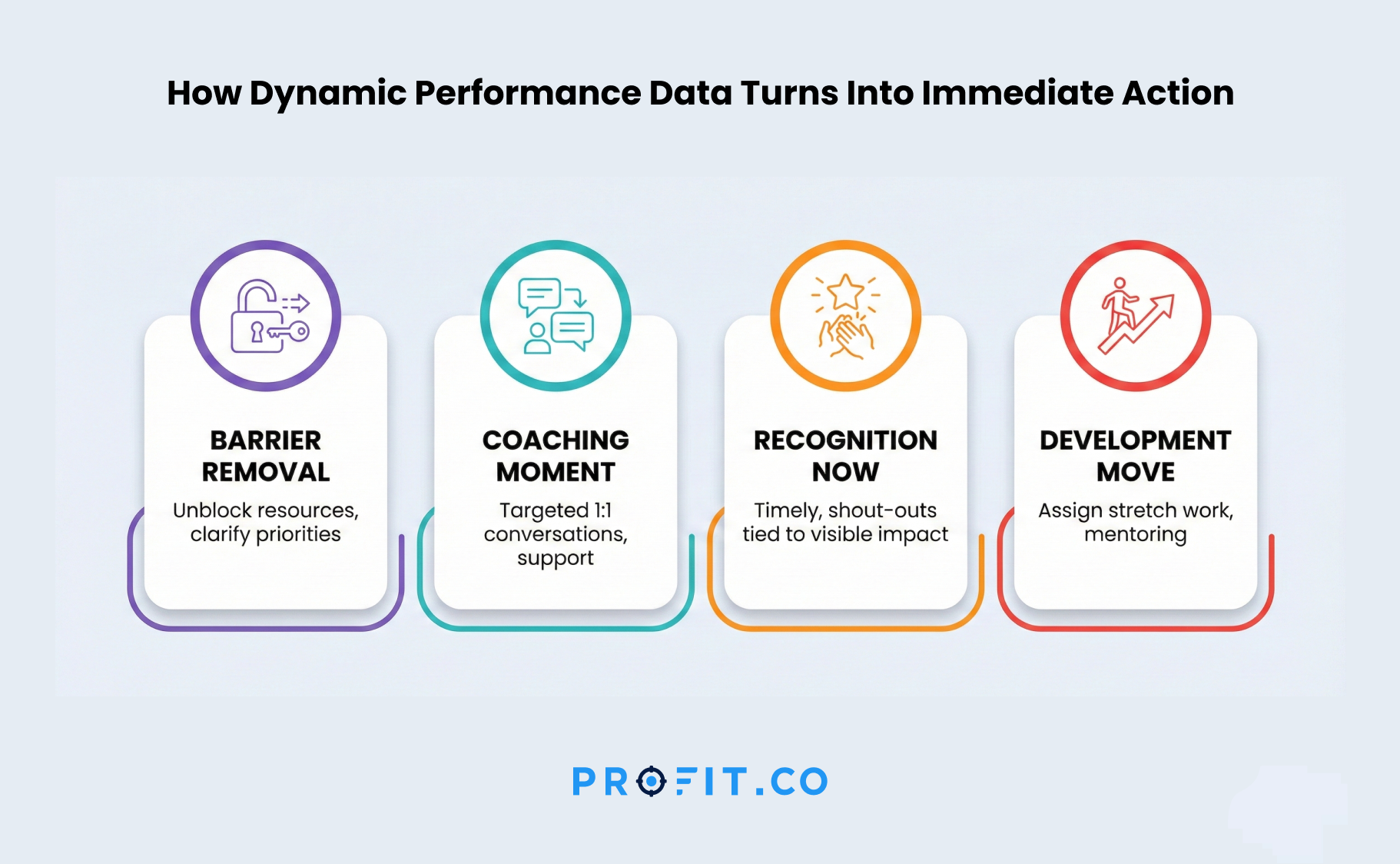
Real-time performance intelligence changes the way managers work and the way they spend their time. This process involves gathering data and breaking down barriers. In traditional performance management, managers have to spend a lot of time getting information, writing down what they see, and putting together what happened in the past. This administrative work takes up hours that could be better spent on more important tasks.- Dynamic systems automatically collect data, which cuts down on the time managers spend on paperwork. This increase in efficiency doesn’t mean doing less work.
- When the system finds a performance pattern that needs attention, managers look into the root causes and get rid of any problems. Is a lack of clear strategy holding things back? Are limited resources causing problems? Managers become people who solve problems for the company instead of people who collect data.
- Better coaching conversations. One-on-one conversations become more meaningful and focused on the future when there is a lot of performance data available. Managers don’t have to remember things or spend time in meetings getting information about what happened anymore. The data gives us that base. Conversations can quickly turn to context, figuring out problems, and planning for growth.
- When a manager gets a notice that someone’s performance has changed, they can set up a time to talk: “I’ve noticed that your project completion timeline has gotten longer lately.” Let’s talk about what’s going on and how I can help you. These conversations are much more effective when they are specific and timely.
- Recognizing and developing proactively. Managers can see contributions right away and spot chances for growth as they come up thanks to real-time visibility.The system keeps track of these patterns of collaboration when someone always helps their coworkers succeed. Recognition is no longer vague and late; it is now clear and on time
- When performance indicators show that someone is ready for stretch assignments, managers can offer them growth opportunities based on objective readiness signals instead of waiting for annual review cycles.
What organizations Need to Today
To switch to dynamic performance management, both the technology and the organization need to be ready1. Putting technology together
Most businesses already have basic systems that can give them performance data. The problem isn’t getting new technology; it’s making sure that the tools you already have work well together.Please begin by identifying the systems you are currently utilizing:
- Platforms for managing projects
- Tools for talking and working together
- Software for tracking goals and OKRs
- Systems for managing customer relationships
- Platforms for managing learning
Dynamic performance management doesn’t replace these data sources; it combines them.
The most important thing is to add an intelligent layer that combines information and brings out insights
2. Data Governance That is Clear
To get real-time performance data, there need to be clear rules about what data is collected, how it is used, and how privacy is protected.Companies need to be clear about:
- What performance indicators are being watched
- How data affects choices
- Who can see what information
- How workers can see their own performance data
Being open builds trust. Ambiguity makes people anxious and resistant.
3. Training and Support for Managers
Training and support for managers to use technology alone won’t change how performance management works. Managers need to be ready for conversations based on data and how to understand automated insightsGood training covers:
- How to read performance dashboards and see patterns
- When to step in based on alerts from the system
- How to find a balance between numbers and context
- How to talk to employees about performance insights
Companies that put money into both their managers’ skills and the use of technology get much better results.
Finding the right balance between automation and human judgment
- People often worry that dynamic performance management will make management less personal or robotic. When systems are set up correctly, the opposite is true
- Technology does things like collect data and find patterns that are mechanical. This lets managers do things that technology can’t, like understand context, build relationships, show empathy, and make decisions that are more complicated.
- A system might notice that someone’s collaboration metrics have gone down. A manager interprets: Is this person going through something personal? Did the dynamics of the team change? Are they doing focused work that requires them to be alone for a while?
- Data gives people a chance to talk. Managers give advice and the right answers.
Common Problems with Implementation
Companies that want to move toward dynamic performance management will face certain problems:- Too much reliance on metrics: Automated data is useful, but it doesn’t tell the whole story. Qualitative observations, contextual factors, and human judgment continue to be indispensable. Don’t let data make decisions for you; use it to help you make them.
- Poor change management: It’s easy to implement new technology, but changing behavior is hard. People weren’t ready for new ways of working, which is why many dynamic system rollouts fail.
- Bad data quality: Performance intelligence is only as good as the data it is based on. Automated insights will be wrong if the source systems have wrong information.
- Not enough support from managers: When managers see dynamic systems as a way to watch people instead of help them, resistance makes it harder to use them. It’s very important to be clear about the benefits and to deal with concerns before they happen.
The Advantages of Dynamic Performance Management
Companies that put money into real-time performance intelligence get a number of measurable benefits:- More efficient managers: A 40% decrease in administrative time means big savings and lets managers focus on coaching, development, and strategic work.
- Faster problem solving: Fixing performance problems within weeks instead of quarters stops small problems from turning into big, costly ones.
- Better employee retention: Giving timely development support and recognition makes high performers more engaged and less likely to leave.
- Better decisions about talent: Objective, ongoing performance data makes it easier to make decisions about promotions, succession planning, and finding high-potential employees
- Improved organizational agility: Organizations can respond quickly to changing business conditions when they can see performance patterns in real time.
Businesses don’t need perfect technology or full support from everyone in the company to get started. Pick one high-value data source that you already use that could provide you with information about performance. Common places to start are project management tools and systems for tracking goals. Choose a champion team that is open to trying new things and giving honest feedback about what works and what doesn’t. Do a three-month pilot that focuses on certain use cases. Find out how real-time data changes coaching conversations and what extra information managers need to make sense of insights. Carefully write down specific results.
- Which insights were the most useful?
- What data needed more context?
- How did the manager’s time management change?
Use success stories to build momentum. When one team does better, other teams will want to be able to do the same things. The change to dynamic performance management is happening.
Want to see what real-time performance intelligence looks like in practice?
Regular check-ins and feedback conversations led by managers are important for continuous performance management. Dynamic performance management uses automated data collection and AI analysis to give managers real-time information about how well their employees are doing. s
No. Dynamic systems don’t look at invasive activity monitoring; instead, they look at validated performance indicators that are related to outcomes and development. The goal is to be able to see support and coaching, not to be watched. It’s important to be open about what is being measured and how the data is being used
Most businesses already have basic systems in place, such as tools for managing projects, platforms for communication, and software for tracking goals. Dynamic performance management doesn’t replace these systems; instead, it adds an intelligent layer that combines insights from them
No way. Dynamic systems take care of gathering data and finding patterns, which gives managers more freedom to make decisions. Technology gives us better information to help us make decisions, but it can’t replace what people know about the situation, the people involved, and their own circumstances
Related Articles
-
Building a Dynamic Performance Rhythm That Actually Changes Behavior
TL;DR Dynamic Performance Management data only changes behavior when it's paired with a human cadence. Use daily micro-touchpoints to remove... Read more
-
How Performance Management Platforms Align Individual Goals with Company Strategy
TL;DR Performance management platforms help organizations align individual goals with company strategy by cascading objectives, tracking progress in real time,... Read more
-
Employee Recognition and Performance Management Software: The Missing Link Between Motivation and Results
TL;DR Employee recognition and performance management software bring motivation and accountability together on one platform. By connecting recognition, feedback, goals,... Read more
-
Goal & Performance Management Software
TL;DR Goal and performance management software helps organizations move from static annual reviews to continuous, outcome-driven performance. By aligning goals,... Read more