

TL;DR
The CIO role has fundamentally changed. Managing technology is no longer enough. The CIOs driving real business impact are connecting IT decisions to revenue, aligning teams to shared goals, and making strategy execution a repeatable system. Here is how to do the same.
The CIO Role Has Changed
In an era of constant disruption, CIOs are no longer measured solely by operational uptime. They are measured by enterprise impact.Today, technology decisions directly shape customer experience, revenue performance, operational efficiency, and competitive positioning. IT is not a support function. It is a core operating system for the entire business.
The problem is that many CIO strategies have not caught up with this shift. They are still built around managing existing technology rather than creating new value from it.
The CIOs who are getting results in 2026 and beyond have made a different choice. They are operating as strategy architects, not just technology managers. Here is what that looks like in practice.
The CIO’s Expanding Strategic Mandate
IT has moved from a support function to the backbone of enterprise value creation. Today’s CIO must:- Align IT initiatives directly to business outcomes
- Enable data-driven decision-making at every level
- Accelerate innovation without increasing risk
- Demonstrate clear ROI from technology investments
As we move through 2026, the CIO’s success now depends on disciplined strategy execution that connects IT investments directly to revenue growth, operational resilience, and competitive advantage. Against this backdrop, six strategic priorities stand out for forward-looking CIOs.
1. Connect Every IT Initiative to a Business Outcome
This is where most technology strategies break down. A CIO invests in a new data platform, a cloud migration, or an AI integration. The technical delivery goes well. But six months later, leadership is still asking what the business actually got from the investment.The gap is not the technology. It is the absence of a clear link between the initiative and a measurable business outcome.
The fix is straightforward: every IT initiative needs to be tied to a key performance indicator that business leaders already care about. Revenue per customer, cost per transaction, time-to-market, and customer satisfaction scores. Not IT metrics but business metrics.
When technology investments are framed this way from the start, it becomes much easier to secure executive support, justify the budget, and demonstrate value after delivery.
2. Build an AI Strategy That Solves Real Problems
AI is not optional anymore. Most organizations are already using it in some form, whether in customer experience tools, financial forecasting, or workforce planning.The challenge for CIOs is not whether to adopt AI, but how. It is about doing it in a way that creates lasting value rather than adding more complexity to an already complex environment.
The highest-performing technology leaders are approaching this by focusing on three areas.
- First, identifying where AI can automate processes that currently consume significant human time.
- Second, building data infrastructure that makes AI outputs reliable and auditable.
- Third, integrating AI governance into strategic planning so that risk and compliance are addressed before deployment, not after.
Stop chasing AI trends and start defining the AI capabilities your specific business needs. A targeted, governed AI strategy will consistently outperform a broad, experimental one.
See how your strategy connects with problem-solving and execution
3. Fix the Foundation Before You Build on Top of It
Legacy systems, fragmented integrations, and accumulated technical debt do not disappear when you introduce new technology. They become bigger problems.Many CIOs underestimate how much this foundational work matters. New tools built on unstable or disconnected infrastructure underperform. Migrations stall. Adoption rates disappoint.
Future-ready CIOs are addressing this by:
- Migrating to hybrid and cloud-native architectures
- Refactoring legacy applications
- Centralizing overlapping systems
- Adopting platform engineering for automation and scalability
The practical approach is to treat modernization as a strategic priority, not a maintenance task. This means making deliberate decisions about which legacy systems to refactor, which to migrate to the cloud, and which to decommission entirely. It also means building the talent strategy alongside the technical strategy. Skills gaps in areas like AI development, cloud architecture, and data engineering do not fill themselves. Proactive upskilling plans need to be part of the roadmap.
“Every company is a software company. You have to start thinking and operating like a digital company”

4. Treat Cybersecurity as a Strategic Function, Not a Defensive One
The scale and sophistication of cyber threats has increased significantly. The attack surface now includes cloud environments, third-party tools, Software as a Service applications, and edge devices, and the risks change constantly.Reactive cybersecurity is no longer sufficient. Waiting for an incident to occur and then responding is a strategy built for a different era.
The CIOs who are ahead of this shift are building pre-emptive security capabilities. This includes continuous vulnerability testing, zero-trust architecture, and AI-powered threat detection that can identify anomalies before they become breaches. Ongoing team training is equally important since the majority of breaches still involve human error at some point in the chain.

5. Align IT Strategy to How the Business Actually Operates
IT strategies that are designed in isolation from business workflows consistently underdeliver.The most effective CIOs spend time understanding the primary value streams of the business: how customers get served, how revenue is generated, how teams collaborate. Once those workflows are mapped, it becomes much easier to design IT initiatives that remove friction rather than create more of it. Strategy execution improves when IT aligns to business value streams rather than isolated systems.
This requires:
- Mapping end-to-end customer journeys
- Aligning technology initiatives to workflow outcomes
- Automating processes with measurable success metrics
- Collaborating cross-functionally to define and track KPIs
The shift from process-centric IT to outcome-centric architecture enables faster, more accountable execution. Collaborating with other senior leaders to define what success looks like, and then tying IT delivery to those definitions, is one of the most effective ways to raise the strategic credibility of the technology function.
6. Making Strategy Execution Repeatable
The difference between CIOs who drive consistent impact and those who struggle to demonstrate value is rarely technical skill. It is a system.Repeatable strategy execution requires clear goal alignment, visible performance tracking, and regular checkpoints to assess whether initiatives are still connected to the outcomes they were designed to achieve.
One of the CIO’s greatest challenges is demonstrating tangible value from technology spend. The solution lies in linking every initiative to enterprise outcomes through:
- Clear executive communication
- Quantifiable performance metrics
- Continuous portfolio visibility
- Value-based funding models instead of static annual budgeting
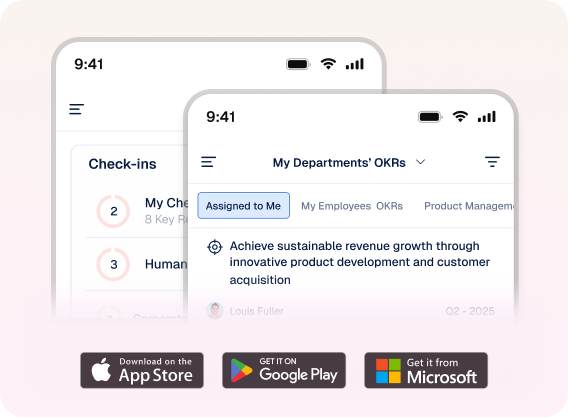
Technology must be positioned not as a cost center infrastructure, but as a measurable growth engine. Profit.co’s strategy execution platform gives technology leaders the tools to align IT initiatives to business OKRs, track performance in real time, and build the visibility that turns good intentions into measurable results.
The Future CIO Advantage
The next generation of CIOs will be defined by their ability to translate vision into sustained business impact.Success will require:
- AI-integrated governance
- Data-driven performance management
- Modernized architecture
- Cyber resilience
- Continuous strategy execution discipline
The CIO of the future is not simply managing systems. They are orchestrating enterprise value. Organizations that master disciplined, measurable strategy execution powered by AI, data visibility, and outcome alignment will lead in the next phase of digital transformation.
Ready to make your technology strategy more than a document?
It means ensuring that IT initiatives translate into measurable business outcomes, not just technical deliverables. It requires aligning technology decisions to company-wide goals and tracking progress against those goals consistently.
By identifying specific business problems AI can solve, building the data infrastructure to support reliable outputs, and integrating governance into the plan from day one. Broad AI experiments without clear success criteria rarely generate lasting value
Misalignment between IT metrics and business metrics. When technology success is measured differently from business success, the two functions operate in parallel rather than in partnership.
Profit.co connects IT initiatives to company OKRs, provides real-time performance tracking, and gives CIOs portfolio-level visibility across all strategic programs, helping close the gap between technology delivery and business outcomes.
Related Articles
-
The Project Portfolio Management Migration Trap: How to Break Free
Karthick Nethaji Kaleeswaran Director of Products | Strategy Consultant Published Date: March 31, 2026 TL;DR Organizations running legacy Project Portfolio... Read more
-
The True Cost of Your Legacy Project Portfolio Management System
Karthick Nethaji Kaleeswaran Director of Products | Strategy Consultant Published Date: March 31, 2026 TL;DR Most CFOs approve legacy Project... Read more
-
How to Choose a Project Portfolio Management Platform
TL;DR Most project portfolio management platform evaluations are structured around feature comparisons, such as which tool has the best Gantt... Read more
-
When Staying With Legacy Project Portfolio Management is Actually the Right Decision
TL;DR Project portfolio management modernization has a compelling business case for most large enterprises. It does not have a compelling... Read more