

TL;DR
An Employee of the Month nomination letter is a written case for why a specific employee deserves formal recognition during a given period. The most persuasive nominations are specific, evidence-based, and aligned with the criteria your organization uses to evaluate the award. This article provides 15 complete nomination letter examples across different roles and contribution types, plus a four-part structure that works for any nominationMost Employee of the Month programs have a quiet credibility problem. The selection criteria are vague, the nominations are even vaguer, and the result is that the same visible, outgoing employees tend to appear on the list repeatedly while quieter, equally strong contributors are overlooked.
The problem is not usually the selection process. It is the nominations that feed it.
A nomination letter that says, ‘I would like to nominate [Name] because they are an incredible team player and always go above and beyond,’ does not give the selection committee much to work with. It could describe a hundred different employees. It does not help anyone make a decision.
A nomination letter that says, ‘I am nominating [Name] for the way they managed the client escalation on March 14th, which directly prevented the loss of a contract worth [amount], through a combination of sound judgment, clear communication, and genuine commitment to the customer relationship,’ gives the committee something real to evaluate.
The difference between these two letters is not talent for writing. It is the habit of specificity.
This article gives you 15 complete nomination letter examples plus a structure you can apply to any employee and any occasion.
“Appreciation is the legal tender that all souls enjoy.”

The Four-Part Nomination Letter Structure
Every nomination letter in this article follows a version of this structure. Understanding it helps you write your own when none of the templates is a perfect fit.Part 1: Open with the nomination and the specific trigger. Name the employee and the specific action, project, period, or behavior you are nominating them for. Do not open with pleasantries. Lead with the point.
Part 2: Describe the specific contribution in detail. This is the most important section and the one most nominators abbreviate. What exactly did the employee do? What were the circumstances? What challenges did they navigate? What decisions did they make?
Part 3: Describe the impact. What resulted from their contribution? Use numbers where possible: revenue saved or generated, time saved, problems prevented, colleagues helped, customer relationships protected. Where numbers are not available, describe the qualitative impact as concretely as possible.
Part 4: Connect to the award criteria and close with your endorsement. Reference the qualities or criteria the award is designed to recognize and explain how this employee demonstrated them. Close with a direct, unambiguous statement of support for the nomination.
Profit.co fosters an ongoing recognition culture, giving Employee of the Month programs a meaningful anchor
Nomination Letters: Performance and Results
These nominations are built around measurable performance achievements.Example 1: Sales Performance
I am writing to nominate [Name] for Employee of the Month in recognition of their Q3 sales performance.
Over the past ninety days, [Name] closed [X] new accounts, representing [X]% above their target, and secured two contract renewals that had been at significant risk of lapsing. The [Client Name] renewal in particular required sustained relationship management over four months and multiple conversations with senior stakeholders. [Name] navigated each of those conversations with professionalism and patience, ultimately securing a renewal that represents [amount or percentage] of annual recurring revenue.
What distinguishes this performance is not just the numbers. It is the way [Name] approached the most difficult accounts: with preparation, persistence, and a genuine investment in understanding the client’s perspective before proposing any solution. That approach is consistent, not occasional.
This nomination reflects both the results and the qualities that produced them. I wholeheartedly support [Name] for this recognition.
[Nominator Name], [Role]
Example 2: Operations Excellence
I am nominating [Name] for Employee of the Month based on their contribution to the operational improvement initiative over the past month.
[Name] identified a critical inefficiency in our order processing workflow that was adding an estimated [X] hours per week of manual work across the operations team. Rather than flagging the issue and waiting for someone else to act on it, they researched three potential solutions, built a simple prototype using our existing tools, and presented a fully formed proposal to the team within one week of identifying the problem. The solution has since been implemented and is already delivering the projected time savings.
The entire process, from observation to implemented solution, took [X] weeks and was completed entirely within [Name]’s existing workload. That kind of initiative and follow-through is exactly what the Employee of the Month award is designed to recognize.
I nominate [Name] with full confidence.
[Nominator Name], [Role]
Example 3: Customer Service Excellence
I am submitting this nomination for [Name] in the customer success role, specifically for their handling of the [Client Name] account over the past month.
When [Client Name] contacted us with a significant service complaint in early [month], the relationship was at serious risk. [Name] took personal ownership of the situation, scheduled a call with the client within two hours of the initial complaint, and coordinated a resolution across three internal teams over the following five days. At each stage, they communicated proactively with the client, set realistic expectations, and delivered on every commitment made.
The outcome was a retained account and, unexpectedly, a referral that has since converted into a new client. The client specifically mentioned [Name] by name in their renewal communication.
The award criteria include customer impact and values alignment. [Name] demonstrated both in a high-pressure situation where the easy path would have been to escalate and step back. I strongly support this nomination.
[Nominator Name], [Role]
Nomination Letters: Team Contribution and Culture
These nominations focus on collaborative contributions, cultural impact, and team-building behaviors that formal metrics often miss.Example 4: Team Leadership and Culture
I am nominating [Name] for Employee of the Month in recognition of the leadership role they played during the team restructuring over the past four weeks.
Organizational change creates uncertainty, and uncertainty tends to reduce performance. [Name] actively mitigated that effect on our team by being a consistent source of calm, transparency, and positive energy during a period when it would have been easy to disengage. They held informal team check-ins twice a week on their own initiative, kept communication open with colleagues who were struggling with the transition, and maintained their own performance output without interruption throughout.
The team’s productivity during the restructuring was significantly higher than we had expected, and [Name]’s informal leadership contributed materially to that outcome. Their impact on team culture and resilience this month qualifies them for recognition on a level that goes beyond individual performance metrics.
I nominate them with great enthusiasm.
[Nominator Name], [Role]
Example 5: Mentorship and Development
I am nominating [Name] for Employee of the Month in recognition of the mentorship they have provided to three junior team members over the past two months.
[Name] was never asked to take on this mentorship role. They identified that several newer colleagues were struggling with the transition to our project management system and offered their time and expertise without waiting for anyone to formalize the arrangement. They conducted twelve one-on-one sessions over the period, created three short training documents that are now used as standard onboarding resources, and raised the functional competency of the team in a way that will have a lasting impact.
The award criteria include contribution to team development and going above and beyond role expectations. [Name] met both standards in ways that are directly measurable and genuinely valued.
[Nominator Name], [Role]
Example 6: Cross-Functional Collaboration
I am nominating [Name] for their contribution to the cross-functional project connecting [Department A] and [Department B] over the past six weeks.
Cross-departmental projects are notoriously difficult to keep moving because no single person has authority across all contributing teams. [Name] functioned as the de facto coordinator of this project without any formal mandate to do so, building relationships with stakeholders across both departments, managing a shared action list that everyone trusted, and resolving two significant disagreements between teams through thoughtful facilitation rather than escalation.
The project was delivered on time, and both department heads mentioned [Name] specifically when reflecting on what made it work. That kind of collaborative leadership, conducted without formal authority and motivated entirely by investment in the outcome, is exactly what the Employee of the Month award is designed to celebrate.
[Nominator Name], [Role]
Nomination Letters: Innovation and Initiative
Example 7: Process Innovation
I am writing to nominate [Name] for Employee of the Month in recognition of the process improvement they proposed and implemented in [specific area] during [month].
After noticing that our current [process] was generating a recurring error that cost the team approximately [X hours or amount] per month, [Name] spent two weeks researching best practices, consulting with relevant colleagues, and designing a revised approach. They then presented the proposal clearly and persuasively, addressed every concern raised, and led the implementation themselves.
The new process has been running for [X weeks] and has already eliminated the recurring error entirely. The ROI of this contribution, measured against the time [Name] invested to produce it, is significant.
I support this nomination without reservation.
[Nominator Name], [Role]
Example 8: Creative Problem-Solving
I am nominating [Name] for the creative solution they developed for the [specific challenge] our team faced last month.
When [description of problem], the conventional approach would have been [describe standard approach]. [Name] proposed an alternative that nobody on the team had considered, built a quick proof of concept to validate it, and presented it with enough evidence to earn the team’s confidence. The solution was implemented within [X days] and produced [specific result].
Original thinking that is backed by practical execution is rare. [Name] demonstrated both. I am delighted to submit this nomination.
[Nominator Name], [Role]
Nomination Letters: Customer and External Impact
Example 9: Peer-Submitted Nomination (Customer Impact)
I am submitting this nomination as a colleague and daily collaborator of [Name], and I want to explain why I believe they deserve this recognition in my own words.
Last month I witnessed [Name] handle a situation with a client that, in my assessment, would have ended in contract termination had anyone else been dealing with it. The client was frustrated, the complaint was legitimate, and the solution required coordinating resources that were not technically within [Name]’s remit. They did all of it: stayed calm, took ownership, pulled together the right people, and resolved the situation within 48 hours.
The client sent a follow-up email thanking [Name] personally. Our manager received a copy. I think the selection committee should know about it too.
This is a nomination from someone who was in the room. [Name] deserves this recognition.
[Nominator Name], [Role]
Example 10: Customer-Submitted Nomination
I am writing on behalf of [Client/Customer Name] to nominate [Employee Name] at [Company] for your Employee of the Month recognition.
Over the past [timeframe], [Employee Name] has been our primary point of contact for [specific service or project]. The quality of their communication, their responsiveness, and their genuine investment in our success have been exceptional. On [specific date], when we experienced [specific challenge], [Employee Name] took immediate action, kept us informed throughout, and delivered a resolution faster than we had any right to expect.
We do not submit feedback like this often. We are doing so now because [Employee Name]’s service genuinely stands out and deserves formal recognition.
[Client Name], [Role, Company]
Nomination Letters: Broader Situations
Example 11: Nomination for a Remote Employee
I am nominating [Name] for Employee of the Month, and I want to make a specific point about the context of this nomination: [Name] works remotely, which means their contribution is less visible to the immediate team than it would otherwise be. This nomination is partly a recognition of their output and partly a correction of a visibility gap.
This month, [Name] delivered [specific achievement], contributed [specific collaboration or support], and maintained a level of communication that made the geographic distance functionally irrelevant. Their documentation alone, [describe the documentation], has been referenced by four different team members and has reduced the time new contributors spend getting up to speed.
Employees who do outstanding work without the natural visibility of an in-office presence deserve recognition that corrects for that gap. I am nominating [Name] to ensure their contribution is formally seen.
[Nominator Name], [Role]
Example 12: Nomination for a Long-Tenured Employee
I am nominating [Name] for Employee of the Month and I want to explain why tenure is not a reason to take someone’s contribution for granted, it is a reason to recognize it more specifically.
[Name] has been with this organization for [X years]. What they contributed this month was not different from what they contribute every month: [specific consistent qualities and contributions]. But the fact that they have delivered this quality for [X years] running, with no diminishment and no ceremony, represents exactly the kind of sustained commitment that organizations thrive on.
This nomination is for this month’s contribution. It is also an acknowledgment of the years of performance that preceded it.
[Nominator Name], [Role]
Example 13: Nomination Following a Difficult Period
I am nominating [Name] for Employee of the Month, specifically in recognition of their performance over the past four weeks, which followed a period of personal difficulty that the team was aware of.
Returning to full capacity after a challenging personal period is not easy. [Name] did it with a professionalism and focus that was, frankly, an example to everyone on the team. They delivered [specific result], supported [specific colleague], and brought a quality of presence to the work that contributed to the team’s morale during a period where morale needed supporting.
Resilience and professional commitment in difficult circumstances deserve formal recognition. I am submitting this nomination to ensure that happens.
[Nominator Name], [Role]
Example 14: Nomination for a New Employee
I am nominating [Name] for Employee of the Month, noting that they have been with the organization for only [X months].
In that time, [Name] has [specific achievement], contributed [specific collaborative action], and demonstrated a level of [specific quality] that typically takes much longer to develop in a new environment. More specifically, they [detailed description of what they did this month].
New employees who contribute at this level early in their tenure deserve early recognition. It signals to them that their contribution is seen and it sets the right tone for their development within the organization.
I support this nomination enthusiastically.
[Nominator Name], [Role]
Example 15: Nomination for Quiet, Behind-the-Scenes Excellence
I am submitting this nomination specifically because [Name]’s contribution is exactly the kind that Employee of the Month awards tend to overlook, and I believe that is a problem worth correcting.
[Name] does not work in a client-facing role. They do not present to the executive team. They do not have dramatic wins to point to. What they do is ensure that [specific critical function or process] runs without error, every single day, with a precision and reliability that the whole team depends on without always acknowledging it.
This month specifically, [Name] [specific above-and-beyond contribution]. Without that contribution, [specific consequence for the team or project]. Most of the team did not know this happened. I did, and I believe the selection committee should too.
The award criteria include going above and beyond expectations. Few people do that as consistently and as quietly as [Name]. I nominate them with genuine conviction.
[Nominator Name], [Role]
How Profit.co Supports Structured Recognition Programs
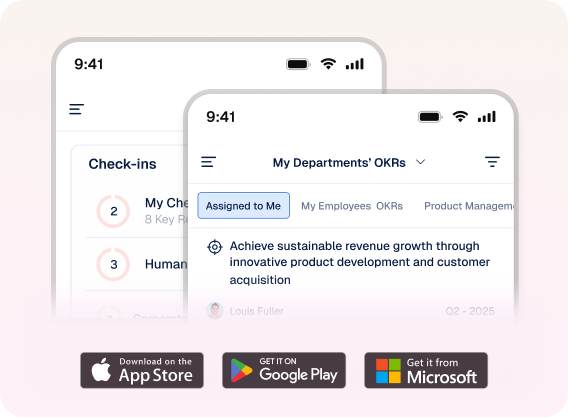
Employee of the Month programs are only as effective as the recognition infrastructure that supports them. When nominations are weak, the program loses credibility. When selection criteria are disconnected from how performance is actually managed, the awards feel arbitrary.Profit.co’s Employee Engagement module connects recognition directly to the goals, OKRs, and performance data your organization is already tracking. Managers and peers who nominate employees can reference specific goal achievements, performance metrics, and contributions already visible on the platform, making nominations stronger and selection more defensible. Awards and Leaderboards in Profit.co foster an ongoing recognition culture, giving Employee of the Month programs a meaningful anchor.
Profit.co connects your recognition programs directly to OKRs, goal achievements, and performance metrics
An effective nomination letter uses a four-part structure: open with the nomination and the specific trigger, describe the specific contribution in detail, explain the measurable or observable impact, and close by connecting the contribution to the award criteria and endorsing the nomination directly. The most common weakness in nomination letters is vagueness. The more specific you are about what the employee did and what it produced, the stronger the nomination
Nominations can come from managers, peers, cross-functional colleagues, customers, or senior leaders. Each source brings a different perspective that strengthens the program. Peer nominations are particularly valuable because they surface contributions that managers and leaders do not always see directly. Including multiple nomination sources in your program criteria produces more diverse, credible, and representative recognition.
Long enough to be specific and short enough to be read and evaluated efficiently. For most nominations, three to five substantive paragraphs is the right length. The goal is to give the selection committee enough concrete information to evaluate the nomination fairly. Nominations that are too short fail to make a case. Nominations that are too long dilute the argument with excess detail
Specificity and evidence. The nominations that stand out are the ones that describe precisely what the employee did, under what circumstances, and with what result. Generic superlatives like ‘exceptional’ and ‘above and beyond’ are present in most nominations and therefore distinguish nothing. Specific details about specific actions and specific outcomes are rare and therefore persuasive.
Credibility comes from clear criteria, transparent selection, and nominations that are specific and evidence-based. Define the behaviors and contributions the award is designed to recognize, communicate those criteria to the whole organization, require nominations to reference those criteria explicitly, and ensure the selection process is visible enough that winners feel genuinely earned rather than politically determined. Rotating the selection committee and incorporating peer voices in the process also increases perceived fairness.
Related Articles
-
50 Employee Appreciation Messages for Every Occasion (Ready to Use)
TL;DR Finding the right words to recognize an employee can be surprisingly difficult, especially when you want the message to... Read more
-
How to Build a Peer Recognition Program From Scratch
TL;DR A peer recognition program gives employees the tools and the social permission to appreciate each other's contributions, independent of... Read more
-
Work Anniversary Messages That Actually Mean Something
TL;DR Work anniversary messages are one of the most reliably mishandled recognition moments in most organizations. The automated email, the... Read more
-
Years of Service Recognition: How to Honor Milestones That Actually Matter
TL;DR Years of service recognition programs acknowledge employee tenure milestones, typically at one, three, five, ten, and fifteen-plus year marks.... Read more