

TL;DR
Years of service recognition programs acknowledge employee tenure milestones, typically at one, three, five, ten, and fifteen-plus year marks. When designed well, they reduce voluntary turnover, strengthen loyalty, and signal that the organization values long-term investment from its people. When designed badly, they feel like a checkbox exercise that insults the tenure they are supposed to celebrate. This guide covers what works, what fails, and how to build a program that makes milestone recognition genuinely meaningful.
“celebrate what you want to see more of.”

Key Takeaways
- Employees who feel recognized at tenure milestones are significantly less likely to consider leaving.
- The most common failure in service recognition is treating every milestone identically regardless of tenure length or individual contribution.
- Effective service recognition combines a tangible reward with personal acknowledgment and documented professional recognition.
- Automated notifications sent without personalization actively damage the recognition they are supposed to deliver.
- The recognition should reflect the full scope of what the employee has contributed during their tenure, not just the number of years served.
- Profit.co integrates milestone recognition with performance and goal data so managers have the context to make every acknowledgment specific.
Somewhere between the five- and ten-year marks, many employees go through a quiet period of reflection. They look at what they have built at the company, what they have given up to stay, what they have passed up to invest in this particular organization. And they start paying attention to whether the organization notices.
This is the window where years of service recognition either earns deep loyalty or quietly accelerates the resignation nobody saw coming.
Most companies have some form of service award program. The problem is that most of these programs were designed to be administered rather than felt. They generate an automated email on the employee’s work anniversary. They produce a certificate signed by someone the employee has never met. They offer a catalog of gifts that looks like it was licensed from a hotel loyalty program.
The employees receiving these recognitions know the difference between an organization that invested in honoring their tenure and one that processed it. That difference shapes how they feel about the next several years of their career at that company.
This guide covers what makes years of service recognition meaningful, how to design a program that reflects the weight of the milestones it is celebrating, and what the research says about the relationship between tenure recognition and retention.
Why Years of Service Recognition Matters More Than Most Organizations Realize
The business case for service recognition is not primarily sentimental. It is financial.
Research consistently shows that employees who feel recognized at service milestones report significantly higher engagement, stronger organizational commitment, and lower intent to leave than those who receive no recognition at tenure markers.
Service recognition also sends a signal to the entire workforce, not just the employee being recognized. When colleagues observe that long tenure is acknowledged with genuine appreciation rather than a form letter and a catalog gift, they update their own expectations about how the organization treats sustained contribution.
The cost of getting this wrong is real. Replacing an employee costs between 50% and 200% of their annual salary depending on role complexity and seniority. An employee who leaves at the nine-year mark because they felt invisible at their five-year milestone represents a preventable cost that a well-designed recognition program could have avoided.

The Milestones That Matter and How to Treat Each One
One Year: Celebrating Arrival and Early Contribution
The first work anniversary is not a tenure milestone in the traditional service award sense. It is a celebration of successful integration, early contribution, and the decision to continue investing in the organization after getting a full picture of what it actually involves.
- First-year recognition should feel warm and forward-looking.
- Acknowledge specific things the employee has contributed or learned in their first year.
- Express genuine confidence in the years ahead.
The reward does not need to be significant, but the acknowledgment needs to be personal. An automated notification from the HR system with a first-year badge is the opposite of this.
Three Years: Acknowledging Commitment
By the three-year mark, an employee has chosen to stay through at least one significant organizational change, one difficult period, and one moment where leaving would have been the easier option. That is a meaningful commitment that deserves recognition beyond a passing mention.
Three-year recognition is the right moment to reflect specifically on the employee’s growth during their tenure.
- What have they taken on that they could not have handled in year one?
- What have they built that will outlast any individual project?
A personalized message from their manager that references these specific developments carries significantly more impact than a standard service award.
Five Years: The Critical Retention Window
The five-year mark is the single most important milestone in most service recognition programs, for one reason: it is the moment when employees are most likely to be evaluating whether to stay for the next chapter of their career.
Five-year recognition should be treated as a significant event, not an administrative entry.
- It warrants a formal written acknowledgment from a senior leader, a meaningful reward that reflects the employee’s preferences rather than a catalog default, and public recognition that names specific contributions from their tenure.
- Organizations that treat the five-year mark as just another anniversary frequently lose strong employees within six to twelve months of that milestone.
Ten Years: Honoring a Career Investment
A decade of service is rare in most industries. Recognizing it with the same certificate-and-catalog approach used for the five-year mark communicates something unintentional: that the organization does not actually understand the significance of what is being marked.
Ten-year recognition should involve senior leadership directly, not just the immediate manager.
- It should include a public celebration, a meaningful experiential or financial reward, and a written acknowledgment that reflects on the employee’s specific contribution to the organization over that decade.
- Some organizations use the ten-year mark as an occasion for a paid experience, a sabbatical option, or a significant professional development investment.
Fifteen Years and Beyond: Legacy Recognition
For employees with fifteen or more years of service, the recognition should reflect the weight of a genuine professional legacy. At this tenure level, the employee has likely influenced the careers of multiple colleagues, shaped parts of the organization’s culture, and contributed institutional knowledge that is genuinely difficult to replace.
- Recognition at this level should be commensurate with that contribution.
- A formal ceremony, a named award category, a significant experiential reward, and a written acknowledgment signed by the most senior leader available are all appropriate components.
- The tone should be retrospective and celebratory without being valedictory: these employees are still contributing and the recognition should honor that.
Profit.co gives managers the performance history and goal data they need to recognize every milestone.
The Components of a Meaningful Service Recognition
Regardless of the milestone being marked, the most effective years of service recognition combine three components that work together rather than in isolation.
Personal written acknowledgment. A letter or message that references specific contributions from the employee’s tenure. This is the component most commonly skipped in favor of automated systems, and it is the component that carries the most emotional weight. An employee who receives a letter from their manager that names actual things they have done and built during their time at the organization experiences something qualitatively different from an employee who receives a branded keychain and a congratulatory email from HR.
A meaningful tangible reward. The reward should reflect the milestone’s significance and where possible the employee’s actual preferences. Catalog selection programs that offer the same seventy options to every employee regardless of tenure level or personal interests communicate that the organization did not invest much thought in the recognition. Rewards that are chosen with the individual in mind, whether an experience, a development opportunity, a charitable donation, or a high-quality item connected to something they care about, communicate the opposite.
Public recognition. The employee’s contribution should be named publicly, in a format visible to their peers and to the wider organization. Public recognition has two functions simultaneously: it honors the recognized employee and it signals to everyone else what sustained contribution looks like at this organization.
What Ruins Years of Service Recognition Programs
- Full automation without personalization. When the entire recognition experience is driven by an HR system that sends notifications and processes reward selections without any human input, employees feel processed rather than honored. Automation has a role in triggering and coordinating the recognition. It should not replace the human elements that make the recognition meaningful.
- Generic rewards that feel like afterthoughts. A $25 gift card for five years of service is not recognition. It is an accidental insult dressed up as appreciation. The reward does not need to be expensive, but it needs to reflect deliberate thought about what this person would actually value.
- Inconsistent application across the organization. When some managers make a genuine event of their team members’ milestones and others let them pass with the automated system notification, the program becomes a reflection of individual manager quality rather than organizational values. Consistent standards, communicated to managers and enforced through people operations, are essential.
- Recognition that focuses on the years rather than the person. “Congratulations on five years!” is a marker of calendar time. “Congratulations on five years of building the customer success function from three people to twenty-two, and for being the reason so many of those twenty-two people chose to stay” is recognition of a person. The former is forgettable. The latter is kept.
Building a Years of Service Recognition Program: Practical Steps
Step 1: Audit Your Current Milestone Distribution
Before designing or redesigning your program, understand your population. How many employees are at each tenure band? Which milestones are coming up in the next six months? What has happened historically at these milestones: have they been celebrated, acknowledged minimally, or ignored? This audit gives you a realistic picture of the scope and the starting point.
Step 2: Define Differentiated Recognition by Milestone Level
Resist the tendency to run the same program for every milestone with a slightly larger reward at each level. The recognition experience at one year should feel qualitatively different from the recognition at five years, which should feel qualitatively different from ten years. Design a distinct recognition experience for each major milestone, with components appropriate to the significance being marked.
Step 3: Give Managers the Tools and Context to Personalize
The manager’s personal acknowledgment is the most important component of service recognition at every level. Give managers a recognition brief thirty days before each team member’s milestone: a summary of the employee’s tenure, their key achievements, their current OKR contributions, and the specific milestone being recognized. This brief does not write the recognition for them, but it gives them the context to write something specific and meaningful rather than something generic.
Step 4: Create a Flexible Reward Architecture
Design rewards that scale with tenure and offer genuine personalization. This might mean a tiered budget that increases at each milestone level, a choice between reward types rather than a single default, or a manager-guided reward selection process that takes the employee’s known preferences into account. Whatever the structure, avoid the catalog model for significant milestones: give managers the flexibility to honor the employee in a way that reflects who they actually are.
How Profit.co Supports Years of Service Recognition
The biggest practical obstacle to meaningful service recognition is that managers lack the context to personalize their acknowledgment. They know the milestone is coming but they do not have an organized view of what the employee has contributed over three or five or ten years. The result is generic recognition driven by what they happen to remember rather than what the employee actually achieved.
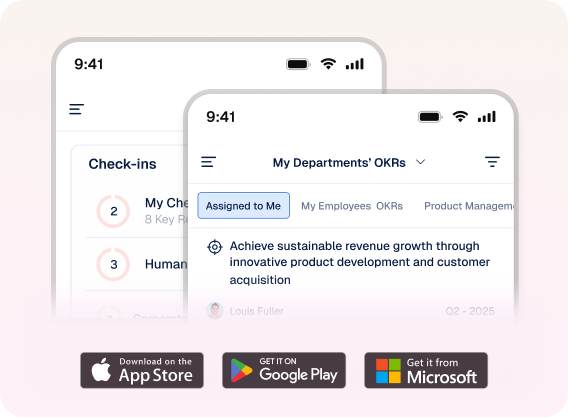
Profit.co’s performance management platform maintains a continuous record of goal achievements, OKR completions, performance milestones, and manager-recorded recognition over an employee’s tenure. When a service milestone approaches, the manager has an organized view of exactly what has been accomplished during that period, which is what makes specific, meaningful recognition possible rather than just aspirational.
The Employee Engagement module integrates milestone recognition with the ongoing recognition culture in Profit.co, so service awards are not isolated events but connected moments in a continuous recognition experience.
See How Profit.co Supports Milestone Recognition.
Years of service recognition programs are structured initiatives that acknowledge employee tenure at defined milestones, typically at one, three, five, ten, and fifteen-plus years. They typically combine a tangible reward, a personal written acknowledgment, and public recognition. When designed well, they reduce voluntary turnover by signaling that the organization values sustained contribution and is invested in the employee’s long-term relationship with the company
The most effective service rewards combine three elements: a personal written acknowledgment that references specific contributions from the employee’s tenure, a tangible reward that reflects the milestone’s significance and the employee’s individual preferences, and public recognition visible to their peers and the wider organization. The specific reward matters less than whether it reflects deliberate thought about this particular employee rather than a catalog default applied to everyone
All defined milestones matter, but the five-year mark is the most critical from a retention standpoint. Research consistently identifies the period following the five-year milestone as one of the highest-risk windows for voluntary attrition, because employees are actively reflecting on whether their sustained investment in the organization is being reciprocated. Organizations that treat the five-year mark as a significant recognition event rather than a routine anniversary see measurably better retention in the eighteen months that follow
The most effective personalization comes from referencing the employee’s specific contributions during their tenure rather than speaking only in terms of time served. What did they build? Who did they develop? What challenges did they navigate? What has the organization become partly because of their investment in it? Answers to these questions, incorporated into the written acknowledgment, transform service recognition from a calendar event into a genuine professional acknowledgment.
Both have a role. Public recognition at significant milestones serves two purposes: it honors the employee in front of their colleagues and it signals to the entire workforce that sustained contribution is valued and celebrated at this organization. Private, personal written acknowledgment from the direct manager or a senior leader adds the intimate dimension that public recognition cannot fully replicate. The most effective service recognition programs include both components rather than choosing between them
Multiple studies show a direct correlation between feeling genuinely recognized at service milestones and reduced intent to leave in the following year. The mechanism is straightforward: tenure milestones are natural reflection points where employees evaluate whether their long-term investment in the organization is being reciprocated. Recognition that genuinely honors that investment tends to produce renewed commitment. Recognition that feels automated or generic can actually accelerate attrition by confirming that the organization is not paying attention
Related Articles
-
50 Employee Appreciation Messages for Every Occasion (Ready to Use)
TL;DR Finding the right words to recognize an employee can be surprisingly difficult, especially when you want the message to... Read more
-
Employee of the Month Nomination Letter: 15 Examples
TL;DR An Employee of the Month nomination letter is a written case for why a specific employee deserves formal recognition... Read more
-
How to Build a Peer Recognition Program From Scratch
TL;DR A peer recognition program gives employees the tools and the social permission to appreciate each other's contributions, independent of... Read more
-
Work Anniversary Messages That Actually Mean Something
TL;DR Work anniversary messages are one of the most reliably mishandled recognition moments in most organizations. The automated email, the... Read more