
Hazard Identification OKR Tracker Template

Rated 4.7/5 by 500+ Leaders
Use ready-made hazard identification OKRs to find and fix plant hazards all quarter.
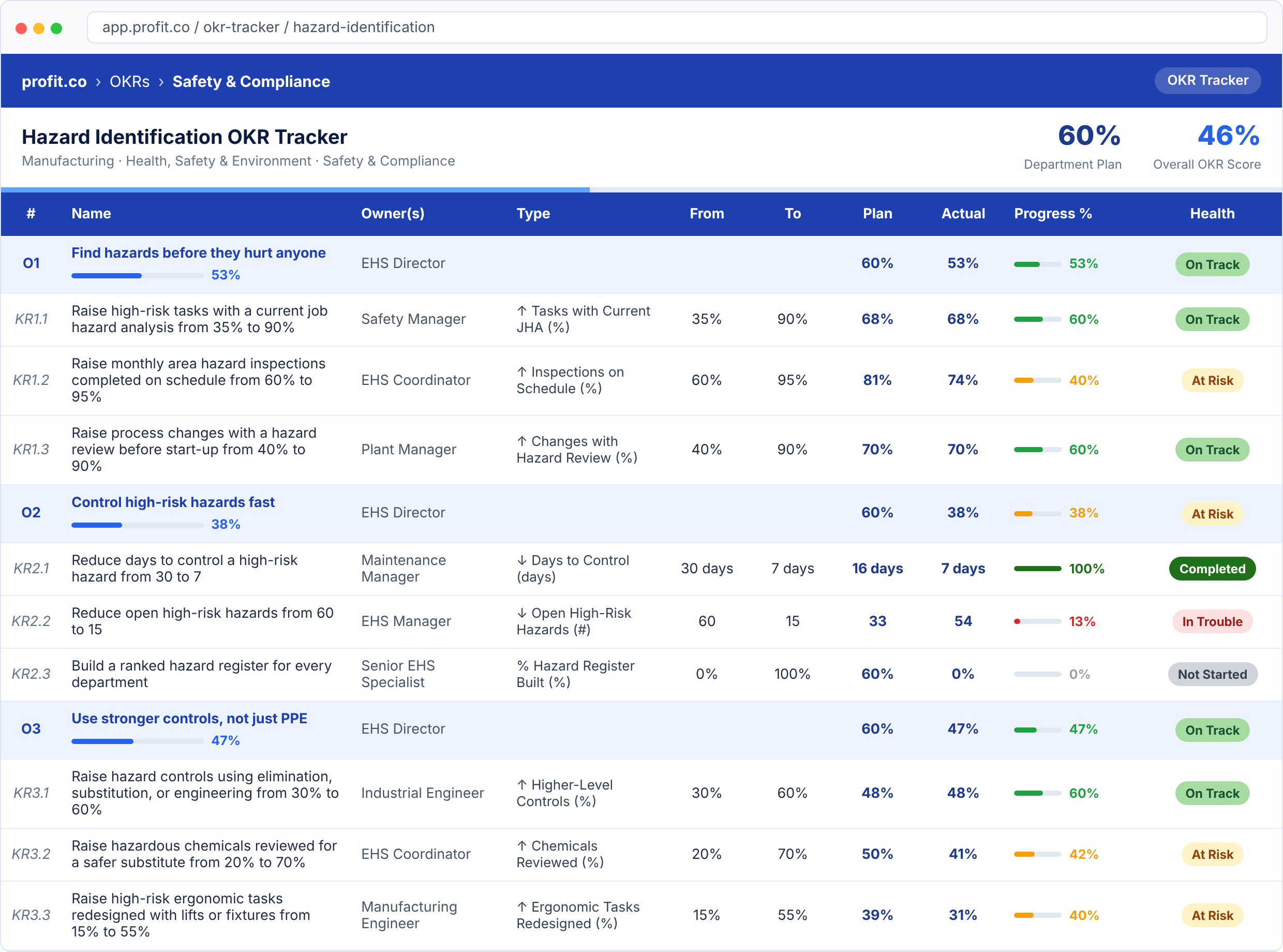
- O1: Find hazards before they hurt anyone KR1.1: Raise high-risk tasks with a current job hazard analysis from X% to Y% KR1.2: Raise monthly area hazard inspections completed on schedule from X% to Y% KR1.3: Raise process changes with a hazard review before start-up from X% to Y%
- O2: Control high-risk hazards fast KR2.1: Reduce days to control a high-risk hazard from 30 to 7 KR2.2: Reduce open high-risk hazards from 60 to 15 KR2.3: Build a ranked hazard register for every department
- O3: Use stronger controls, not just PPE KR3.1: Raise hazard controls using elimination, substitution, or engineering from X% to Y% KR3.2: Raise hazardous chemicals reviewed for a safer substitute from X% to Y% KR3.3: Raise high-risk ergonomic tasks redesigned with lifts or fixtures from X% to Y%
What is hazard identification?
Finding what could hurt workers before it does.
Hazard identification is finding the conditions and tasks that could injure workers, often through a job hazard analysis. OSHA then advises controlling each hazard with the NIOSH hierarchy of controls.
Hazard identification OKRs turn that process into quarterly goals. Each key result, such as completing job hazard analyses or controlling high-risk hazards, gets a measurable target and a named owner.
Why track hazard identification with OKRs?
Find and fix hazards before they cause an injury.
Find every hazard
Job hazard analysis, inspection, and change review goals surface hazards before work begins.
Control them fast
Control time, open hazard, and register goals get the worst risks fixed first.
Use stronger controls
Elimination, substitution, and ergonomic redesign goals move plants up the hierarchy of controls.
What you'll get in this template
The real difference your team will see.
- High-risk hazards controlled within a week, with the worst risks fixed first.
- Fewer jobs that depend on PPE alone, because hazards are designed out.
- One shared view of plant hazards for safety, engineering, and plant leaders.
How to use this template?
Four simple steps to a live quarterly plan.
- 1
See the example
Check Sheet 1 to see how it works.
- 2
Add your goals
Fill in Sheet 2 with your objectives and key results.
- 3
Update weekly
Enter your latest numbers each week.
- 4
Track your score
Progress and status update on their own.
Related templates
More OKR templates for Manufacturing teams.
Ready to track OKRs?
Start tracking your hazard identification OKRs today
Join 1,500+ organizations using profit.co to find and fix hazards every quarter.