4 min read ·

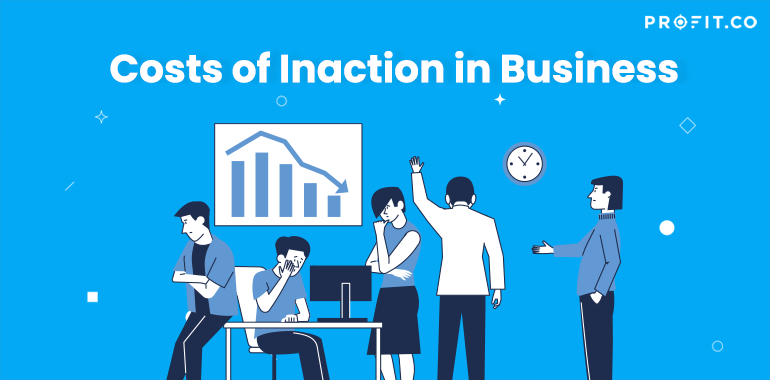
Costs of Inaction in Business

Bastin Gerald Bastin Gerald ·
costs-of-inaction-in-business
bastin_gerald

Bastin Gerald
Founder & CEO at Profit.co


Last updated: May 17, 2024

Documenting the cost of inaction in a business change management exercise can be categorized into several key areas. Each category should capture both qualitative and quantitative aspects to provide a comprehensive understanding. Here are some effective categorizations:
costs-of-inaction

Financial Impact

Lost Revenue: Revenue opportunities missed due to outdated systems. Increased Operational Costs: Higher maintenance and operational costs associated with old technology. Inefficiencies: Costs incurred from inefficient processes and manual workarounds.

Competitive Disadvantage

Market Share Loss: Potential loss of market share to more agile and technologically advanced competitors. Innovation Stagnation: Inability to innovate and bring new products/services to market quickly. Customer Churn: Loss of customers to competitors offering better service and technology.

Learn more about achieving continuous learning for your organization with Profit.co today

Sign up with Profit.co

Operational Risks

Security Vulnerabilities: Increased risk of data breaches and cyber-attacks due to outdated systems. Compliance Issues: Potential fines and legal issues arising from non-compliance with industry regulations. System Downtime: Increased frequency of system failures and downtime impacting business continuity.
marcus-aurelius-quote

“There are costs and risks to a program of action, but they are far less than the long range risks and costs of comfortable inaction.”

John F. Kennedy

Employee Impact

Productivity Loss: Reduced employee productivity due to inefficient tools and processes. Job Dissatisfaction: Lower employee morale and job satisfaction leading to higher turnover rates. Talent Attraction and Retention: Difficulty in attracting and retaining top talent who seek modern and efficient work environments.

Customer Experience

Service Quality: Decline in service quality and customer satisfaction due to outdated systems. Response Time: Longer response times and inability to meet customer expectations promptly. Brand Reputation: Damage to brand reputation as a result of poor customer experiences.

Strategic Alignment

Misalignment with Business Goals: Failure to align with long-term business goals and strategies. Missed Opportunities: Missing out on strategic opportunities for growth, partnerships, and market expansion. Innovation Lag: Falling behind industry trends and innovations.

Technological Debt

Legacy System Maintenance: High costs associated with maintaining and supporting legacy systems. Integration Challenges: Difficulty in integrating new technologies with outdated systems. Scalability Issues: Limitations in scaling operations and technology to meet growing business needs.

Regulatory and Compliance Risks

Non-Compliance Penalties: Financial penalties and legal repercussions from failing to comply with updated regulations. Audit Failures: Increased likelihood of audit failures and associated costs.

Environmental Impact

Sustainability Issues: Higher energy consumption and environmental footprint due to inefficient systems. Corporate Responsibility: Negative impact on corporate social responsibility (CSR) initiatives.

Future Growth and Adaptability

Inflexibility: Reduced ability to adapt to market changes and emerging trends. Scalability: Limitations in expanding operations and scaling technology infrastructure. By documenting the costs of inaction across these categories, businesses can create a compelling case for change that highlights the wide-ranging impacts of maintaining the status quo. This approach helps stakeholders understand the urgency and necessity of implementing new systems and processes.

Ready to start your change management journey today?

Book a free demo

Related Articles

Change Management
5 min read · December 5, 2025

Is Your Organization Ready for Change? Take the Readiness Assessment

TL;DR: Most change initiatives fail because organizations underestimate their readiness. This assessment helps you evaluate both business readiness (processes, KPIs,…

Bastin Gerald Bastin Gerald
reduce_framework
Change Management
8 min read · May 21, 2024

What is “Distance” in the REDUCE Framework From the Book Catalyst?

Bastin Gerald Founder & CEO at Profit.co Last updated: May 21, 2024 In “The Catalyst,” Jonah Berger introduces the REDUCE…

Bastin Gerald Bastin Gerald
burn-the-ships
Change Management
6 min read · May 17, 2024

“Burn the Ships” Strategy for Effective Change Management in Business

Bastin Gerald Founder & CEO at Profit.co Last updated: May 17, 2024 In the realm of change management, the “burn…

Bastin Gerald Bastin Gerald
drivers_for_change
Change Management
12 min read · June 23, 2023

What are the Drivers for Change?

Bastin Gerald Founder & CEO at Profit.co Last updated: June 23, 2025 As an organization, there are times when you…

Bastin Gerald Bastin Gerald
4-Real-World-Examples-of-Change-Strategy
Change Management
8 min read · May 26, 2023

4 Real-World Examples of Change Strategy

What do all successful companies and organizations have in common? The ability to develop and pivot their strategies for significant…

Bastin Gerald Bastin Gerald
change-management-for-strategy
Change Management
11 min read · May 12, 2023

Change Management For Strategy Implementation

Strategy implementation is essential for organizations to stay competitive and achieve their goals. A strategy is a plan, roadmap, and…

Bastin Gerald Bastin Gerald