Depending on the country or state that they live in, everyone has an age at which they are legally allowed to retire. However, there are also cases when people tend to retire early – or later than they were supposed to. Still, considering that every company needs to have a plan, you also need to… Read more
As much as some companies love to change overnight for various reasons, people leaving the company is never a good change to embrace. As an employer, people leaving your firm for a better job could cost you time and effort in bringing somebody to fill in the empty slot. When people tend to leave the… Read more
There are times when people try their luck at getting a job at your company. Some candidates are what you’ve been looking for, while others don’t seem that invested. Still, you wish you could them into your team and work towards success, but that’s not possible. Did you know that you could keep track of… Read more
When a company wants to analyze the performance of its supply chain, there are several metrics that can be used in this respect. Additionally, there are various performance management methodologies that measure the results of the supply chain process. Using an OKR management software can help you build a strong foundation. The guiding factor of… Read more
This metric is used in order to calculate the value of new business contracts, over a specified period of time. It’s as simple as this, whenever you land on a new business contract, your company benefits from it. This is why a general goal for most companies is to optimize their number of business contracts…. Read more
Lead scoring represents the process of assessing the quality of marketing and sales leads by factoring in standard criteria and specific targets. Essentially, these criteria and targets are varied, depending on the buyer’s activity, demographics and user behavior.Usually, these criteria are established by investigating the individualities of an existing customer base. To that end, lead… Read more
The asset turnover ratio is a widely used efficiency ratio that analyzes a company’s capability of generating sales. It accomplishes this by comparing the average total assets to the net sales of a company. Expressly, this ratio displays how efficiently a company can utilize this in an attempt to generate sales. To be more precise,… Read more
We all get sick or have emergencies at some point. Sometimes, we are simply unable to get to work – and this has nothing to do with your vacation days, authorized leaves, or statutory holidays. No, this has to do with you picking up your phone in the morning, and telling them that you can’t… Read more
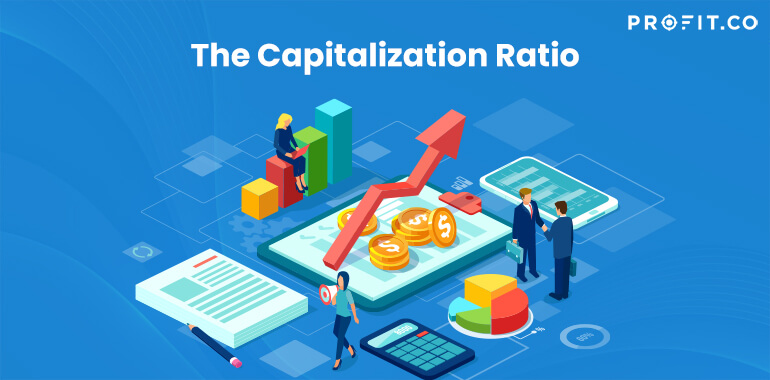
The capitalization ratio, also referred to as the cap ratio, represents a financial ratio that measures a firm’s solvency. It does that by calculating the total amount of debt of a company. More specifically, it calculates the company’s financial leverage by comparing and contrasting the total debt with the total equity or a section of… Read more
The percentage of an investment, in terms of it increasing and decreasing year over year, is determined with the financial investment calculation that’s known as CAGR. This stands for Compound Annual Growth Rate. It can be compared with the annual average rate of return for a certain investment made by your company over a set… Read more
To start with, the break-even point analysis represents a measurement system that determines the margin of safety. It does this by comparing the revenues or units that have to be sold to cover both fixed and variable costs linked with making the sales. Specifically, this ratio is a means of calculating the potential profitability of… Read more
Also known as an important solvency ratio, the average payment period (APP) assesses how much time it takes for a business to pay its vendors, in the case of purchases made on credit. Many times, when a business makes an important purchase, credit arrangements are made beforehand. These arrangements might give the buyer a specific… Read more