TL;DR
Ben Lamorte’s three-phase approach to OKR success—Deployment Coaching, Training, and Execution—helps organizations move from simply setting goals to achieving real results. By building a strong foundation, ensuring team alignment, and maintaining consistent execution, companies can turn OKRs into a powerful, results-driven systemWhen it comes to OKRs, it’s easy to get caught up in the excitement of setting goals. But as Ben Lamorte, one of the world’s leading OKR coaches, reminds us, writing OKRs is easy and executing them well. That’s where companies struggle.
Ben Lamorte – what are OKRs?
OKRS: A critical thinking framework and ongoing discipline that seeks to ensure employees work together, focusing effort to make measurable contributionsTweet
So, how do you go from OKRs as a great idea to OKRs as a powerful execution engine?
Ben has spent years coaching over 2,000 business leaders across startups, enterprises, and everything in between. He’s seen OKRs fail. He’s seen them succeed. And through it all, he’s developed a three-phase framework that gives companies the best shot at making OKRs work.
“Everyone wants to jump straight to the execution phase. But if you don’t get the first two phases right, your OKRs won’t stick.” – Ben Lamorte.
Let’s break down these three critical phases and why they matter.
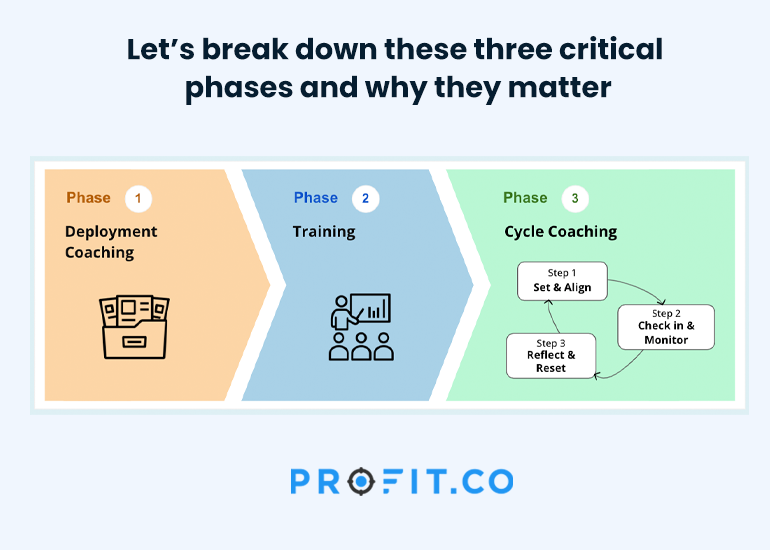
Phase 1: Deployment Coaching – Laying the Foundation
Before you write your first OKR, you need a solid plan. Sounds obvious, right? Yet, according to Ben, most organizations skip this step entirely, so they struggle later.
In the deployment phase, teams answer the following key questions:
- At what level will we set OKRs? Company-wide? Team-level? Individual?
- How many OKRs will we set? Too many, and you lose focus. Too few, and you risk missing key priorities.
- What’s our OKR cadence? Monthly? Quarterly? Four-month cycles?
- How will you score the OKRs?
- How long is an OKR cycle?
- Where will we track the OKRs?
- OKRs vs. KPI?
- How will we ensure OKRs are aligned?
- How do we ensure most OKRs are bottom-up?
- How are OKRs related to performance review?
Why This Phase Matters
“If you don’t make these decisions upfront, you’ll hit roadblocks later. It’s like building a house without blueprints.” – Ben Lamorte
Skipping deployment coaching leads to common OKR disasters teams overwhelmed by too many goals, confusion over ownership, and OKRs that sound great but don’t connect to real business impact.
Once you nail down your OKR structure, it’s time for Phase 2.
Phase 2: Training – Getting Leadership & Teams on Board
OKRs only work when people understand them. If leadership isn’t fully bought in, or teams don’t know how to use OKRs properly, the system breaks down.
That’s why Ben emphasizes two key workshops in the training phase
1. Leadership Training:
Senior leaders must align on what OKRs mean for the company.
2. OKR Coach Training:
Internal OKR champions learn how to facilitate and support OKR adoption.
Why This Phase Matters
“You can’t just drop OKRs on a team and expect them to succeed. Training ensures people know how to set, track, and adjust OKRs properly.” – Ben Lamorte
One of the biggest mistakes? Forcing OKRs on teams without leadership commitment. If executives aren’t using OKRs, why would anyone else take them seriously?
By the end of Phase 2, teams are ready to roll out OKRs correctly.
Want to make OKR planning effortless?
Phase 3: Execution – Making OKRs Stick
Finally, the part everyone wants to talk about is execution. This is where OKRs come to life.
Ideas are easy. Execution is everything. It takes a team to win

Ben’s execution framework follows three core steps:
- Define OKRs clearly – Fewer, better OKRs win every time.
- Check-in regularly – Avoid the “set it and forget it” trap. OKRs need bi-weekly check-ins, not just end-of-quarter reviews.
- Reflect & reset – The most overlooked phase! At the end of a cycle, teams should reflect on what worked, what didn’t, and how to adjust moving forward.
Why This Phase Matters
“Half of my clients used to write OKRs, then never looked at them again. That’s not an OKR program that’s just a wish list.” – Ben Lamorte.
Companies often get overwhelmed with too many OKRs or waste time tracking meaningless metrics. Ben suggests keeping 1-3 key objectives with a single-digit number of key results per level.
And finally OKRs should be a verb, not a noun.
“OKRs aren’t something you set and forget. They’re an ongoing discipline an active process of tracking, learning, and improving.” – Ben Lamorte.
Why This Three-Phase Approach Works
When companies follow this structured approach, they avoid the biggest OKR pitfalls and set themselves up for long-term success.
- Deployment Coaching ensures clarity – Teams know exactly how OKRs fit into their strategy.
- Training builds confidence – Leadership and teams understand OKRs, so adoption is smooth.
- Execution drives real impact – OKRs become part of the company’s operating rhythm, not just an annual exercise.
So, are you ready to do OKRs the right way?
If you’re looking to move beyond “set it and forget it” OKRs and start executing with focus and clarity, it’s time to put this three-phase approach into action.
Want to make OKR planning effortless?
Ben Lamorte is a leading OKR coach who has helped thousands of organizations successfully implement and execute OKRs.
The three phases are Deployment Coaching (planning and structure), Training (education and alignment), and Execution (ongoing tracking and improvement).
It helps define structure, cadence, ownership, and alignment, preventing confusion and inefficiencies during execution
Leaders and teams are trained to understand, set, and manage OKRs effectively, ensuring proper adoption across the organization.
OKRs should be reviewed regularly, typically through weekly or bi-weekly check-ins, to track progress and address challenges