













A sub-task shows as its own card when its assignee is not the owner of the parent task.
Table of Contents
- What are Sub-Task Cards?
- Why Do Sub-Task Cards Matter?
- How Do Sub-Task Cards Work?
- What Happens When You Use Sub-Task Cards?
- What Are the Best Practices for Sub-Task Cards?
- Related Articles
- What Are Some Frequently Asked Questions About Sub-Task Cards?
What are Sub-Task Cards?
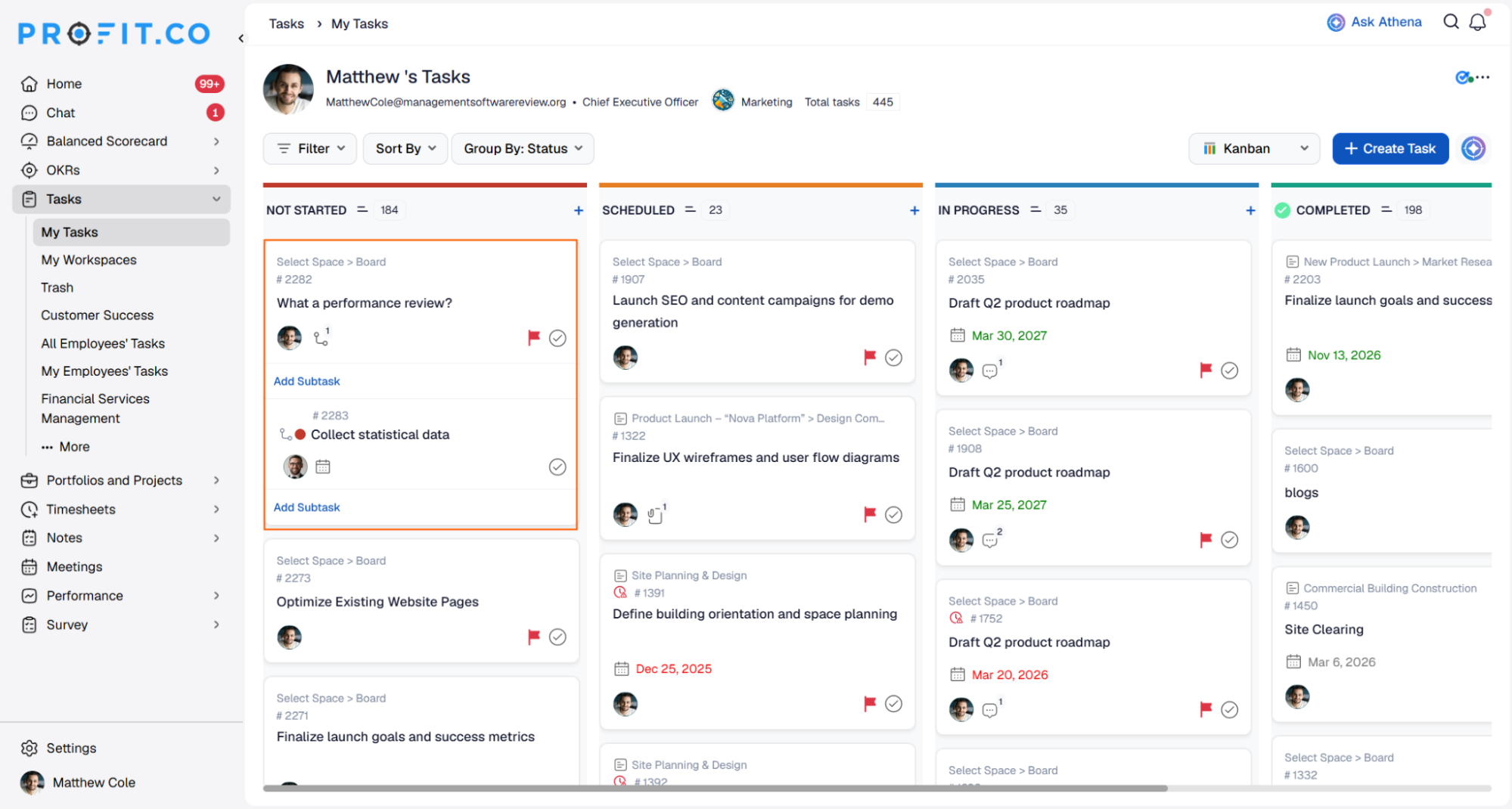
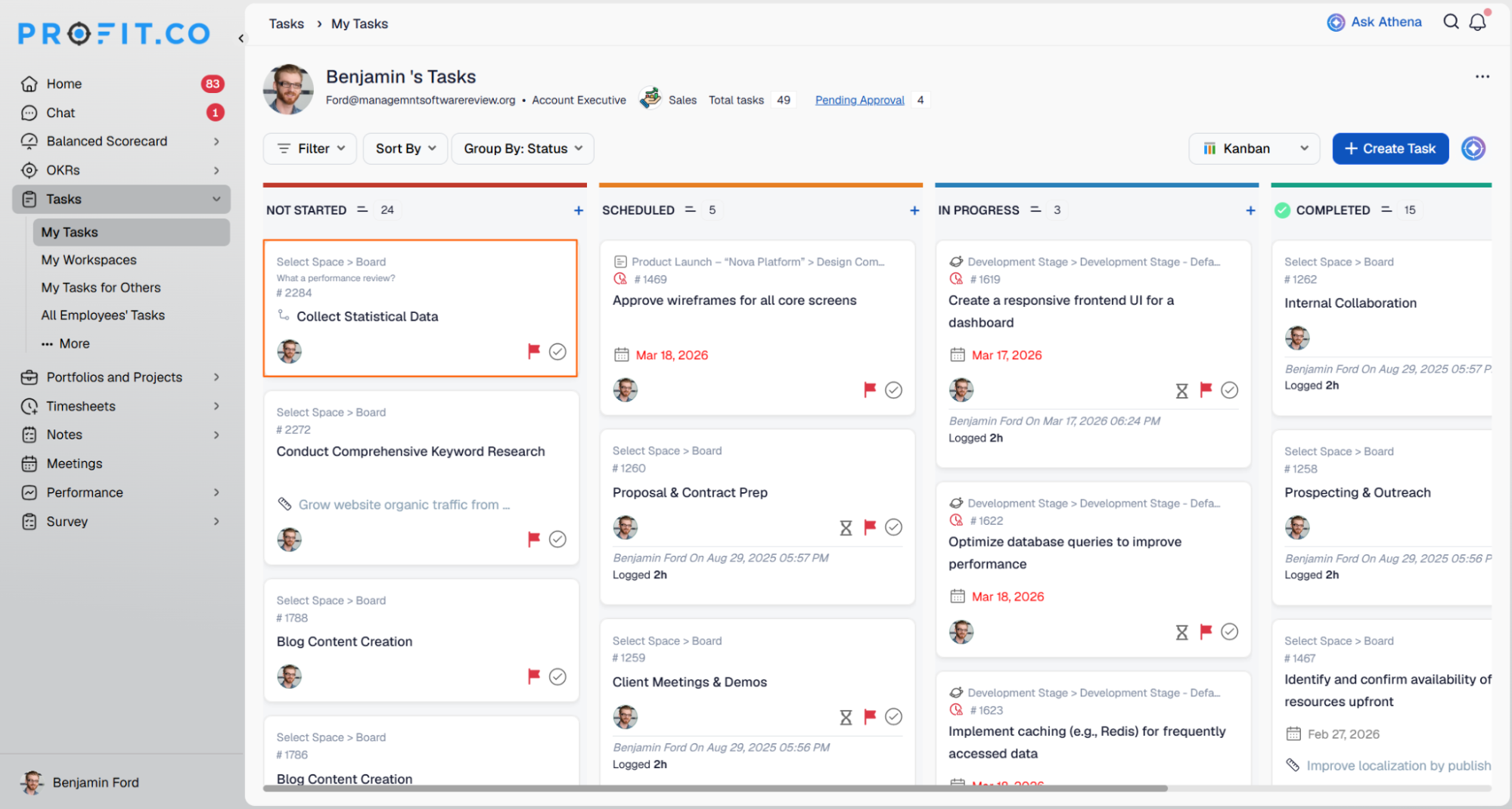
Profit.co displays a sub-task based on who is looking at it. The owner of the parent task sees the sub-tasks inside the parent card, and an assignee who does not own the parent sees only the sub-task.
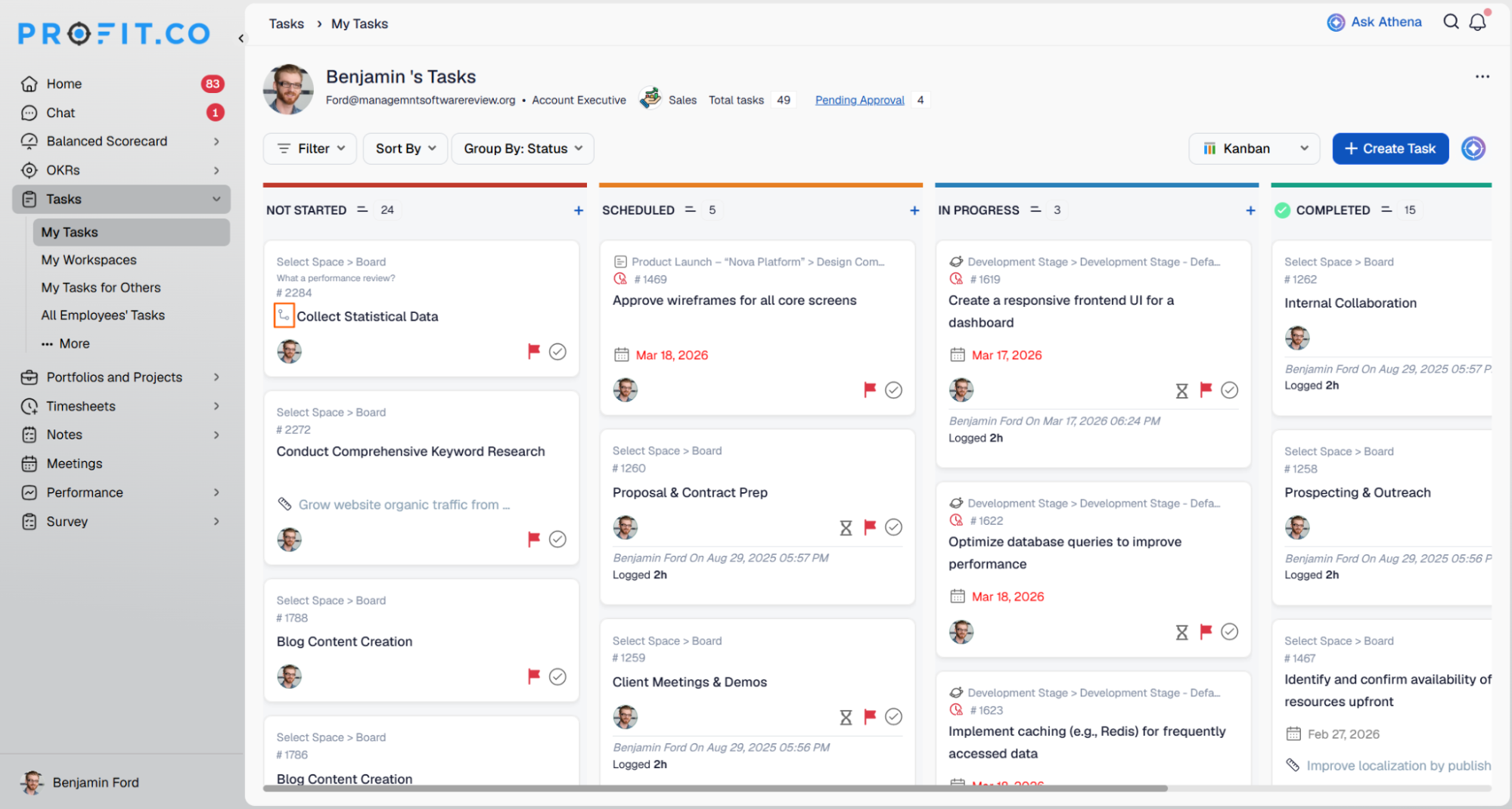
An icon marks the card as a sub-task, and the parent KR appears below it.
| Viewer | What They See |
|---|---|
| Parent task owner | Sub-tasks inside the parent task's card |
| Sub-task assignee | Only the assigned sub-task, as a separate card with the sub-task icon |
Why Do Sub-Task Cards Matter?
Separate cards let each owner see and work on their own tasks when a parent task belongs to someone else. They also make a large, complex parent task easier to manage, because it is broken into smaller sub-tasks.
How Do Sub-Task Cards Work?
Step 1
Let's say Matthew Cole is working on writing a blog on what a performance review is and how it impacts the company's growth. He wants Benjamin Ford to collect statistical data regarding the topic. So he creates a task and sub-task regarding the same and assigns it to Benjamin Ford.
Step 2
The sub-tasks will be assigned to Bryan Cranston, and while taking a look at Bryan's tasks, the assigned sub-tasks alone will be shown since the owner of the parent task is Matthew.
The icon  differentiates that the task is a sub-task and that it is assigned from the parent KR mentioned below it.
Step 3
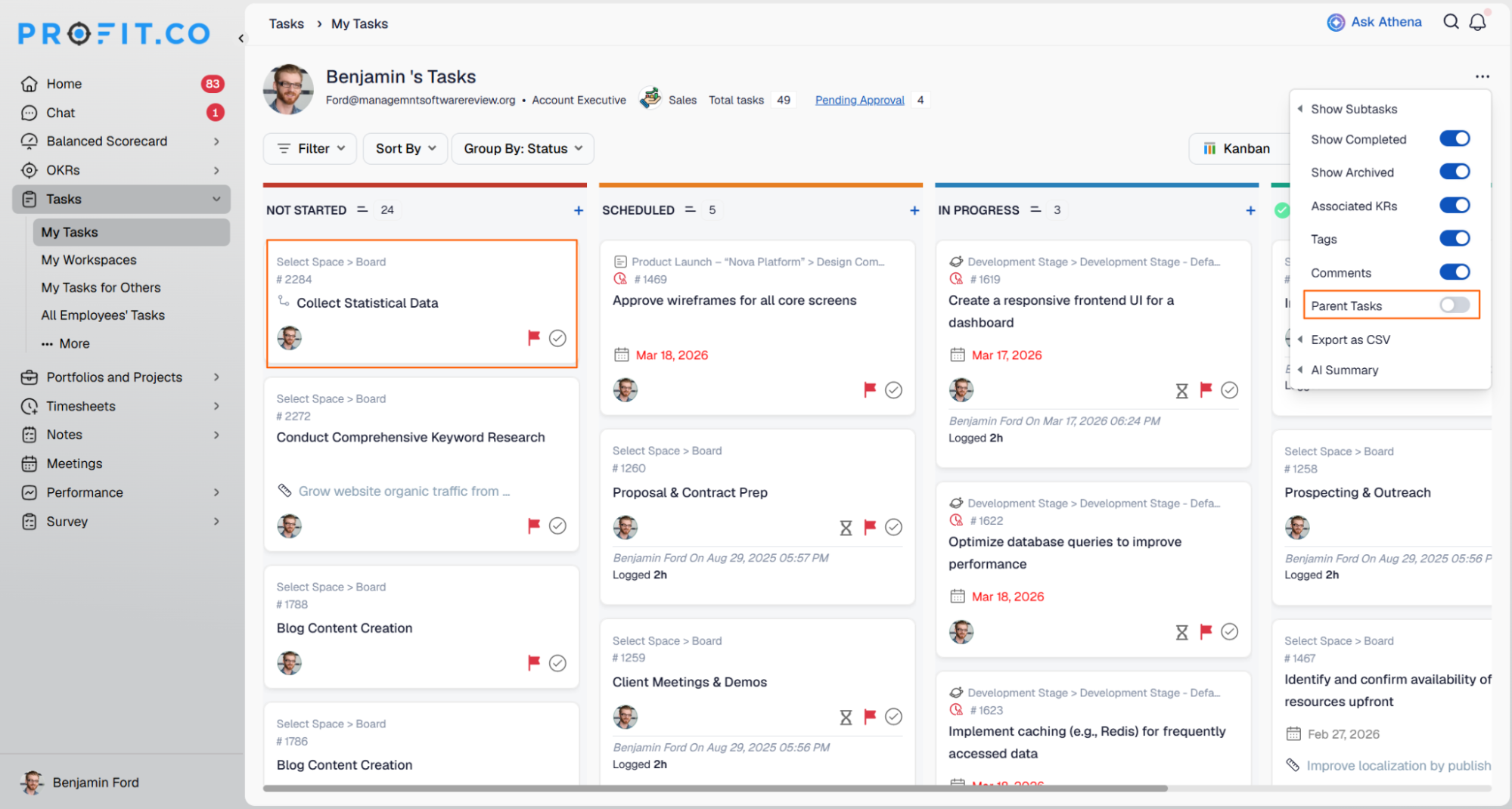
To hide parent tasks, click on the More option and disable the Parent tasks option to restrict access to parent tasks.
What Happens When You Use Sub-Task Cards?
| Scenario | What Happens |
|---|---|
| You assign a sub-task to someone who does not own the parent task. | Profit.co shows that sub-task as a separate card in the assignee's tasks. |
| You open a parent task that you own. | Profit.co shows its sub-tasks in the same card as the parent. |
| You disable the Parent tasks option under More. | Profit.co hides parent tasks to restrict access to them. |
What Are the Best Practices for Sub-Task Cards?
- Assign a sub-task to another person only when that person needs their own card, because it separates the work from the parent.
- Disable the Parent tasks option when assignees should see their sub-tasks without the parent's context.
- Use the sub-task icon and the parent KR line on a card to trace where the work came from.
- Make sure the Subtasks control is on in Task Controls before you expect sub-tasks to appear.
Related Articles
What Are Some Frequently Asked Questions About Sub-Task Cards?
Yes. Each sub-task can carry its own assignee, due date, priority and tags.
You can assign it to anyone within the workspace or board.
Yes. The Convert option lets you change a task into a sub-task or promote a sub-task to a parent task. See how to create sub-tasks.
Execute your strategy with confidence
Connect OKRs, tasks, and teams in one place with Profit.co
