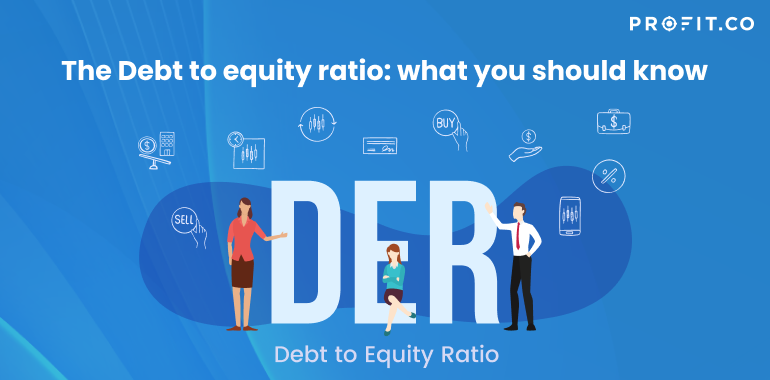
The debt to equity ratio is another important liquidity ratio. Fundamentally, it compares a firm’s total debt in relation to its total equity. The debt to equity ratio displays the percentage of company financing that is derived from creditors and investors. In other words, if the debt to equity ratio is high, that would mean that there is a higher amount of creditor financing (aka bank loans) used than investor financing (aka shareholders).
Explaining the Formula of the Debt to Equity RatioThis is a rather simple formula. Basically,
Considering that all the information you need is easily found on the balance sheet, the debt to equity ratio is also referred to as a balance sheet ratio.
Analyzing the Implications of the Debt to Equity RatioWe’ll start by saying that each industry has particular benchmarks when it comes to debt to equity ratio. This is why we cannot make any general estimates that would apply in all case scenarios. Essentially, there are specific industries that need more financing than others. That can be caused by the need for expensive equipment, or anything of the kind.
With that in mind, if we were to talk about a ratio of .5, then the number of liabilities would be higher than the amount of equity. In other words, the assets owned by the company would be funded 2-1 by both creditors and investors. In this situation, the investors would own roughly 66.6 cents for every dollar of the firm’s assets. In the meantime, the creditors would only own 33.3 cents for every dollar.
Now let’s take a different scenario. If a company had a debt to equity ratio of 1, then the creditors and investors alike would benefit from an equal stake in the assets owned by the business.
These being said, a lower debt to equity ratio translates into more financial stability. On the other hand, if a company has a higher debt to equity ratio, creditors and investors might see it as a riskier affair as compared to their counterparts. Distinct from equity financing, it is ultimately necessary to repay the debt to the lender.
Evidently, debt financing includes debt servicing or regular interest payments. Thus, the debt could be a much pricier type of financing if we were to compare it with equity financing. That is to say, companies leveraging significant amounts of debt might be incapable of dealing with regular payments. From a creditor’s point of view, a high debt to equity ratio entails a lot of risks. That’s because it clearly mirrors that investors didn’t consider funding the operations in the same amount as creditors have. That would mean that investors are hesitant to fund business operations because the company doesn’t perform as expected. In general, a poor performance could also be an indicator that a firm is seeking out additional debt financing.
To conclude, even if this ratio can shed a lot of light on a company’s financial stability, it is essential to assess its limitations, as well. Therefore, the industry in which the firm operates shouldn’t be overlooked, since distinct industries depend on different amounts of capital to operate fruitfully.