



The capital planning process is how organizations evaluate, prioritize, and fund long-term investments in technology, infrastructure, and strategic initiatives. It determines which projects receive budget, in what order, and how execution is governed after approval. Most companies treat it as a finance function. High-performing organizations treat it as a strategy execution system.
In this guide
- What Is the Capital Planning Process?
- Why Does Capital Planning Break Down Before Execution Ends?
- How Does Capital Expenditure Planning Work Step by Step?
- Stage-Gate vs Agile: Which Governance Model Fits Your Capital Planning Process?
- How Do OKRs Connect Capital Planning to Execution?
- The Hybrid Capital Planning Platform
- Frequently asked questions
What Is the Capital Planning Process?
The capital planning process is a structured method for making large-scale investment decisions. It means evaluating options, securing governance approval, allocating budgets, and tracking outcomes against strategic goals. Unlike operational budgeting, which covers recurring expenses, capital planning focuses on multi-year commitments where a misaligned decision compounds across quarters.
Capital expenditure planning covers any investment that creates long-term organizational value: new technology systems, physical infrastructure, product development, capacity expansion, or strategic acquisitions. The process answers three questions every leadership team must align on before capital moves:
Which investments connect to strategy?
Not every capital request deserves approval. Only investments with a traceable link to strategic priorities should advance past the screening stage.
Which investments should be sequenced first?
Capital is finite. Prioritization determines which projects unlock strategic value earliest and which consume resources without proportionate return.
How is execution governed after approval?
Approval is not delivery. Governance must extend from the investment committee to the project team. Otherwise the capital allocation decision becomes meaningless by quarter two.
The capital planning process connects project portfolio management to strategic intent. It is the governance system that ensures capital flows to the work that matters, not simply to the projects with the loudest advocates.
Why Does Capital Planning Break Down Before Execution Ends?
Capital without direction is just budget waiting to be wasted.
Most capital planning processes are built to answer one question: Should we approve this? Very few are designed to answer the harder follow-on: Is this investment actually delivering what we approved? That gap is where capital value disappears.
Capital planning fails in three predictable patterns. Each is invisible at the approval stage and costly by the time it surfaces:
Failure Pattern 1
Financial tracking replaces outcome tracking
Spend variance reports tell you how much of the budget has been consumed. They cannot tell you whether the investment is moving toward its intended strategic outcome. A project can be exactly on budget and completely off course. Most governance models will not catch it until year-end.
Failure Pattern 2
Approved projects drift from strategic intent
Between approval and delivery, scope changes, team turnover, and priority shifts accumulate. With no structured quarterly checkpoint connecting execution back to the original investment thesis, projects drift. Organizations discover the misalignment only at post-implementation review, when the money is already spent.
Failure Pattern 3
No feedback loop between projects and portfolio
When individual projects fail to surface progress signals upward, the portfolio manager is operating on assumption. The result: underperforming investments continue to consume capital that could be redirected to higher-value initiatives, a structural drag on portfolio performance that compounds every quarter.
These three patterns share a root cause. Capital planning was designed as a governance event, not a governance system. Approval happens once. Execution happens every day. The organizations that close the gap are the ones that build continuous visibility between the two.
Understanding how stage-gate governance structures capital decisions is the first step toward closing the gap between budget approval and strategic delivery.
How Does Capital Expenditure Planning Work Step by Step?
A capital expenditure planning process follows five sequential stages. Each stage produces a decision or governance artifact that feeds into the next, creating a traceable chain from investment idea to realized business outcome.
Investment Identification and Screening
Business units submit capital requests tied to strategic priorities. Each request is scored against a strategic fit matrix. Projects without a traceable connection to organizational goals are screened out before consuming evaluation resources. This stage keeps the pipeline focused, not just full.
Business Case Development
Each shortlisted investment receives a formal business case covering projected ROI, payback period, risk assessment, resource requirements, and, most critically, the strategic outcome metrics used to define success. This is the first point where outcome measures, not just financial projections, should be defined and agreed upon.
Governance Review and Approval
An investment committee reviews business cases against the capital budget envelope. Stage-gate criteria determine which projects advance. Approval should produce not just a budget release but a set of measurable milestones: the outcome targets that govern continued funding throughout execution.
Budget Release and Project Initiation
Approved projects move into delivery. Project charters are formalized, teams are assembled, and execution begins. This stage introduces the highest-risk handoff: the point where strategic intent most commonly breaks down if the execution governance model is not already in place before work starts.
Execution Tracking and Portfolio Review
Active investments are tracked against milestones, strategic outcome metrics, and budget consumption. Portfolio-level reviews, not just project-level status reports, surface which investments are delivering against their thesis and which require intervention or reallocation before the next budget cycle.
The organizations that succeed at capital execution share one structural trait: governance does not end at stage three. Stages four and five are where the investment thesis is proven or disproven, and where choosing the right project delivery methodology determines whether approved capital produces the outcome the business case promised.
Stage-Gate vs Agile: Which Governance Model Fits Your Capital Planning Process?
Strategy documents don’t move capital. Executable goals do.
The debate between stage-gate and agile is the wrong debate for most organizations. These are not competing philosophies. They solve different problems in the capital planning process. Stage-gate governs which investments to make. Agile governs how those investments are delivered. Applying one model to both problems is where execution breaks.
Most organizations running large infrastructure or compliance-heavy investments benefit from stage-gate at the portfolio level. Teams delivering software, product features, or iterative innovation benefit from agile at the execution level. The hybrid model, used by most mature capital planning programs, combines both. The bridge between them is the quarterly OKR cycle.
| Dimension | Stage-Gate Governance | Agile Sprint Model |
|---|---|---|
| Planning horizon | Annual or multi-year | 2 to 4 week sprints |
| Decision points | Sequential approval gates | Continuous sprint reviews |
| Governance level | Investment committee or board | Team-level autonomy |
| Risk management | Front-loaded due diligence | Iterative risk reduction per sprint |
| Best suited for | Infrastructure, compliance, large capex | Software, product, innovation |
| Primary weakness | Slow to adapt once execution begins | Lacks portfolio-level visibility |
| Hybrid bridge | OKR quarterly cycles: key results as gate criteria, sprint goals as execution units | |
For teams evaluating which governance model to adopt, the comparison between agile and waterfall project management approaches provides a practical framework for matching delivery methodology to investment type before committing to a governance structure.
Connect Capital Planning to Strategic Outcomes
How Do OKRs Connect Capital Planning to Execution?
Most capital planning fails not at approval. It fails at execution. OKRs are the governance layer that makes delivery traceable.
OKRs solve the execution handoff problem in capital planning by creating a structured, measurable connection between the investment committee’s approval decision and the project team’s delivery output. The quarterly cadence of OKRs maps naturally onto both governance layers in the hybrid model.
Here is how the three-layer hybrid model works in practice:
Layer 1 · Capital Approval
Stage-Gate Decision
The investment committee approves the capital allocation. The approval includes not just a budget but the strategic outcomes expected, framed as OKR objectives that govern the investment through the full delivery lifecycle.
Layer 2 · Quarterly Governance
Key Results as Gate Criteria
Quarterly key results become the mid-cycle gate criteria. If a project’s key results are not progressing, the quarterly portfolio review triggers an intervention within the quarter the misalignment occurs, not at year-end review.
Layer 3 · Sprint Execution
Sprint Goals as Execution Units
Agile sprint goals translate quarterly key results into 2 to 4 week delivery cycles. Each sprint outcome feeds back into the OKR check-in, maintaining the chain from daily task to capital allocation decision.
This model makes capital governance continuous rather than episodic. Instead of waiting for quarterly financial variance reports, leadership sees strategic progress at the OKR check-in level, catching underperforming investments within the quarter, not after the budget is spent.
The reason most capital planning programs lose strategic value between approval and delivery is not poor strategy. It is the absence of a structured mechanism to carry intent through each execution layer. OKRs address this by providing a measurable handoff at every layer of the governance stack: from committee approval to quarterly key result to sprint task.
Exploring how OKRs structure goal accountability from company level to team level gives capital planning teams a practical starting point for implementing quarterly checkpoints within an existing stage-gate process.
The Hybrid Capital Planning Platform
Connected OKR + PPM Architecture
OKR management, project portfolio tracking, and capital governance in one system
Most OKR platforms handle goal-setting and stop there. Most project portfolio tools handle execution tracking and stop there. Neither connects to the other, which means the quarterly OKR check-in and the weekly project status report live in separate systems, creating two disconnected conversations about the same approved investment.
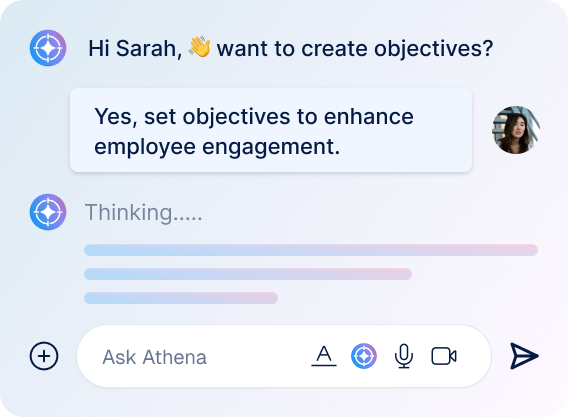
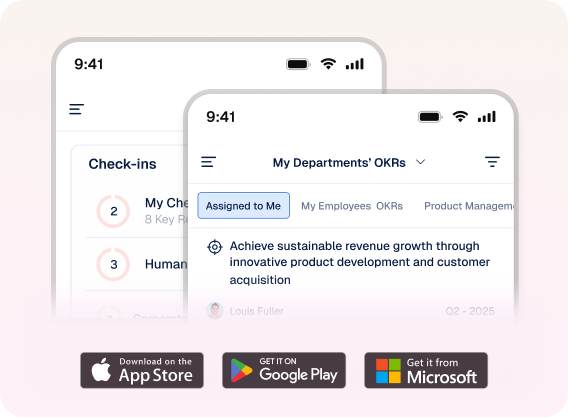
A connected OKR, project portfolio management, and task management platform runs quarterly key results as the live governance layer for approved capital projects. Sprint tasks feed directly into OKR progress tracking, which feeds into portfolio dashboards. The investment committee sees capital performance against strategic outcomes in real time, not in a quarterly spreadsheet prepared by hand.
With 100+ integrations pulling live progress from Jira, Salesforce, and Azure DevOps, and AI-powered progress automation replacing manual check-in cycles, the full hybrid model operates natively: stage-gate governance at the portfolio level, quarterly OKRs as mid-cycle checkpoints, and agile sprint tasks as the execution units.
Organizations already running an OKR management program can extend the PPM capability to capital project governance without adding another tool. This connects the OKR cycle they already run to the project portfolios that consume their approved capital budget.
Key Takeaways
- ✓The capital planning process is a strategy execution discipline, not a finance function. The governance must extend from approval all the way through delivery.
- ✓Capital expenditure planning fails in three patterns: financial tracking replaces outcome tracking, projects drift from strategic intent, and no feedback loop connects project results back to portfolio decisions.
- ✓Stage-gate and agile are not opposing models. They govern different layers. The hybrid approach uses stage-gate at the portfolio level and agile at the execution level, bridged by quarterly OKR cycles.
- ✓OKRs make capital governance continuous: quarterly key results as gate criteria, sprint goals as execution units, and a traceable chain from daily task to investment committee decision.
Connect Capital Planning to Strategy Execution
Frequently Asked Questions
The capital planning process is a structured framework for evaluating, approving, and managing long-term investment decisions. It covers project prioritization, budget allocation, governance review, and execution tracking against strategic outcomes.
Capital expenditure planning follows five stages: investment identification and screening, business case development, governance review and approval, budget release and project initiation, and ongoing execution tracking against strategic goals and financial targets.
Stage-gate uses sequential approval gates for large, high-risk investments. Agile distributes budget in short sprint cycles for iterative delivery. Most enterprises benefit from a hybrid model: stage-gate governance at the portfolio level, agile execution at the team level.
OKRs bridge stage-gate governance and agile delivery by making quarterly key results the gate criteria and sprint goals the execution units. This connects capital approval decisions to measurable business outcomes rather than spend milestones alone.
Capital planning fails when governance ends at approval. Projects drift from strategic intent, spending is tracked without measuring outcome progress, and no feedback loop connects results back to the original investment thesis.


